 How-to
How to Choose a Solar Pool Heater for a Screened Enclosure
Quick Summary
To choose a solar pool heater for a screened enclosure, first measure your pool surface area and roof orientation, since the mesh reduces the sunlight reaching the collectors. Then pick a collector type, with mats usually the practical default for enclosures, and size the system to match your pool and the light that gets through the screen.
- Measure pool length, width, average depth and surface area before comparing any products.
- Check roof direction, pitch and shade from trees or buildings during peak sun hours.
- Solar mats are lightweight and inexpensive, but need more area for the same heating effect.
- Screen mesh open-area percentage determines how much light reaches the collectors.
- Use independent racking when the enclosure is older, lightly built or already showing movement.
Table of Contents
- How a Screened Enclosure Changes Solar Pool Heater Choice
- Step 1: Measure Your Pool Surface Area and Roof Orientation
- Step 2: Choose Your Collector Type: Mats, Panels or Domes
- Step 3: Size the System for Your Pool
- Step 4: Plan Mounting, Structural Load and Plumbing
- Solar Versus Gas Heating Once the Enclosure Is in Place
- Booking Your Free Consultation for a Screened-Enclosure Solar Setup
- Frequently Asked Questions
How to Choose a Solar Pool Heater for a Screened Enclosure
Last Updated: November 20, 2026
How a Screened Enclosure Changes Solar Pool Heater Choice
A solar pool heater is a collector system that uses sunlight to warm pool water as it circulates through the filter. Adding a screened enclosure changes that picture in two ways. The mesh cuts the amount of sunlight reaching the water and collectors, and the enclosure traps warm air around the pool. The right heater for an enclosed pool can differ from the one an open pool would need.
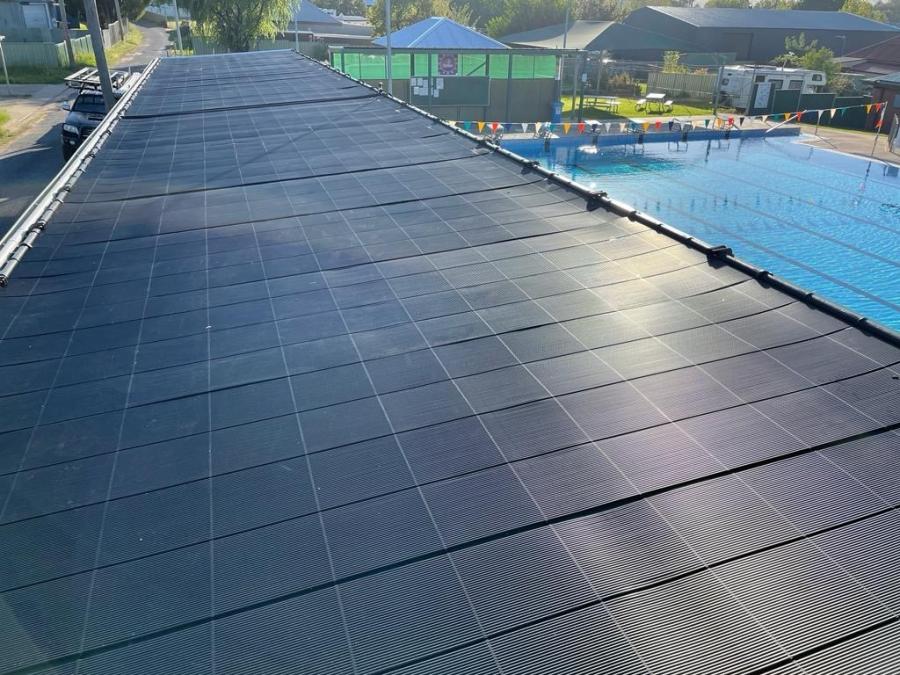
The screen reduces incoming light, which lowers collector output. Those two effects pull in opposite directions, so the choice depends on how much sun reaches the collectors and how the enclosure is built.
Plan for the enclosure from the start. Measure the roof, note which direction it faces, and check how much sun reaches the spot where collectors would sit. A solar pool heater for a screened enclosure is a sizing and placement decision, not just a product pick.
Step 1: Measure Your Pool Surface Area and Roof Orientation
Start with the numbers. Measure the pool's length, width and average depth, then calculate surface area, since that figure drives how much collector area you need. Irregular shapes can be split into simple rectangles and circles, with their areas added together.
Next, look at the roof. Collectors work best on a surface with strong sun exposure. Note the roof pitch and whether any part of the enclosure is shaded by trees or nearby structures during the hours of peak sun.
Record these points before you compare any products:
- Pool length, width and average depth
- Surface area in square feet
- Roof direction, pitch and clear sun hours
- Shade from trees, neighboring buildings or the house itself
Step 2: Choose Your Collector Type: Mats, Panels or Domes
Solar pool heaters come in three main collector styles. Each suits different enclosures and budgets, so compare them against your roof and layout.
| Collector Type | How It Works | Pros | Cons | Best Fit |
|---|---|---|---|---|
| Solar mats | Flat polypropylene mats laid on a roof or ground | Low profile, lightweight, lower install cost | Need open space, lower output per square foot | Ground-level or low-slope roofs |
| Solar panels | Rigid glazed or unglazed panels on a mounting rack | Higher output, durable, good for cooler weather | More structural load, more visible | Roofs with good south exposure |
| Solar domes | Clear dome collectors that concentrate sunlight | Compact footprint, good for tight spaces | Higher cost per unit, fewer options | Small pools or limited roof space |
Pros and cons by system type:
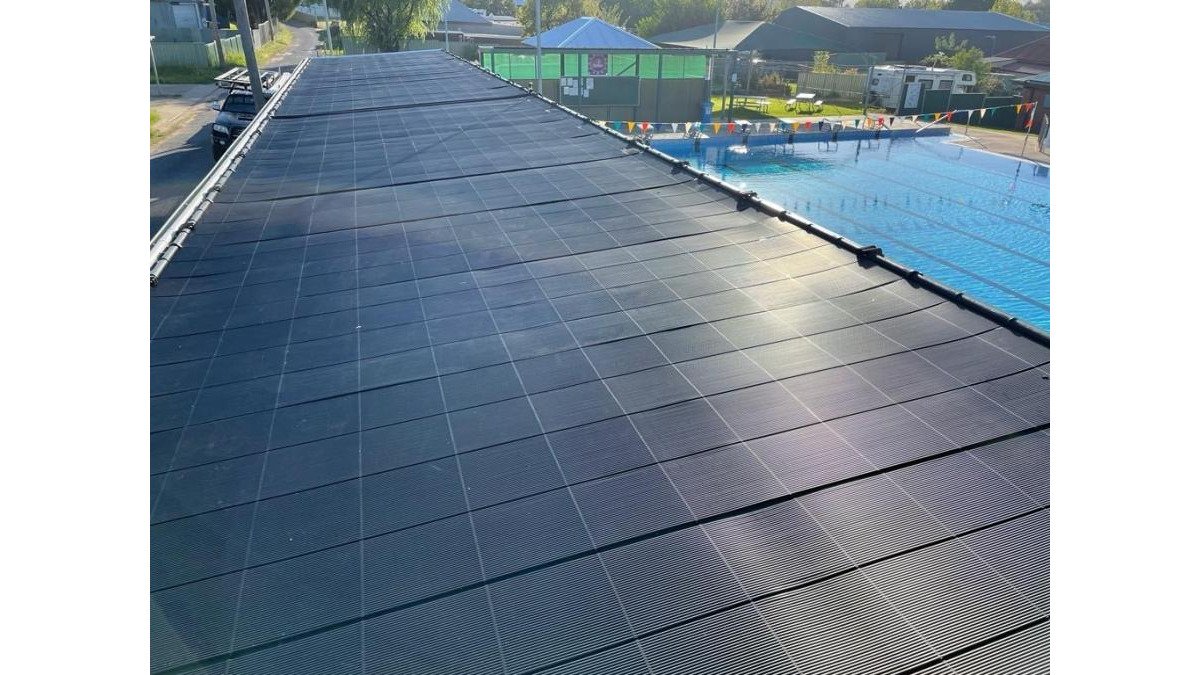
- Mats: Simple and inexpensive to install, but they need more surface area for the same heating effect. Mats also suit enclosures where the roof is not strong enough for panels.
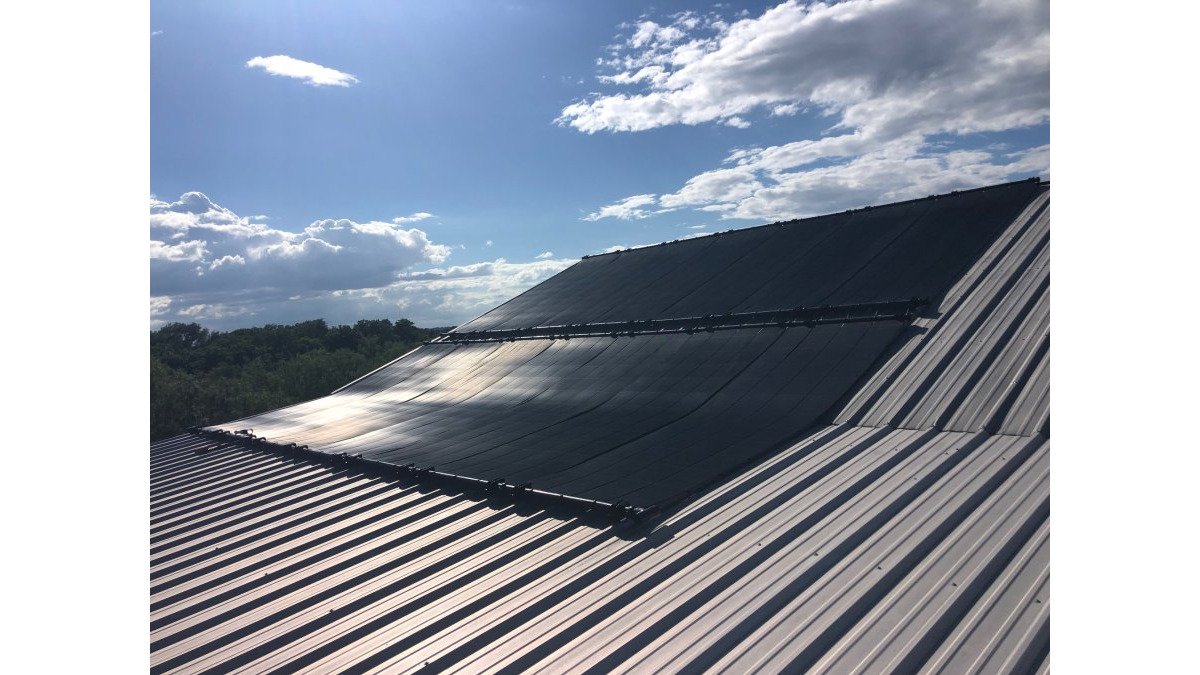
- Panels: Deliver more heat per unit and hold up well, but they add weight and need a stable mounting frame.
- Domes: Fit small or awkward spaces, yet they usually cost more per unit of heating capacity.
For many screened enclosures, mats are the practical default because they add little load and install quickly. Panels make sense when the roof is strong and faces the sun, and domes suit small pools where space is the main limit.
Step 3: Size the System for Your Pool
Sizing matches collector area to pool surface area and to the sunlight that actually reaches the collectors. A screened enclosure sits between the sun and the collectors, so open-sky sizing figures do not translate directly.
Start with the light the screen lets through. Screen mesh is specified by strand count per square inch. Screen mesh is specified by strand count per square inch, and manufacturers publish open-area percentages for their fabrics. That open-area figure is what determines how much light reaches the collectors.
Then account for enclosure geometry. A screen cage is not a flat window. Light arrives at an angle, reflects off the aluminum frame and the pool deck, and is partly blocked by structural members, knee walls, and the house itself. Two enclosures with identical mesh can deliver very different irradiance if one faces the sun squarely and the other is shadowed by the home for part of the day. Check the roof plane you intend to use for shadows from the frame and house during the day.
Keep these sizing factors in view:
- Pool surface area and average depth
- Mesh open-area percentage and the resulting shading factor
- Roof orientation, pitch, and clear sun hours after screen shading
- Frame and structural shadows that fall across the collector plane
- Desired water temperature and length of the swimming season
- Pump flow rate, since it sets how quickly water passes through the collectors
Match collector area to flow, too. Collector output depends on water moving through at the right rate. Too little flow and the panels run hot and lose efficiency; too much and the water does not pick up enough heat per pass. Collector output depends on pump flow matching the manufacturer's specification for the collectors.
Step 4: Plan Mounting, Structural Load and Plumbing
Installation planning matters most for a screened enclosure, because the structure has to carry the collectors and resist wind. A screen cage is engineered to hold screen fabric and its own frame, not necessarily added dead load and uplift. Treat the enclosure as a separate structure to be evaluated, not as a roof in the conventional sense.
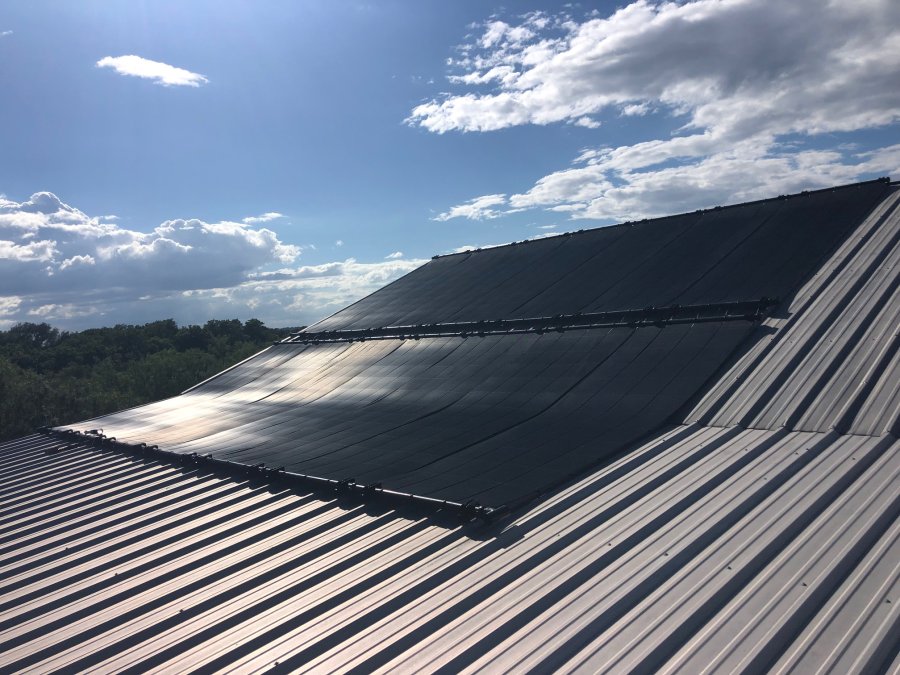
Decide between frame-mounted and independent racking. There are two practical approaches:
- Frame-mounted collectors attach to the aluminum superstructure (the beams and columns, not the screen tracks). This keeps the system compact and uses existing geometry, but it transfers collector weight and wind uplift directly into members that may not have been sized for it.
- Independent racking sets collectors on their own ground-mounted or deck-mounted frame beside the enclosure, with plumbing run to the pool equipment. This removes load from the screen structure entirely and is the safer default when the cage is older, lightly built, or already showing movement.
A structural evaluation can help determine whether the enclosure can carry collector loads.
Evaluate load in two directions. Dead load is the weight of the collectors plus water in the headers and any mounting hardware. Wind load is uplift and lateral force on the collector plane, which can be significant on an elevated cage. Both must be checked against the frame's capacity, and both are reasons a professional structural review is worth having before any drilling begins.
Plan attachment points carefully. Frame-mounted systems need attachment at structural members, with isolation between dissimilar metals to prevent galvanic corrosion where stainless fasteners meet aluminum. Never fasten to screen tracks, splices, or thin sections that carry only fabric. Roof-mounted panels on a solid roof need proper flashing and attachment points, while ground-mounted mats need level, unshaded space nearby.
!A homeowner and a contractor inspecting solar collector panels mounted on the roof edge of a screened pool enclosure in Texas sunshine
Plumbing is the other key piece. A solar system connects to the existing pool pump and filter, usually through a diverter valve that sends water to the collectors and back. A vacuum relief valve protects the pump and filter when water flow changes, and a check valve keeps water from draining back through the panels when the pump shuts off. Good plumbing layout keeps flow even across the collectors and makes the system easier to service.
Plan these items before installation starts:
- Whether collectors go on the frame or on independent racking
- Attachment points at structural members, with galvanic isolation
- Route for supply and return lines from the pump
- Location of the diverter valve, vacuum relief valve, and check valve
- Access for winterizing and routine service
Solar Pool Heating Texas can help you decide which installation path fits your enclosure.
Solar Versus Gas Heating Once the Enclosure Is in Place
Once the enclosure is built, solar heating and gas heating solve the same problem in very different ways. Gas heaters respond quickly and work regardless of weather, but they carry ongoing fuel costs. Solar systems run on sunlight after installation and need little maintenance.
Solar performs best when the sun is strong and the enclosure traps heat. On cloudy days or in cooler months, a solar system may heat more slowly than a gas heater, which is a real trade-off to weigh. Many owners pair solar with a sensible schedule and a pool cover to get the most from both.
The comparison comes down to these points:
- Solar has low running costs once installed; gas bills recur every season
- Gas gives faster, more predictable heat on demand
- Solar output depends on sun exposure, which the screen reduces
- Solar needs little maintenance compared with gas burners and fittings
Solar Pool Heating Texas can discuss your options for your specific site.
Booking Your Free Consultation for a Screened-Enclosure Solar Setup
Choosing a solar pool heater for a screened enclosure is easier with a site visit. A consultation lets the team look at your roof, enclosure and pool layout, then recommend a collector type and system size that fit your setup. Solar Pool Heating Texas offers a free consultation.
Bring your measurements, roof details and any questions about the enclosure.
Ready to get started? Request your free consultation with Solar Pool Heating Texas and get a clear plan for heating your screened pool with the sun.
Frequently Asked Questions
Can you put solar pool heater panels on a screened enclosure?
Yes, in many cases. Panels can be mounted on the roof of a screened enclosure if the roof has a clear southern or near-southern exposure and can carry the added weight and wind load. Mats are often easier to place on a screen cage because they are lightweight and lie flat. Before mounting anything, confirm that the roof structure and fasteners are rated for the load. A professional site assessment is the safest way to check this, and Solar Pool Heating Texas offers a free consultation to review your enclosure.
How does a screened enclosure affect solar pool heater efficiency?
A screened enclosure reduces wind exposure, which helps the pool hold heat, but the mesh also filters some sunlight that would otherwise reach the collectors. The collectors themselves should sit above or outside the mesh wherever possible so they receive full sun. Shade from the enclosure frame and nearby trees should be checked at different times of day. A well-placed collector on an unshaded roof section usually keeps efficiency high even with a screen in place.
How many solar panels do I need for my pool size?
Sizing depends on pool surface area, the length of your swimming season, your desired water temperature and how much sun the collectors receive. A common planning approach is to size the collector area as a percentage of the pool surface area, with more collector area needed for cooler climates or longer seasons.
How do solar pool heaters compare to gas or electric heat pumps?
Solar pool heaters use the sun's energy directly and have no fuel or electricity running costs for the heat they provide, while gas heaters burn fuel and heat pumps use electricity to move heat. Solar works best when the sun is strong, so it may not heat the pool as quickly on cloudy days.