 How-to
Which Pool Heating Company Is Right for You?
Last Updated: November 19, 2026
Quick Summary
A pool heating company designs, installs, services, and repairs the systems that keep your pool comfortable, and the right one sizes the system to your pool, pump, and site before selling equipment. Solar pool heating is the most cost-effective choice for most Texas pool owners, with the lowest operating costs and minimal maintenance.
- Solar thermal has lower operating costs and maintenance needs than gas heaters.
- Gas heaters warm a pool fastest but carry the highest operating expenses.
- Installation runs through assessment, mounting, plumbing, controls, and testing.
- Collector tilt is set to match your site's latitude for the best seasonal angle.
- Solar pool heating can extend your swimming season by up to nine months.
Table of Contents
- What a Pool Heating Company Actually Does
- Solar vs. Gas vs. Heat Pump: Which Heating Type Fits Your Pool?
- What Solar Pool Heater Installation Involves
- Solar Pool Heater Maintenance: What Owners Actually Do
- Solar Pool Heater Troubleshooting: Common Problems and Fixes
- How to Read Pool Heating Company Reviews
- Get a Free Consultation Before You Choose a Pool Heating Company
- Frequently Asked Questions
What a Pool Heating Company Actually Does
A pool heating company designs, installs, services, and repairs the systems that keep your pool at a comfortable temperature. Solar Pool Heating Texas provides residential and commercial solar pool heating installation and repair services across Texas.
Most homeowners come to us thinking a pool heating company only sells heaters. The real work starts before any equipment arrives. A good company measures your pool's surface area, checks your pump and flow rate, reviews how much sun your roof gets, and asks how long you actually want to swim. Those answers decide the system, not the brochure.
Three things separate a real heating specialist from a general pool contractor:
- Heat load sizing based on pool volume, surface area, and climate zone
- Pump and flow rate compatibility so the heater performs as designed
- Ongoing service, including diagnostics, repairs, and seasonal checks
Solar vs. Gas vs. Heat Pump: Which Heating Type Fits Your Pool?
Solar thermal is generally considered to have lower operating costs and maintenance needs than gas heaters. Gas heaters warm a pool fastest but carry the highest operating expenses. Heat pumps sit in between, running efficiently in mild air but losing performance as temperatures drop. The right choice depends on how you use the pool, how long your season runs, and how much sun your site gets.
Here is how the three compare on the factors that matter most:
| Heating Type | Warm-Up Speed | Operating Cost | Maintenance | Best For |
|---|---|---|---|---|
| Gas heater | Fastest | Highest | Moderate | Quick weekend warm-ups |
| Heat pump | Moderate | Moderate | Moderate | Mild climates, steady use |
| Solar thermal | Slower, steady | Lowest over time | Minimal | Season extension, low running costs |
Gas Heaters: Fast Warm-Up, Higher Operating Costs
Gas heaters burn fuel to raise pool temperature quickly, which suits homeowners who heat occasionally and want results the same day. The trade-off is energy consumption: every hour of run time adds to the gas bill across a season.
Heat Pumps: Efficient, but Slower in Cold Air
Heat pumps move heat from the air into the water rather than generating it. That makes them efficient in mild conditions. Performance drops as air temperature falls, so in cooler months a heat pump works harder and heats more slowly.
Solar Thermal: The Lowest Operating Cost Over Time
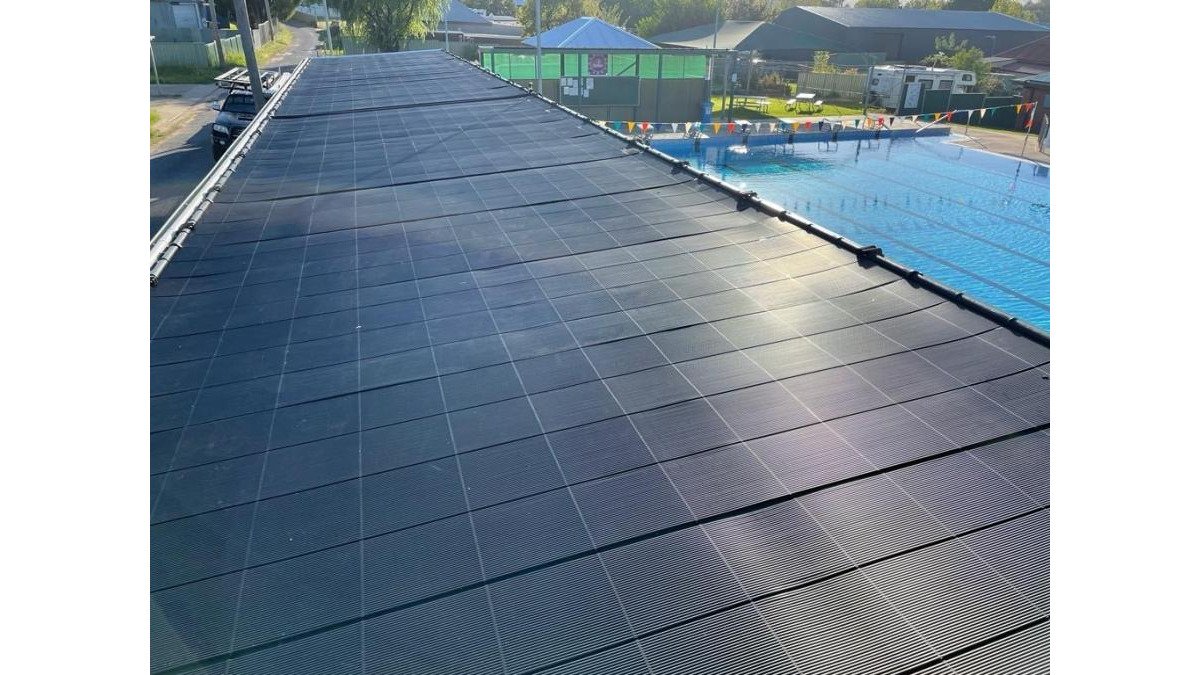
Solar thermal collectors absorb sunlight and transfer that heat to your pool water through a flow loop tied into your existing pool equipment. There is no fuel to burn and no compressor to run. Once installed, solar pool heating is an energy-efficient way to heat your pool, and more Texas pool owners are choosing solar over gas or electric heating.
Sizing and Climate: The Variable Competitors Skip
Sizing the system to your site and your climate is an important part of choosing a heating type. A solar array is sized by collector surface area relative to pool surface area, and the ratio that works depends on how much sun the site receives and how much of the season you want to cover. A pool in a sunnier, warmer zone can reach the same temperature with a smaller collector area than a pool in a cooler, cloudier zone.
A practical way to think about it: solar is a season-extension tool that performs best when the collector area is matched to the pool and the site's sun exposure, while gas and heat pumps are on-demand tools whose output is fixed by equipment rating. Pairing solar with a pool cover can help retain heat in cooler months.
If you are weighing solar against a heat pump in detail, our guide on how to choose a solar pool heater vs heat pump walks through the side-by-side comparison.
What Solar Pool Heater Installation Involves
Installation starts with a site assessment, then moves through mounting, plumbing, controls, and testing. A typical residential project runs in stages, and knowing them helps you ask better questions before work begins. The design decisions made in the first stage determine how well the system performs for the next two decades, so this is where a specialist earns their keep.
The process generally follows this order:
- Assessment: measure pool surface area, check roof orientation and shading, confirm pump compatibility
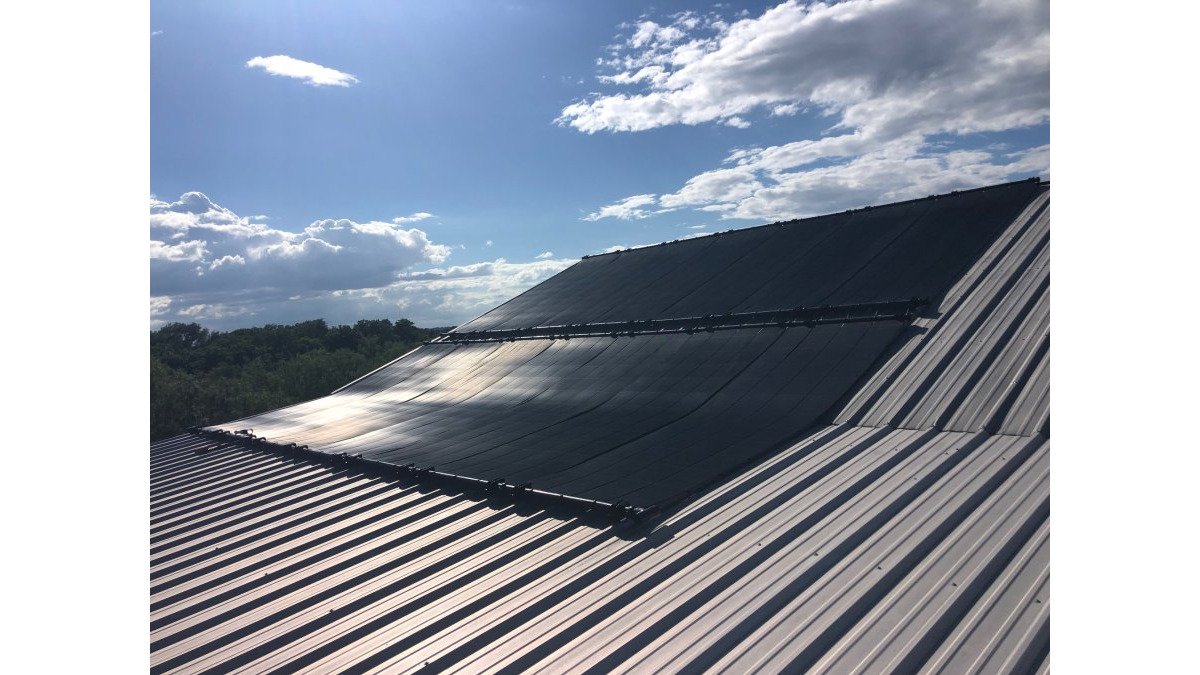
- Mounting: secure collectors on a roof or ground rack with proper tilt for your latitude
- Plumbing: tie the collector loop into your existing pool equipment with valves and a flow path
- Controls: install thermostat control and digital controls so the system runs only when it should
- Testing: verify flow rate, check for leaks, and confirm temperature rise
What the Site Assessment Actually Measures
The assessment is the part homeowners underestimate. A specialist measures the pool's surface area, not just its volume, because solar collectors are sized against the water surface they need to heat. They check roof orientation, since a south-facing roof collects the most sun across the day, and they map shading from trees, chimneys, and neighboring structures hour by hour. They also confirm the existing pump can push the required flow through the collector loop, because a pump that is too small starves the collectors and a pump that is too large wastes energy.
Roof, Ground Rack, or Fence Mount
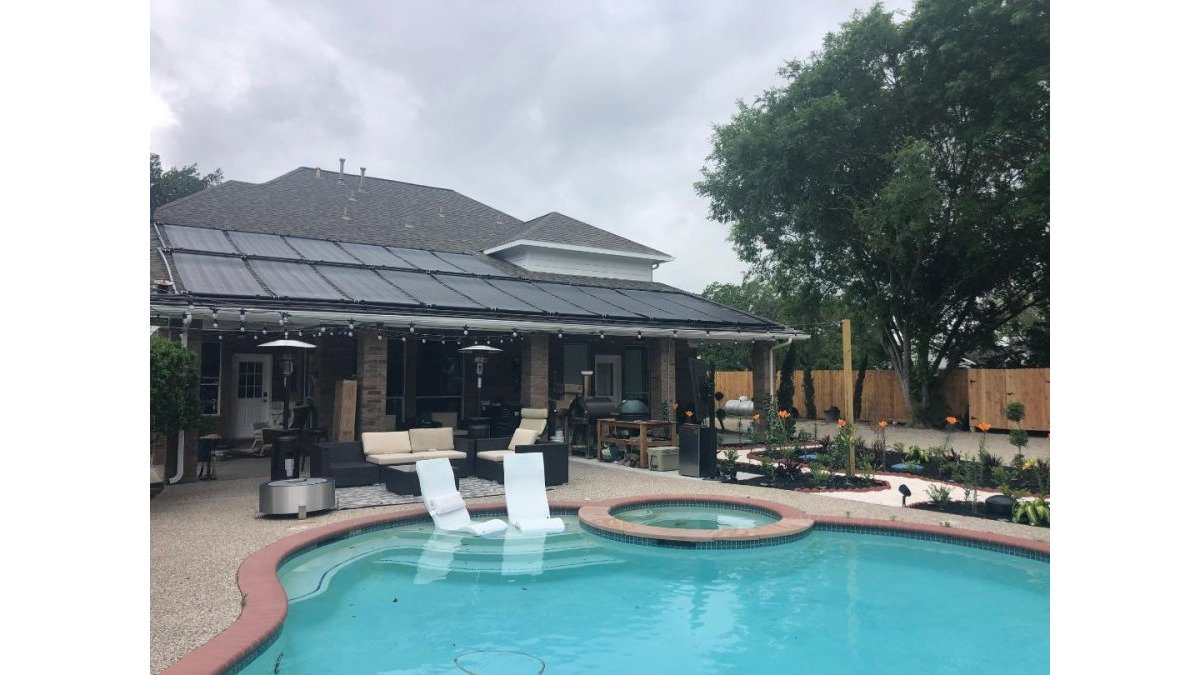
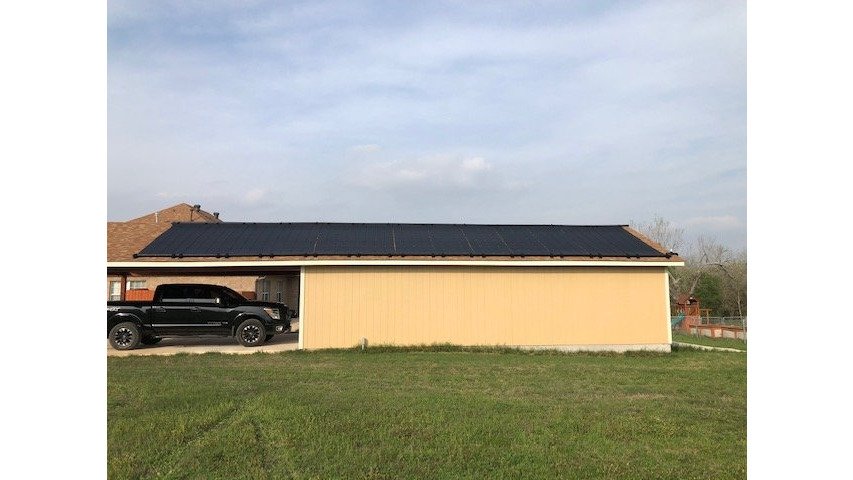
Collectors can go on a roof, a ground rack, or a fence line. Roof mounting saves yard space and often gets the best sun exposure, but it requires a structure that can carry the weight and a clean path for plumbing. Ground racks suit properties with limited roof space or heavy roof shading, and they are easier to service. Fence mounting works on some lots but limits collector area. The right choice is a function of available sun, structural capacity, and how much collector area the pool needs.
Tilt, Orientation, and Latitude
Collector tilt is set to match the site's latitude so the panels face the sun at the best average angle across the season. A tilt that is too shallow underperforms in winter, and one that is too steep underperforms in summer. Orientation matters as much as tilt: a roof that faces the wrong direction can still work with a ground rack or a different mounting angle, but the design has to account for it up front rather than after the panels are up.
Plumbing and Controls
The collector loop ties into your existing pool equipment with valves that direct water through the collectors only when the controller calls for heat. A differential controller compares the temperature at the collectors to the pool temperature and runs the pump only when the collectors are hotter, which is what keeps the system from cooling the pool at night. Sensor placement is part of the design, not an afterthought.
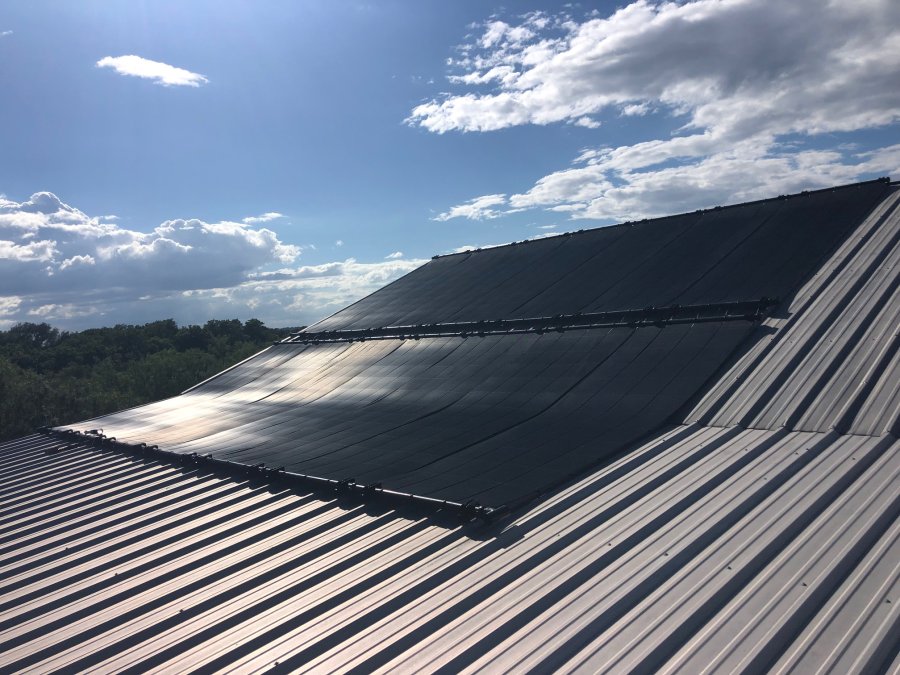
Retrofit installation on an older or oddly shaped pool can be possible depending on available roof or ground space and a clean path for plumbing. What matters is available roof or ground space and a clean path for plumbing. For the full step-by-step breakdown, see our article on the solar pool heating installation process explained.
Solar Pool Heater Maintenance: What Owners Actually Do
Solar pool heating generally requires less maintenance than some gas or electric systems because it has fewer mechanical components to service. Owners mostly keep an eye on flow and clear debris.
A realistic upkeep routine looks like this:
- Check the filter and pump basket regularly so flow stays strong
- Clear leaves and dirt from collectors after storms
- Watch pool water chemistry, since balanced water protects the whole system
- Have the system checked seasonally for leaks or loose fittings
A common issue is low flow rate through the collectors, often caused by neglecting the pool pump.
If you want a fuller maintenance reference, our piece on common solar pool heating maintenance issues and fixes covers what owners actually run into.
Solar Pool Heater Troubleshooting: Common Problems and Fixes
Common solar heating problems often relate to flow, controls, or leaks, and some have simple fixes. Before calling anyone, check the obvious items.
Start with these:
- Water stays cool: confirm the pump runs during daylight hours and the controller is calling for heat
- Weak flow: clean the filter, check valve positions, and inspect for air in the lines
- System runs at night: check the thermostat control settings and sensor placement
- Visible moisture on panels or plumbing: a leak that needs a proper repair
Watch out: ignoring a small leak can let air into the loop, which drops performance and can damage the pump. For a leaking panel specifically, our guide on how to fix a solar pool heater leaking from panels covers the diagnosis step by step.
How to Read Pool Heating Company Reviews
Reviews tell you more about a company when you read for patterns, not star ratings. Look for repeated mentions of the same strength or the same complaint across many reviews.
Read for these signals:
- Consistency: do reviewers describe the same experience again and again?
- Follow-through: do people mention service after the install, not just the sale?
- Specifics: reviews that name a technician, a fix, or a timeline carry more weight
- Responsiveness: how quickly problems were addressed
A common mistake is judging a company on one glowing review. A pattern of ten similar comments tells you far more. For a structured way to vet companies, our 7-step guide to choosing a pool heating contractor lays out exactly what to check.
Get a Free Consultation Before You Choose a Pool Heating Company
Choosing a pool heating company comes down to sizing skill, honest advice, and service after the sale. Solar pool heating is an energy-efficient way to heat a pool, and it keeps working season after season.
Solar Pool Heating Texas specializes in residential and commercial solar pool heating across Texas, in partnership with SolarTEK. The business offers a 100% satisfaction guarantee and is available 24/7 for emergency repairs. Solar pool heating can help extend your swimming season by up to nine months.
Get started with Solar Pool Heating Texas and heat your pool the way the sun intended.
Frequently Asked Questions
What should I look for in a pool heating company?
Look for a company that specializes in the heating type you want, carries a satisfaction guarantee, and offers emergency repair availability. Ask how long they have worked in your area and whether they handle both residential and commercial systems. Read pool heating company reviews for patterns in service after the sale, not just installation praise. A company that explains how its system works and answers follow-up questions before you commit is usually the one that sticks around afterward.
How does solar pool heating work?
Your existing pool pump pushes water through solar collector panels, usually mounted on a roof or rack. The sun warms the panels, and the water picks up that heat before returning to the pool. A thermostat control decides when the system runs, so it only circulates water when the panels are warmer than the pool. That is why solar thermal has the lowest operating cost of any heating type: the sun does the work, and the pump you already run moves the water.
How long does solar pool heater installation take?
Installation time depends on roof access, panel count, and how far the equipment sits from the pool pump. Ask the installer for a written timeline and what could extend it.
Why is my solar pool heater not heating the pool?
Start with the simple checks: confirm the thermostat is set above the current pool temperature, make sure the pump is running during daylight, and look for a dirty filter or low flow rate. Shade on the panels, a tripped sensor, or a valve left in the wrong position will also stop heating. If those check out, call a professional technician for system diagnostics.