 How-to
7 Steps to Size a Solar Pool Heater Correctly
Last Updated: November 16, 2026
Quick Summary
Size a solar pool heater by matching collector area to 50% to 100% of your pool's surface area. Full sun with a cover lands near 50%, while shade, wind, or no cover pushes you toward 100%.
- Measure the water line, not the deck edge, to get surface area in square feet.
- A 400 sq ft pool needs 200 to 400 sq ft of collector area.
- Most calculators assume five to six peak sun hours and a cover at night.
- Check pump flow rate, head loss, and horsepower before finalizing panel count.
- A pool cover keeps collected heat from leaving overnight.
Table of Contents
- Start With Pool Surface Area and Dimensions
- How Many Solar Panels Do I Need for My Pool?
- Using a Pool Heater Size Chart and Solar Pool Heater Calculator
- How to Size a Solar Pool Heater Calculator: What the Numbers Assume
- Climate, Sun Exposure, and Shade Adjustments
- Solar Pool Heater Pump Requirements and Flow Rate Checks
- Heat Loss, Pool Covers, and Realistic Temperature Goals
- Get a Free Consultation and Final System Sizing
- Frequently Asked Questions
Start With Pool Surface Area and Dimensions
Sizing a solar pool heater starts with one number: your pool's surface area. Every panel count, flow rate, and temperature goal flows from that figure, and getting it wrong throws off the whole system.
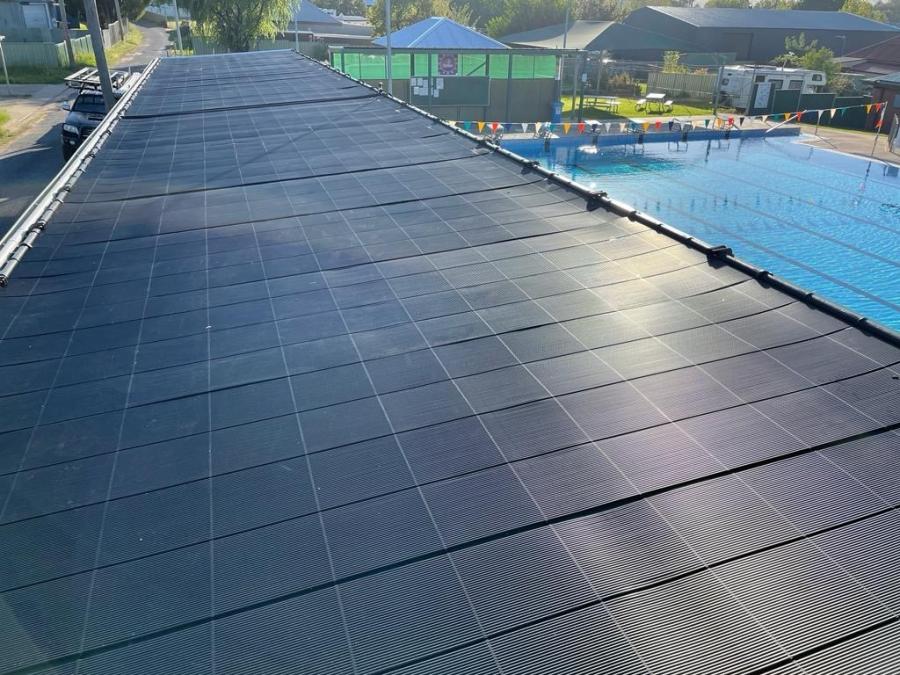
Grab a long tape measure and a notepad. Measure the longest point and the widest point of the water line, not the deck edge. Write both numbers down in feet.
Measuring Rectangular, Round, and Freeform Pools
Rectangular pools are simple: length times width equals surface area. A 20-foot by 40-foot pool covers 800 square feet.
Round pools use a different formula. Measure the radius, square it, then multiply by 3.14. A pool with a 10-foot radius covers about 314 square feet.
Freeform pools need a little more care. If your pool has a rock feature or an odd curve, our guide to sizing systems for oddly shaped pools walks through the measuring process step by step.
How Many Solar Panels Do I Need for My Pool?
The short answer: most pools need a collector area equal to 50% to 100% of the pool's surface area. A pool in full sun with a cover often lands near the low end. A windy, shaded, or uncovered pool needs closer to the high end.
That range is the single most useful rule in solar pool heating. It tells you roughly how many panels to plan for before you ever touch a calculator.
A Worked Sizing Example for a 400 sq ft Pool
Say your pool measures 16 feet by 25 feet. That is 400 square feet of surface.
- Low end (50%): 200 square feet of collector area
- Mid range (75%): 300 square feet
- High end (100%): 400 square feet
Using a Pool Heater Size Chart and Solar Pool Heater Calculator
A pool heater size chart gives you a fast read on panel count. You match your pool's surface area to a climate band, and the chart returns a collector range.
Online calculators do the same math with a few more inputs. You enter pool size, location, and target temperature, and the tool returns a panel count and flow figure.
Watch out: a calculator that never asks about shade, wind, or a pool cover is guessing on the two or three factors that matter most. Treat its output as a floor, not a ceiling.
How to Size a Solar Pool Heater Calculator: What the Numbers Assume
Every solar pool heater calculator rests on assumptions you never see. Knowing them keeps you from trusting a number that does not fit your pool.
Most tools assume full sun for six or more hours a day. They assume a pool cover is in use at night. They assume moderate wind and a collector tilted toward the sun. Change any one of those and the real panel count climbs.
The water cycle behind the math is simple: your pump pushes water through the collectors, the sun warms the water, and it returns to the pool. Our breakdown of how a solar pool heater works explains that cycle in plain terms so the calculator's inputs make sense.
The Assumptions Most Calculators Bury
A typical sizing tool quietly builds in four things:
- Sun hours: tools often assume five to six peak sun hours per day. A site with afternoon shade may see three or four, which means more collector area for the same heat gain.
- Cover use: many calculators assume a cover is on at night. Skip the cover and overnight heat loss rises sharply, so the panel count that worked in the tool falls short in the yard.
- Wind and air temperature: a windy, cool site loses heat faster than a sheltered, warm one. Tools rarely ask, so they rarely adjust.
Why Two Calculators Disagree
Run the same pool through two different calculators and you may get panel counts that differ by several panels. That is not a bug. The tools use different default assumptions about efficiency, sun hours, and cover use, and some round the collector-to-surface ratio to a single number instead of a range.
A common pattern is for a calculator to return a single panel count with no range. Treat that number as a floor, not a ceiling. If your site has shade, wind, or no cover, add panels until the estimate reflects your actual backyard.
A Worked Adjustment You Can Copy
Take the 400-square-foot pool from earlier and adjust the panel count for real conditions:
- No cover: move toward the high end of the range.
- Partial afternoon shade: add one or two panels on top of that.
- Windy, exposed site: add another panel and plan the layout to keep pipe runs short.
The arithmetic is simple; the discipline is in writing down each assumption and changing the panel count when your site breaks it. A calculator that never asks about shade, wind, or a pool cover is guessing on the two or three factors that matter most. Use it to sanity-check your own numbers, then adjust for what it cannot see.
Climate, Sun Exposure, and Shade Adjustments
Sun exposure decides how hard your system works. A pool in open sun all day needs the least collector area. A pool ringed by live oaks needs more.
Here is how we adjust the estimate in practice:
- Full sun, covered pool: plan near 50% to 60% of surface area
- Full sun, no cover: plan near 70% to 80%
- Partial shade or windy site: plan near 90% to 100%
- Heavy shade most of the day: solar may not meet your goal, and we say so up front
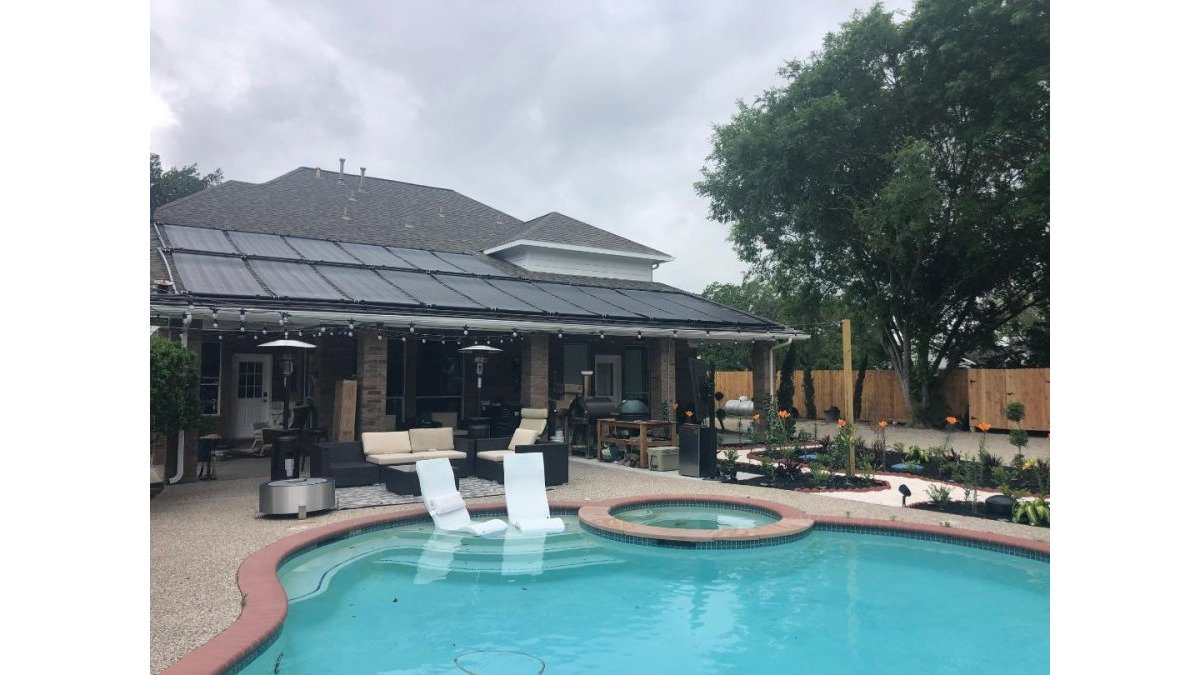
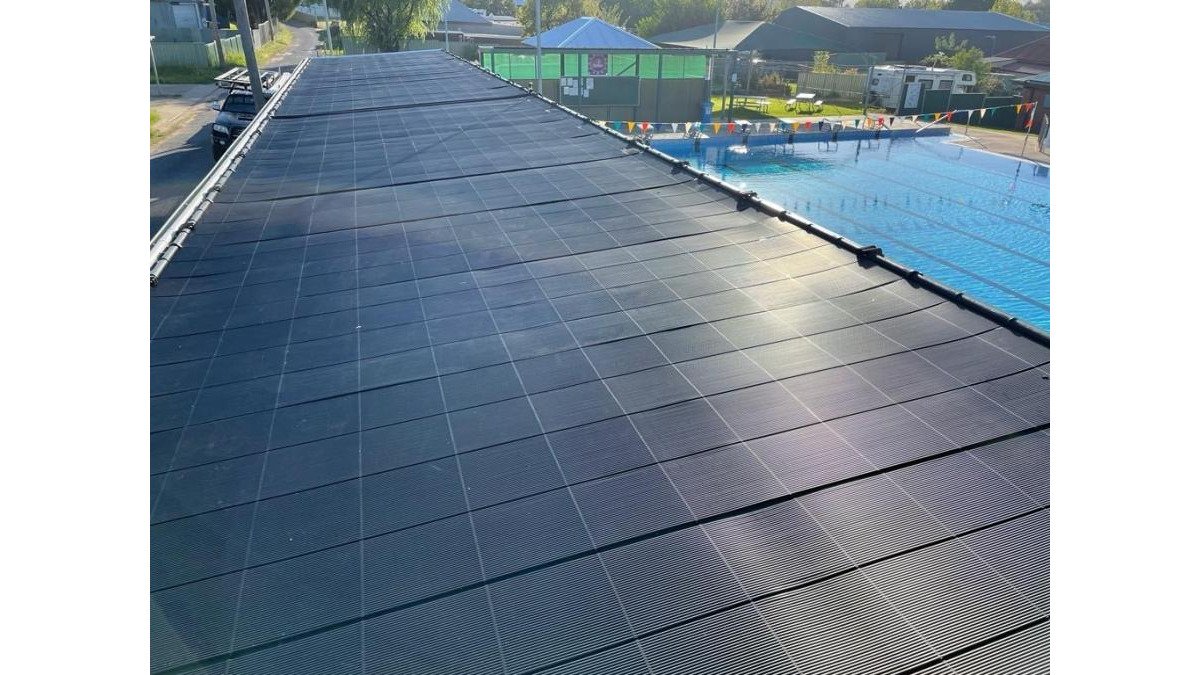
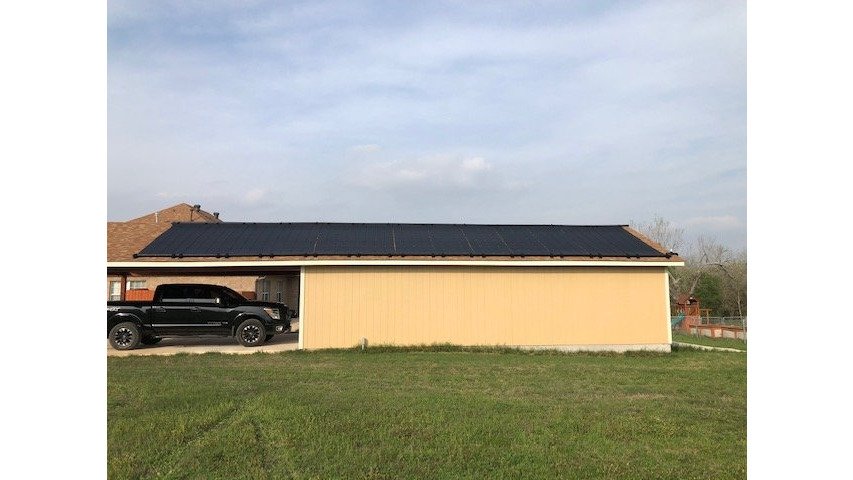
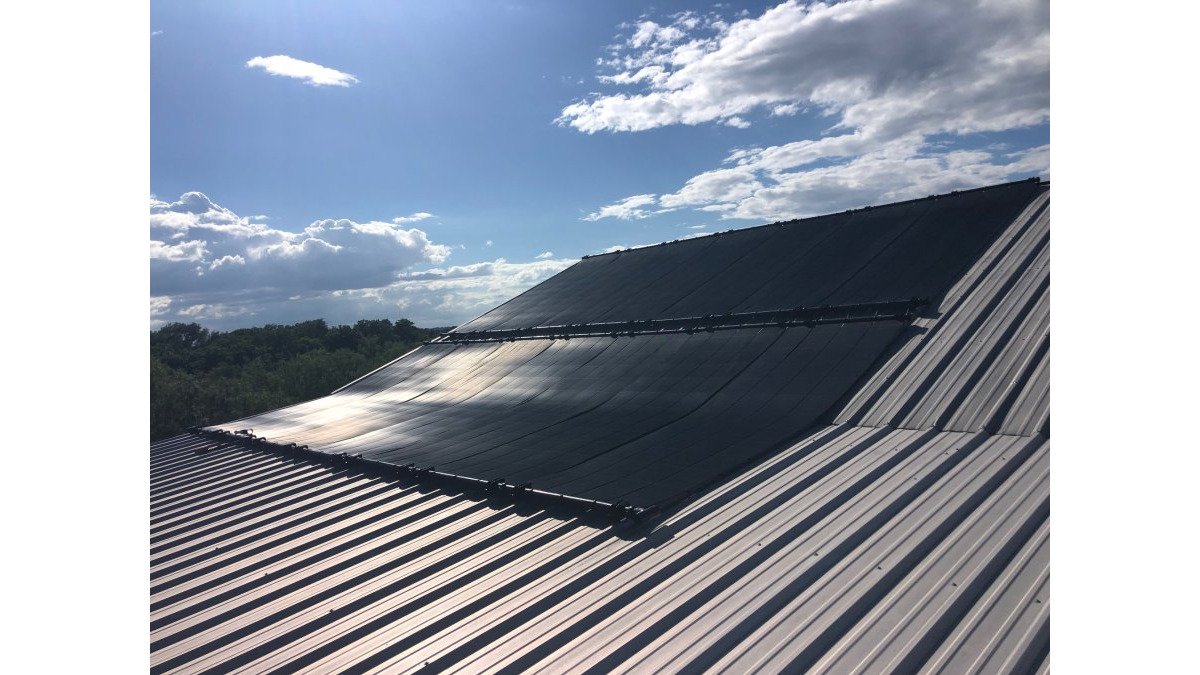
Roof orientation matters too. South-facing roofs collect the most sun. East and west roofs still work but need more panel area to hit the same temperature.
Here is how we adjust the collector estimate based on sun exposure and site conditions.
| Site condition | Collector area (% of surface area) |
|---|---|
| Full sun, covered pool | 50% to 60% |
| Full sun, no cover | 70% to 80% |
| Partial shade or windy site | 90% to 100% |
| Heavy shade most of the day | Solar may not meet your goal |
Collector area as percentage of pool surface area by site condition
Solar Pool Heater Pump Requirements and Flow Rate Checks
Your pump has to move enough water through the collectors, or the panels just sit hot and useless. The target most systems aim for is a flow rate that keeps water moving briskly through every panel.
Check three things before you finalize panel count:
- Flow rate in gallons per minute (GPM): your pump's rated output at the filter
- Head loss: the resistance added by panels, pipe runs, and fittings
- Pump horsepower: whether the current pump can push the extra load
A common mistake is adding panels without checking the pump. Too many collectors on a small pump means weak flow and poor heat transfer. If your pump is near its limit, a variable-speed upgrade often solves it.
Flow Rate Targets by Collector Count
Watch out: a pump rated for high flow at zero head can still fall short once panels, pipe runs, and fittings add resistance. Always read the pump curve at your real operating pressure.
Head Loss and Pipe Sizing
Head loss is the resistance added by panels, pipe runs, and fittings. Every elbow, valve, and long run of pipe adds to it, and too much head loss cuts flow through the collectors.
- Keep pipe runs short: place the array as close to the pump and filter as practical.
- Match pipe size to flow: undersized pipe adds friction and head loss; oversized pipe costs more but moves water more freely.
- Count the fittings: each elbow and valve adds resistance, so a tidy layout with fewer turns performs better than a sprawling one.
Where the panels go changes the pipe run and the head loss. Comparing roof-mounted and ground-mounted collectors helps you settle placement before you lock in flow numbers.
Checking Your Existing Pump
Before you commit to a panel count, confirm the pump can handle the added load:
- Note the pump's rated flow at the filter pressure you run today.
- Add the head loss from the new collectors, pipe, and fittings.
- Re-read the pump curve at the new total head to see the real flow.
- If flow drops below what the array needs, upgrade to a variable-speed pump or add a booster.
A variable-speed pump also lets you dial flow to match the array instead of running full speed all day, which keeps the system quiet and efficient. Sizing the pump and plumbing alongside the collectors is what separates a system that heats well from one that merely looks complete on paper.
Heat Loss, Pool Covers, and Realistic Temperature Goals
A solar pool heater adds heat; a pool cover keeps it. Skip the cover and much of your collected heat leaves overnight, especially on cool, clear nights.
Set a realistic goal. Solar performs best in the warm months and shoulder seasons, and a cover stretches that window further. What solar heating can realistically do in cooler months sets honest expectations before you commit.
Wind steals heat from the surface. A windy site loses more than a sheltered one, which is another reason to size toward the high end of the range.
Get a Free Consultation and Final System Sizing
A calculator gets you close. A site visit gets you right.
Solar pool heating is the smartest way to warm a pool. It uses free sun, needs no maintenance, and pays for itself quickly.
We partner with SolarTEK and back every job with a 100% satisfaction guarantee, and our experts are available 24/7 for repairs. Request a quote and final system sizing and we will turn your measurements into a firm plan.
Sizing a solar pool heater rewards a careful first step. Measure your pool, run the range, then let a professional confirm the panel count against your shade, wind, and temperature goals.
Frequently Asked Questions
Does pool surface area or water volume matter more when sizing a solar pool heater?
Surface area matters more. A solar pool heater works by absorbing sunlight and transferring that heat into the water, and the collector area is matched to the square footage of the pool's surface, not its gallons. Water volume affects how long the pool takes to warm up, but the panel count comes from surface area, climate, and your target temperature. Measure length times width for a rectangle, or use the appropriate formula for round and freeform shapes, then adjust for shade.
How many solar panels do I need for my pool if it is partly shaded?
Shade reduces output, so you generally need more collector area than a fully sunlit pool of the same size. Map the sun across the day and note how many hours the proposed mounting spot stays clear. If a roof section is shaded in the morning but sunny all afternoon, it can still work. A common approach is to add collector area to offset the shaded hours, and to point the panels toward the sun with as little obstruction as possible. An on-site assessment gives the most accurate count.
Can a solar pool heater extend the swimming season in Texas?
Yes. A properly sized solar pool heating system can extend the swimming season by up to nine months in Texas, where sunshine is abundant for most of the year. The key is matching collector area to your pool and setting realistic temperature goals. A pool cover reduces overnight heat loss and helps hold the gains. During the coolest weeks, expect a moderate temperature rise rather than summer-level warmth, and plan your season around what the system can reliably deliver.
What pump flow rate does a solar pool heater need?
Solar pool heating systems are designed around a flow rate that moves the pool's water through the collectors in a reasonable window. Check the panel manufacturer's specification, then confirm your pump can deliver that flow against the added head loss from the panels, plumbing, and mounting height. A variable-speed pump gives you room to tune flow without wasting energy.