 ultimate-guide
Benefits of Solar Pool Heating: A 2026 Guide
Table of Contents
- How Solar Pool Heating Works and Why It Cuts Energy Bills
- Extending Your Swimming Season by Up to Nine Months
- Solar Pool Heating Cost: What Drives the Upfront Investment
- Solar Pool Heater Efficiency: What Affects Performance
- Solar Pool Heating vs Heat Pump: Which Fits Your Pool?
- Solar Pool Heating Pros and Cons for Homeowners
- ROI, Climate Suitability, and Smart Home Integration
- Frequently Asked Questions
Last Updated: October 9, 2026
How Solar Pool Heating Works and Why It Cuts Energy Bills
Solar pool heating is the process of routing pool water through roof-mounted solar collectors, where it absorbs heat from sunlight before returning to the pool warmer than it left. Unlike gas heaters and electric resistance heating, this system uses the sun's thermal energy instead of burning fuel.
The benefits of solar pool heating start with your utility bill. Once the collectors are in place, the sun does the heating work that a gas heater or heat pump was being paid to do.
The Role of Solar Collectors and Water Circulation
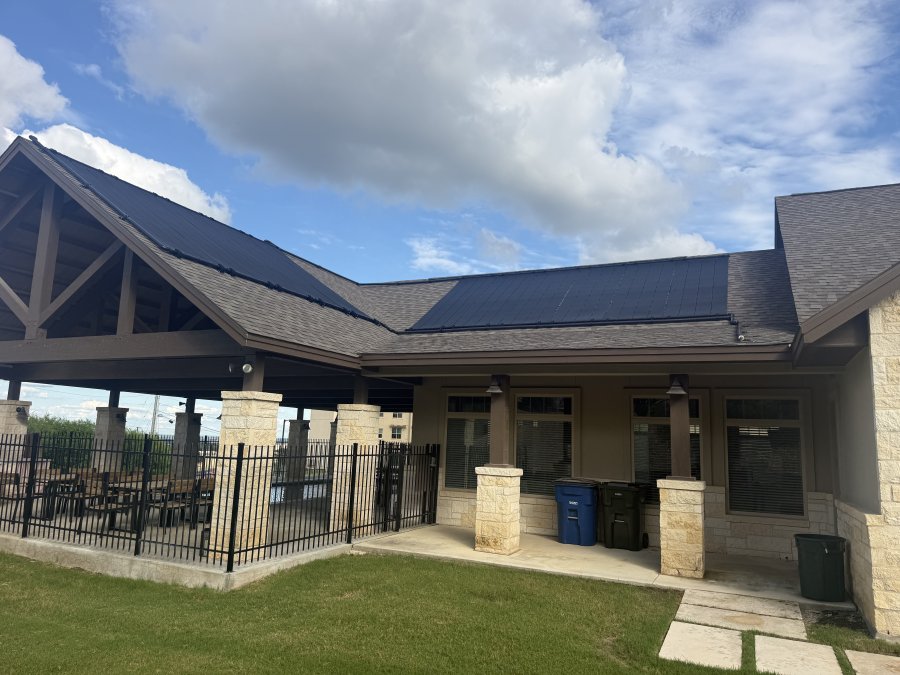
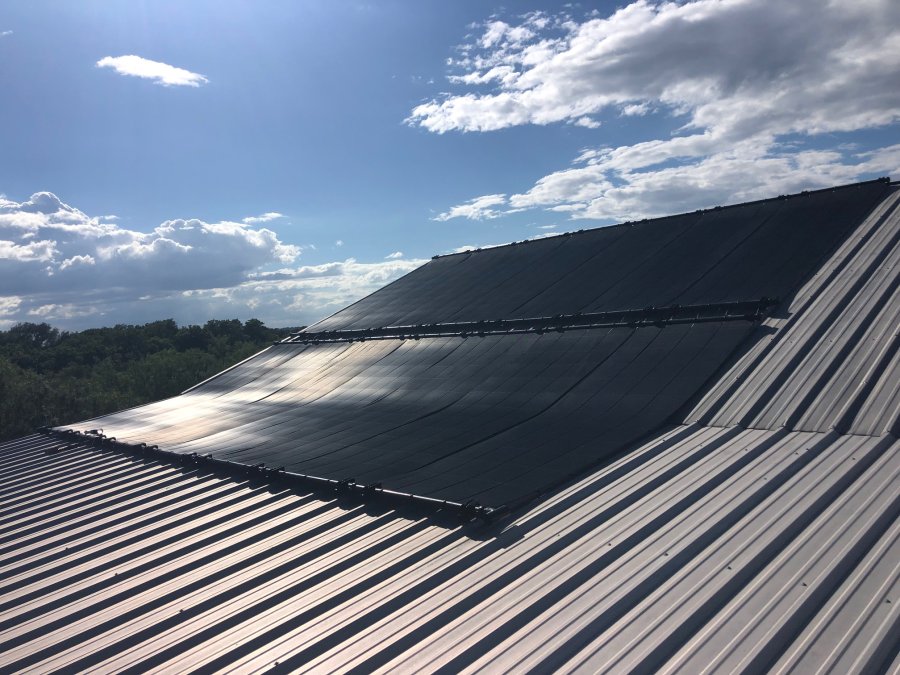
Solar collectors are flat panels, usually made of black plastic or rubber, that absorb UV radiation and transfer that heat to water passing through them. Your existing pool pump pushes water through the collectors and back into the pool, so the system works with equipment you already own. A thermostat control decides when circulation should run, typically when the collector surface is warmer than the pool water.
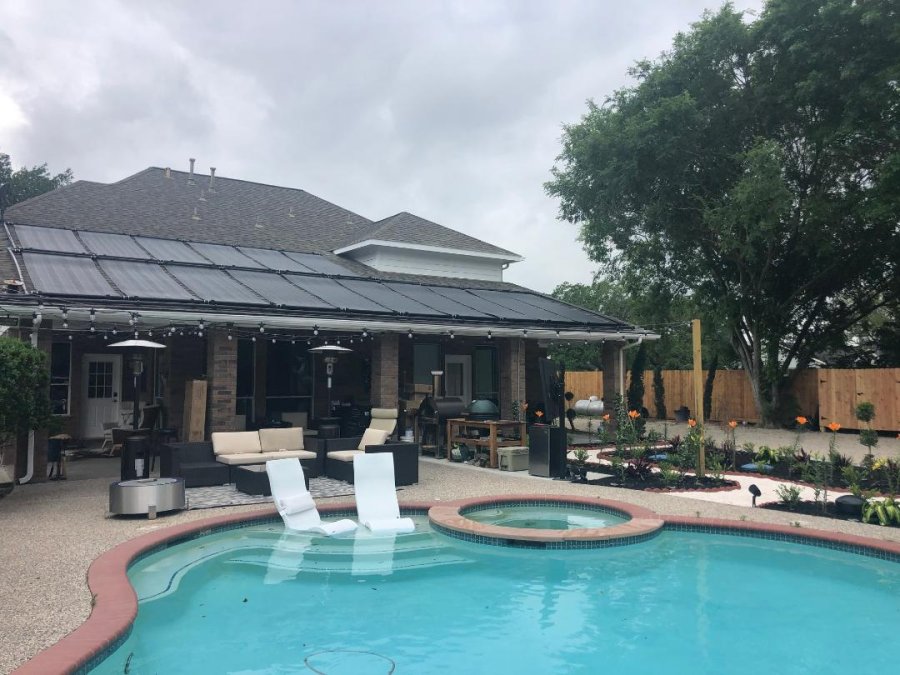
A solar cover changes the math further. According to the U.S. Department of Energy's guidance on solar pool heating, covering a pool when it is not in use reduces both water evaporation and heat loss, which means the collectors do not have to replace as much lost warmth the next day.
Extending Your Swimming Season by Up to Nine Months
The most tangible benefit of a solar system is swimming season extension. In a climate like ours, a properly sized system paired with a solar cover can keep pool water temperature comfortable for roughly nine months of the year instead of the three or four a gas heater budget typically allows.
That difference is not just about comfort. It changes how you use the pool: morning swims in spring, evening swims in fall, and a pool that stays open through stretches when ambient temperature would normally shut it down. For homeowners weighing solar pool heating pros and cons, this is usually the benefit that decides the purchase.
Solar Pool Heating Cost: What Drives the Upfront Investment
Solar pool heating cost is driven by four measurable inputs, and once you know them you can estimate your own project before an installer ever steps on the property: collector surface area, mounting location and racking, plumbing distance from the pool pump, and whether your existing pump can handle the added flow.
Collector surface area is the dominant line item. Most residential systems are sized so that collector area equals 50% to 100% of the pool's surface area, the lower end for warm, sunny climates and the higher end for cooler climates or year-round swimming.
Mounting location is the second driver. A south-facing roof with unobstructed sun is the cheapest place to put collectors because it needs minimal racking and short plumbing runs. Ground-mounted arrays or east/west roof orientations cost more because they require additional racking, longer pipe runs, and sometimes a booster pump.
Plumbing distance matters more than most homeowners expect. Every additional foot of pipe between the pool pump and the collectors adds material, labor, and heat loss. Installers typically try to keep the run under about 30 feet; beyond that, insulation and pipe sizing become a real cost line.
Finally, your existing pump and filter. Many pools already have a pump that can push water through collectors, but undersized pumps need to be replaced or supplemented.
A realistic way to frame the investment: compare the installed cost against the annual heating bill you are eliminating. If a gas heater costs several hundred dollars per season to run and a solar system eliminates most of that, the payback math is straightforward, but only if the system is sized correctly.
We recommend getting an on-site assessment rather than a phone quote. Pricing depends on your roof layout, sun exposure, and pool volume, and Solar Pool Heating Texas provides free consultations so you can see the actual numbers before committing.
Solar Pool Heater Efficiency: What Affects Performance
Solar pool heater efficiency is governed by four factors: collector surface area relative to pool volume, sun exposure on the mounting location, ambient temperature, and how well the pool retains heat overnight. Thermal efficiency drops when any one of these is weak.
Cloudy days are the most common concern. Solar collectors still gather diffuse UV radiation through cloud cover, just at a lower rate, so the system keeps working but produces less heat. A solar cover compensates by slowing heat loss during those stretches.
Wind is the quiet efficiency killer. A pool exposed to steady wind loses heat from the surface faster than collectors can replace it, which is why windbreaks and covers matter as much as panel count. If you are coming from a gas heater, expect a different rhythm: solar heats gradually and holds temperature rather than blasting heat on demand.
Solar Pool Heating vs Heat Pump: Which Fits Your Pool?
The solar-versus-heat-pump decision comes down to three measurable factors: your climate's available sunlight, your available mounting space, and how long you plan to own the home. Operating cost is the headline, but it is not the whole story.
A heat pump runs on electricity and works day or night, in sun or shade. That flexibility is its main advantage. The trade-off is that it draws power every hour it operates, and in cooler ambient temperatures its coefficient of performance drops, meaning it produces less heat per kilowatt-hour and costs more to run.
Climate is the first filter. In sunny, warm climates with long swim seasons, solar is almost always the lower lifetime-cost choice. In cooler or heavily shaded climates, a heat pump may be the only system that can reliably hold temperature, because solar collectors need direct sun to perform.
Mounting space is the second filter. Solar needs roof or ground area roughly equal to 50% to 100% of the pool's surface area. If your property cannot accommodate that, solar cannot be sized correctly, and a heat pump becomes the practical answer regardless of climate.
Ownership horizon is the third filter. Solar's advantage is in lifetime cost, not upfront cost. If you plan to stay in the home long enough to recover the higher installation cost through eliminated heating bills, solar wins.
| Factor | Solar Pool Heating | Heat Pump |
|---|---|---|
| Upfront investment | Higher | Lower |
| Operating costs | Minimal after install | Ongoing electricity use |
| Works at night | No, needs sunlight | Yes |
| Works in shade | No | Yes |
| Season extension | Up to nine months with cover | Depends on run time and ambient temp |
| Maintenance | Low, mostly pump and panels | Compressor and refrigerant service |
| Space required | 50%-100% of pool surface area | Minimal |
| Best for | Sunny climates, long-term owners | Shaded properties, quick installs, rentals |
For most homeowners in sunny climates who plan to stay in the home, solar wins on lifetime cost. For a rental property, a heavily shaded yard, or a property without adequate mounting space, a heat pump may be the more practical choice.
the U.S. Department of Energy's consumer resources on pool heating is worth reading before you sign anything, since it lays out how solar, heat pump, and gas systems compare on operating cost.
Solar Pool Heating Pros and Cons for Homeowners
The pros are straightforward: near-zero operating costs after installation, a smaller carbon footprint than gas or electric resistance heating, low maintenance, and a system that typically lasts decades. The cons are equally real: a higher upfront investment, dependence on sunlight, and the need for adequate roof or ground space.
What most guides miss is that the cons are manageable. Shade can be offset with ground-mounted collectors. Cloudy stretches can be offset with a cover. The upfront cost can be weighed against years of eliminated utility bills. The pros and cons are not symmetrical; the trade-offs are mostly about patience and planning, not performance.
ROI, Climate Suitability, and Smart Home Integration
Payback period is where solar pool heating separates itself from every other heating method. Once installed, the system's operating cost is essentially the electricity to run a pump you were already running. Every month that replaces a gas or electric heating bill shortens the payback window.
Payback Period and Resale Value
A typical system pays for itself over a span of years through eliminated heating costs, and the equipment continues working long after that point. Energy-efficient pool upgrades also tend to be viewed favorably by buyers, since they signal lower ongoing ownership costs. According to ENERGY STAR's guidance on energy-efficient home improvements, efficiency upgrades are among the features buyers weigh when evaluating a home's true cost of ownership.
System Sizing and Climate Considerations
System sizing starts with pool surface area, not pool volume. As a rule of thumb, collector surface area should roughly match 50% to 100% of the pool's surface area, with the higher end for cooler climates and year-round use. Your climate determines how much of that range you need.
Smart home integration is the newest angle. Modern thermostat controls can connect to pool automation systems, letting you adjust target water temperature from a phone and schedule circulation around weather forecasts. This is the piece most installers still skip, and it is the one that quietly improves efficiency the most.
the U.S. Department of Energy's consumer resources on pool heating is worth reading before you sign anything, since it lays out how solar, heat pump, and gas systems compare on operating cost.
Frequently Asked Questions
How much does it cost to heat a 20,000-gallon pool with solar?
The upfront cost of solar pool heating depends on collector surface area, roof space, and system sizing for your pool. For a 20,000-gallon pool, you typically need collectors sized at 50-100% of the pool's surface area. Solar Pool Heating Texas does not publish fixed prices because every installation is different. Request a free consultation for a quote tailored to your pool and roof.
What are the downsides of solar pool heating?
The main downsides are the upfront investment and reliance on sunlight. On cloudy days or during winter, a solar pool heater produces less heat than a gas heater or heat pump. You also need adequate roof or ground space for collectors. However, operating costs are low and maintenance is minimal compared to gas or electric resistance heating.
Can solar pool heating extend the swimming season?
Yes. A properly sized solar pool heating system can extend your swimming season by up to nine months, depending on climate and system design. In Texas, homeowners often swim comfortably from early spring through late fall. Pairing solar collectors with a solar cover reduces water evaporation and helps retain heat overnight.
Is solar pool heating worth the upfront cost?
For many homeowners, yes. Solar pool heating can significantly reduce or eliminate monthly pool heating bills, and the system typically pays for itself over time through lower operating costs. It also increases property value and reduces your carbon footprint. The payback period varies by system size, utility rates, and how often you heat your pool.
The real challenge with solar pool heating is not deciding whether it works, it is getting the sizing, placement, and controls right for your specific pool. Solar Pool Heating Texas handles that assessment for residential and commercial properties, with a partnership with SolarTEK behind the equipment, a 100% satisfaction guarantee, and a team available 24/7 for emergency repairs. Get a free consultation with Solar Pool Heating Texas and find out how much of your swimming season you can reclaim.