 how-to
Extend Swimming Season in Texas: A Practical Guide
Table of Contents
- Why Extending Your Swimming Season Matters in Texas
- Understanding Pool Water Temperature and Swimmer Comfort
- Solar Pool Heating: Your Primary Season-Extension Tool
- Using a Pool Cover to Retain Heat and Reduce Evaporation
- Opening Your Pool Earlier in Spring
- Keeping Your Pool Open Later Into Fall
- How to Winterize a Pool in Texas Before Season Closes
- Combining Heating, Covers, and Wind Protection for Maximum Results
- Frequently Asked Questions
Last Updated: October 10, 2026
Why Extending Your Swimming Season Matters in Texas
Texas pool owners face a unique challenge: a long but uneven swimming season. Summer heat is intense, but spring and fall water temperatures drop fast. Most homeowners close their pools by November and don't reopen until May. That's only six months of comfortable swimming.
Extending your swimming season is practical and achievable with the right heating, insulation, and maintenance strategies. At Solar Pool Heating Texas, we help homeowners stretch their season, delivering more days in the water and lower energy costs year-round.
The real benefit goes beyond comfort. When you extend swimming season in Texas, you reduce per-use heating costs. A pool that runs ten months costs less to heat per day than one running six months with peak summer usage. You also increase your home's usable outdoor space, which appeals to buyers if you ever sell.
Understanding Pool Water Temperature and Swimmer Comfort
Comfort depends on activity level and personal preference, not a fixed temperature.
For lap swimming and exercise, water temperature should be 78-82°F. At this range, swimmers stay warm during activity but don't overheat. For casual swimming and families with children, 80-85°F feels most comfortable. Below 75°F, most swimmers feel cold within 15-20 minutes.
Texas spring water temperatures hover around 65-70°F in March, reaching 72-75°F by April. Fall temperatures drop from 85°F in September to 75°F by November. Without heating, your pool is too cold for comfortable swimming outside summer months.
Seasonal temperature swings are dramatic, a cold snap can drop water temperature 10-15°F overnight. Wind exposure and shade accelerate heat loss. Understanding these patterns helps you choose the right season-extension strategy.
Solar Pool Heating: Your Primary Season-Extension Tool
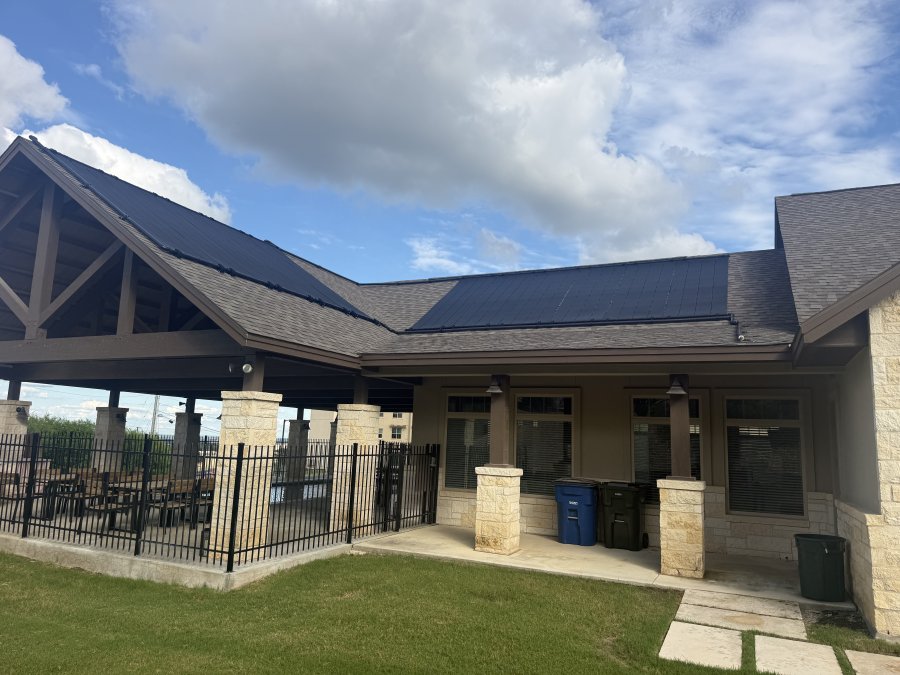
Solar pool heating is the most cost-effective way to extend swimming season in Texas. With 220+ sunny days per year, solar panels are highly efficient at capturing the sun's energy and transferring it directly to your pool water.
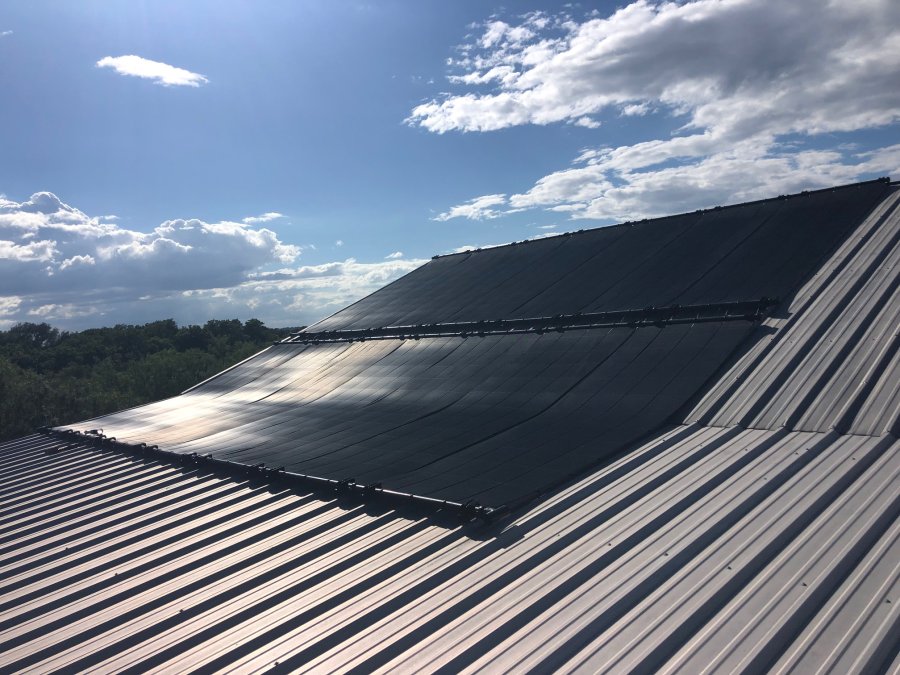
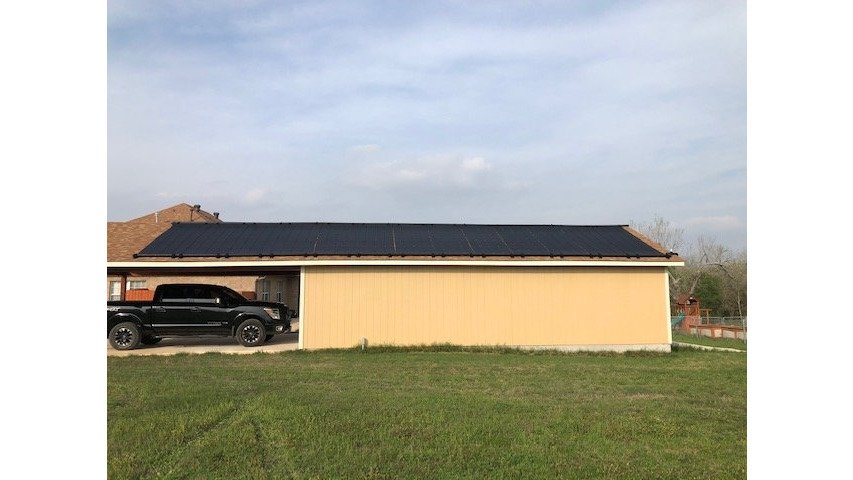
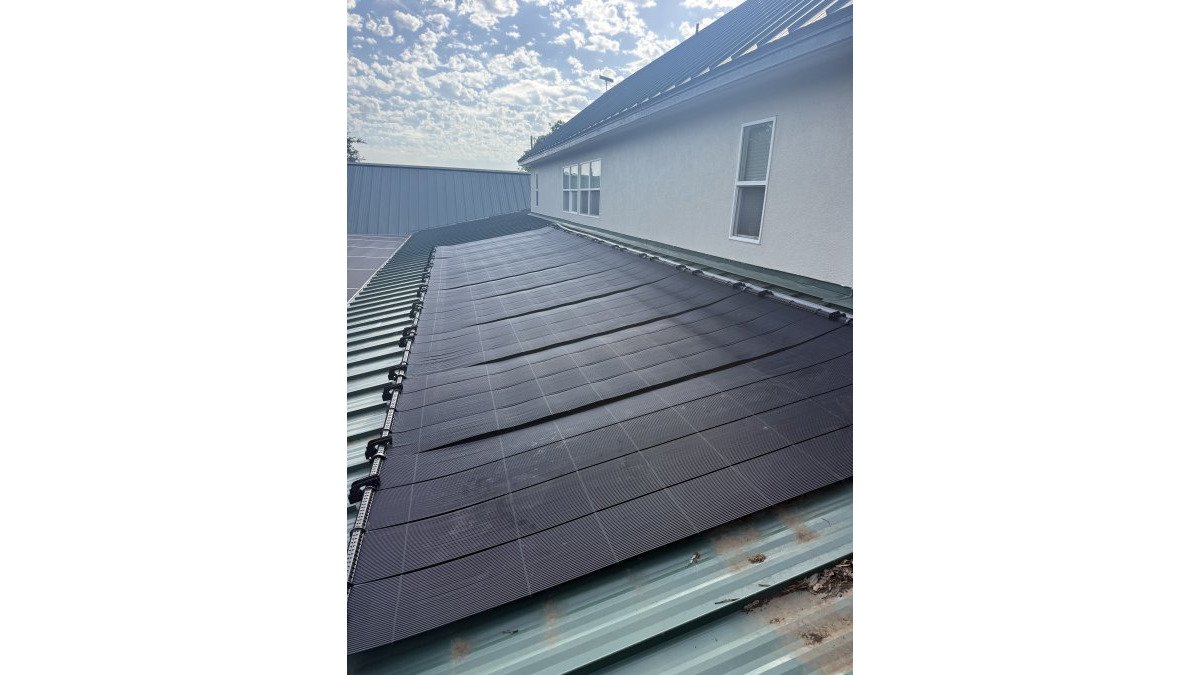
Water flows through solar collector panels mounted on your roof or ground, where the sun heats it before returning to your pool. On cloudy days, the system still produces heat, though less efficiently.
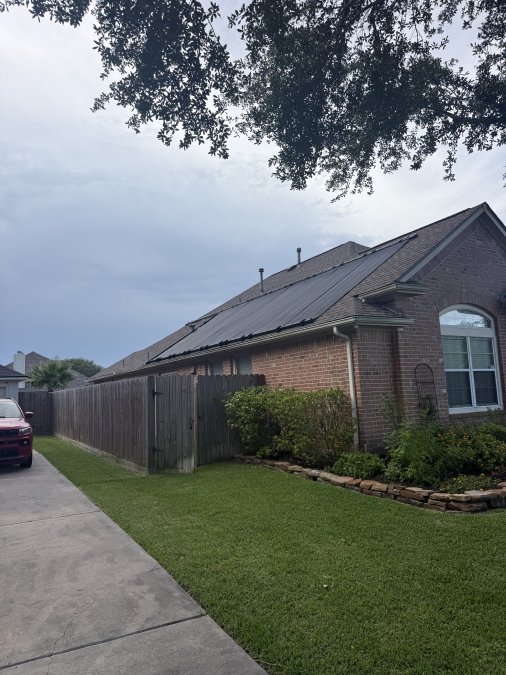
Solar heating raises water temperature 6-12°F above ambient, often reaching the 78-82°F comfort range in spring and fall. The system requires minimal maintenance, lasts 15-20 years, and has nearly zero operating costs.
Solar Pool Heating Texas partners with SolarTEK to deliver systems that extend your swimming season by up to nine months, with professional installation ensuring correct panel angles.
The main limitation of solar heating is weather dependency. For consistent results, combine solar panels with a pool cover to retain heat overnight.
Using a Pool Cover to Retain Heat and Reduce Evaporation
A pool cover is your second essential tool, trapping heat at the water surface and blocking wind-driven evaporation.
Without a cover, your pool loses 1-2°F nightly through evaporation; a cover reduces that to 0.5°F or less. Over a season, this adds up to dozens of degrees of retained heat. Covers also reduce water loss by 50%, cutting refilling and chemical adjustment.
Bubble covers are affordable and effective; solar covers add dark material to absorb extra daytime heat. Both work best overnight and on cloudy days.
Use your cover every night from March through May and September through November to cut heating needs by 30-40% during shoulder seasons.
Opening Your Pool Earlier in Spring
Spring opening timing depends on your region's frost-risk window and water-temperature trajectory. Opening too early can waste heating energy or expose equipment to freeze damage.
North Texas (Dallas-Fort Worth area): Last freeze typically occurs in mid-April. Open in late March or early April once nighttime lows stay above 40°F. Water reaches 75°F by early May with solar heating and a cover.
Central Texas (Austin area): Last freeze usually occurs by early April. Open in mid-March; water reaches 75°F by late April with solar heating and a cover.
Gulf Coast (Houston, Corpus Christi area): Freezes are rare after mid-March. Open in early March; water reaches 75°F by mid-April with minimal heating.
South Texas (San Antonio area): Last freeze typically by late March. Open in mid-March; water reaches 75°F by late April with solar heating.
The opening checklist: Remove your winter cover and inspect water clarity; run your filter 24-48 hours if cloudy. Test and adjust pH (7.2-7.6), alkalinity (80-120 ppm), and chlorine (1-3 ppm).
Install a solar cover immediately to accelerate heating. If you have a gas or heat pump heater, run it during the day. Expect 1-2°F daily gain with solar alone; a heater adds 3-5°F per day.
Match your opening date to your region's last typical freeze date, then allow two weeks to prepare equipment and chemistry.
Keeping Your Pool Open Later Into Fall
Most pool owners close in fall, but Texas weather stays mild into November. You can extend swimming season in Texas by keeping your pool open through Thanksgiving with minimal extra effort.
Water temperature drops from 85-88°F in September to 72-75°F by November. A pool cover and heater keep water swimmable through early November.
In August, clean your filter and check equipment. Plan to run your heater daily starting mid-September and ensure solar panels are clean.
In late October, add your pool cover every night to trap daytime heat. By November, use the cover 24/7 except during swimming to maintain 75-78°F water.
The decision to stay open late depends on your tolerance for cooler water and heating costs.
How to Winterize a Pool in Texas Before Season Closes
Winterizing protects equipment and prevents damage during freeze events. Proper winterization takes a few hours and prevents expensive repairs.
Drain your pool to 12-18 inches below the skimmer to prevent freezing in skimmer lines. Drain all water from your heater, filter, and pump.
Add winterizing chemicals to prevent algae growth. Use a kit designed for your pool size and follow instructions carefully to avoid staining or algae blooms.
Cover your pool with a heavy-duty winter cover, securing it tightly to prevent water pooling and freezing.
Winterization takes 3-4 hours and costs minimal compared to the thousands in equipment protection. Winterize by mid-December.
Combining Heating, Covers, and Wind Protection for Maximum Results
The most effective way to extend swimming season in Texas is layering three strategies: solar heating, pool covers, and wind protection.
How heat loss works: Your pool loses heat through evaporation (50-70%), radiation, conduction, and wind-driven convection. A pool with no cover loses 1-2°F nightly; with a cover, only 0.5°F. Wind exposure doubles losses.
Solar heating as your baseline: A typical residential system (200-400 sq ft) raises water temperature 6-12°F above ambient in spring and fall. Operating cost is near zero, roughly $10-30/month for pump electricity.
Pool covers reduce heating demand: A cover prevents 50-70% of nighttime heat loss, equivalent to 20-40 days of free heating per season. Cost is $50-150/season.
Wind protection and landscaping: A pool exposed to prevailing winds loses 2-4°F more daily than a sheltered pool.
Heating method comparison for extended seasons:
-
Solar heating alone (March-October): Upfront cost $3,000-6,000. Operating cost $10-30/month. Heat gain 6-12°F. Best for shoulder seasons when sun is strong. Cannot maintain 75°F+ in November or during cloudy stretches. Suitable for: budget-conscious owners in Central and South Texas who are willing to accept cooler water in late fall.
-
Gas heater (November-March or all-season backup): Upfront cost $2,000-4,000. Operating cost $50-150/month depending on usage and natural gas prices (currently $8-12 per million BTU in most areas). Heat gain 10-20°F per day. Fast heating. High fuel cost. Suitable for: owners who want to swim in November or during cold snaps and can absorb higher monthly utility bills.
-
Heat pump heater (March-November, moderate climates): Upfront cost $4,000-8,000. Operating cost $30-80/month. Heat gain 5-10°F per day. More efficient than gas in mild weather (above 50°F ambient). Slower than gas but cheaper to run. Suitable for: Central and South Texas owners who want consistent heating without peak gas bills; less effective in North Texas where winter temperatures drop below 40°F.
-
Combination approach (solar + cover + gas backup): Upfront cost $6,000-10,000 (solar system + gas heater). Operating cost $20-60/month depending on season. Heat gain 8-15°F with layered methods. Maintains 75-80°F from March through November with minimal gas use. Suitable for: owners who want maximum season extension and are willing to invest upfront to minimize operating costs.
Practical seasonal operation example (Central Texas, 15,000-gallon pool):
- March-April: Solar heating + cover every night. No additional heater. Water reaches 75°F by late April. Cost: $15/month (pump electricity only).
- May-August: Solar heating, no cover needed. Water stays 80-88°F. Cost: $10/month.
- September-October: Solar heating + cover every night. Water stays 75-82°F. Cost: $15/month.
- November: Solar heating + cover + gas heater running 4-6 hours daily. Water stays 72-76°F. Cost: $60-80/month (gas heater).
- Total seasonal cost (9 months): $200-250 with solar + cover; $350-450 if adding gas heater for November.
Compare this to a pool heated year-round with gas only: $80-120/month × 12 months = $960-1,440 annually. The layered approach saves $700-1,000 per year while extending your season by three months.
Wind protection ROI: If your pool is exposed to prevailing winds, adding a windbreak (fence or dense shrubs on the west or north side, depending on your location) reduces heating demand by 10-15%. For a pool using a gas heater 60 days per year, this saves roughly $100-150 in fuel annually. A $1,000 fence pays for itself in 7-10 years while also providing privacy and aesthetic value.
The strongest approach for most Texas homeowners is starting with solar heating and a cover, then adding a gas or heat pump heater only if November swimming is a priority.
Frequently Asked Questions
What is the best pool temperature for swimming in Texas?
Most swimmers find 78-82°F comfortable for recreational swimming. Water below 70°F becomes uncomfortable for extended use, while 85°F+ feels warm but may promote algae growth. Solar pool heating helps maintain your preferred temperature range throughout spring, fall, and winter months, extending your swimming season significantly.
How much can a pool cover help retain heat?
A quality pool cover reduces heat loss by 50-75% and cuts evaporation by up to 95%. Bubble covers and thermal blankets are most effective, trapping solar heat during the day and preventing nighttime cooling. Using a cover overnight during spring and fall, combined with solar heating, dramatically extends your season.
Does solar pool heating really extend the swimming season in Texas?
Yes. Solar pool heating can extend your season by several months. By raising water temperature 5-15°F above ambient conditions, solar systems make spring and fall swimming comfortable and allow limited winter use in milder Texas regions.
When should I close my pool for winter in Texas?
Most Texas pools close between November and December, depending on your region and winter severity. Central Texas and Gulf Coast areas may close later (December-January) than North Texas. Before closing, balance water chemistry, lower the water level, drain equipment, and winterize pipes to prevent freeze damage.
Extending your swimming season in Texas doesn't require expensive equipment or complicated maintenance. Solar heating, pool covers, and smart timing work together to keep your water comfortable from early spring through late fall. Most Texas homeowners find that nine months of swimming far outweighs six. Solar Pool Heating Texas helps you design a system that fits your budget and extends your season reliably. Get a free consultation today and discover how much longer you can enjoy your pool.