 Comparison
Ballasted vs Roof-Mounted Solar Pool Heaters for Flat Roofs
Last Updated: November 6, 2026
Quick Summary
A flat roof solar pool heater is mounted either ballasted, using weighted pads or trays that keep the waterproof layer intact, or attached with brackets, straps, or sealed penetrations into the roof structure. Choose ballasted for membrane or rolled roofs with moderate wind, and attached for structural decks or high wind exposure.
- Ballasted systems suit single-ply membrane, built-up gravel, modified bitumen, and rolled roofing.
- Attached systems work best on standing-seam metal, structural decks, shingle, and exposed framing.
- Build a slight tilt into the mounting so panels shed water and drain back to the pool.
- Edges, corners, and parapets see higher uplift, so plan hold-down and layout together.
- Confirm the roof structure can carry panels, water weight, and ballast before installing.
Table of Contents
- Flat Roof Solar Pool Heater Mounting: Ballasted vs Attached Systems Compared
- Ballasted Solar Pool Heater Mounting System: How It Works and When to Choose It
- Solar Pool Heater Roof Attachment Methods: Brackets, Straps, and Penetrations
- Solar Pool Heater Installation on a Low-Slope Roof: Tilt, Orientation, and Drainage
- DIY Solar Pool Heater Installation on a Flat Roof: Step-by-Step Guide
- Roof Compatibility, Structural Load, and Wind Resistance Checks
- Choosing Your Flat Roof Solar Pool Heater Installation Approach
- Frequently Asked Questions
Flat Roof Solar Pool Heater Mounting: Ballasted vs Attached Systems Compared
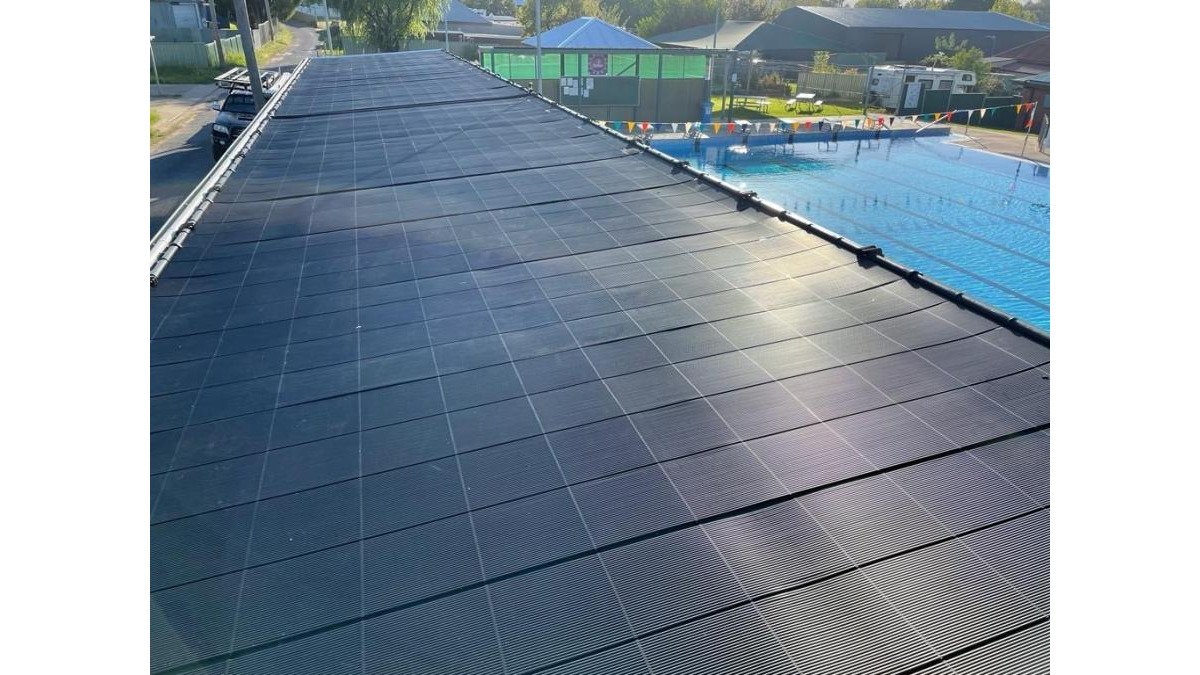
Solar pool heater installation on a flat roof comes down to one decision: hold the collectors down with weight, or fasten them to the roof structure. That choice shapes everything from drainage to how much roof work the job involves.
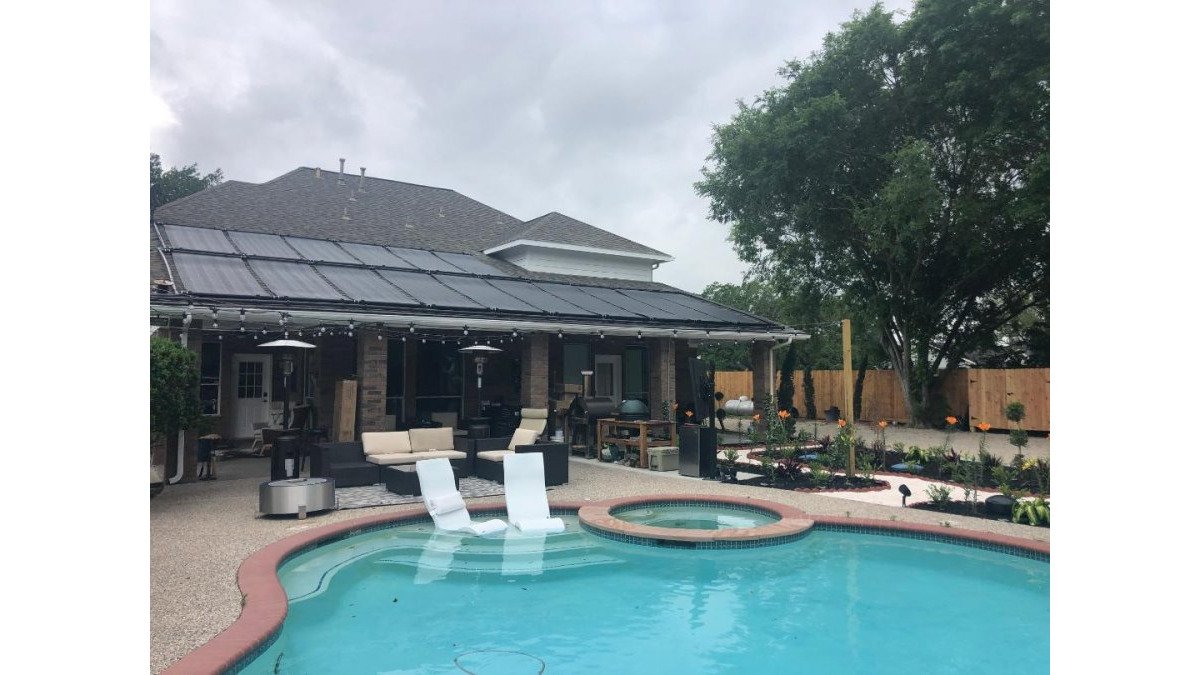
Flat and low-slope roofs are common on Texas homes and can host solar collectors when the mounting is planned properly.
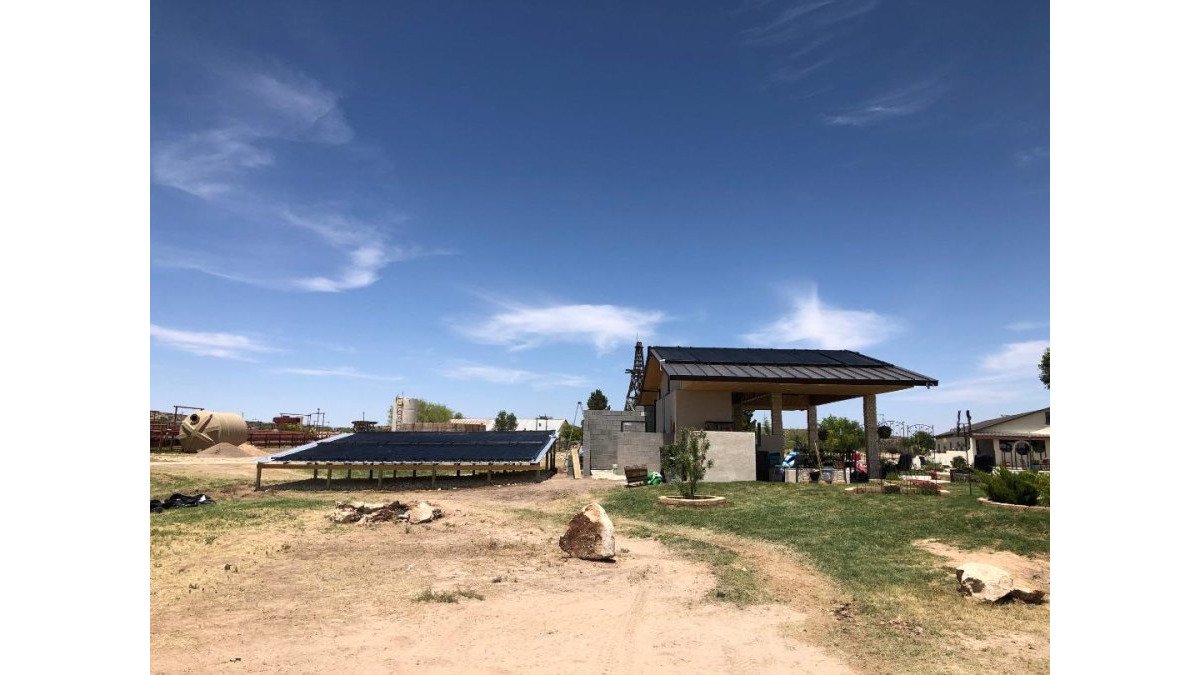
A flat roof solar pool heater system works best when the mounting method matches the roof surface, the wind exposure, and the drainage path.
The useful comparison breaks each approach down by the factors that decide the job: roof compatibility, wind resistance, drainage, serviceability, and long-term roof impact.
| Factor | Ballasted System | Attached System |
|---|---|---|
| Roof penetration | None | Fasteners or seam clamps through or onto the surface |
| Best roof types | Single-ply membrane, built-up with gravel, modified bitumen, rolled roofing | Standing-seam metal, structural deck, shingle, exposed framing |
| Wind resistance | Depends on ballast weight, pad friction, and shielding; weakest near edges and corners | High when fasteners and straps are sized for the wind zone |
| Drainage | Slight tilt must be built into the tray or pad stack | Tilt set by bracket height and rail adjustment |
| Serviceability | Panels lift off for roof service or replacement | Requires unfastening hardware to clear the roof |
| Roof leak risk | Very low, since the waterproof layer stays intact | Depends entirely on flashing and seal quality |
| Roof surface wear | Pads and slip sheets protect the membrane; gravel must be managed | Penetrations must be re-flashed; seam clamps must not crush the seam |
| Best when | Membrane roof, moderate wind, panels may need to come up later | Structural deck or metal roof, high wind exposure, long-term fixed array |
What the table does not show
Drainage is the hidden differentiator. A ballasted tray sits close to the roof, so the installer must build drain slope into the pad stack or tray.
Serviceability cuts both ways. Ballasted panels lift off easily for roof repair or replacement.
Wind exposure is not uniform across one roof. Edges, corners, and parapets see higher uplift than the interior field.
Lifecycle matters more than install day. Ballasted systems avoid roof penetrations, so the waterproof layer and its warranty stay intact.
Solar pool heating is a strong way to heat a pool, and more Texas pool owners are choosing it over gas or electric heating.
Below, we compare both approaches, then walk through installation steps and the checks that protect your roof.
Ballasted Solar Pool Heater Mounting System: How It Works and When to Choose It
A ballasted solar pool heater mounting system holds collector panels in place with weighted pads or trays instead of fasteners. The panels rest on mounting pads, and the assembly's weight, sometimes supplemented with ballast blocks, keeps everything anchored.
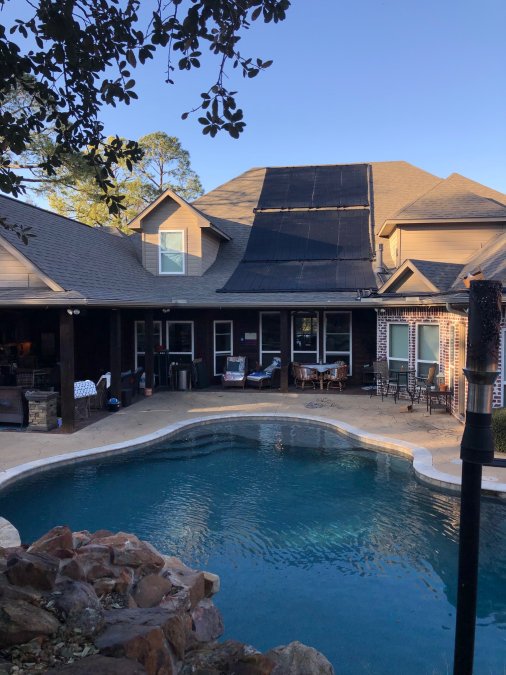
This approach suits membrane roofs, rolled roofing, and tar-and-gravel surfaces where drilling holes is undesirable. Nothing pierces the membrane, so the waterproof layer stays intact.
Choose ballasted mounting when:
- Your roof surface is a membrane or rolled product
- Wind exposure is moderate, with shielding from nearby structures
- You want panels that can be lifted for roof service or replacement
- The roof structure can carry the added weight of panels, water, and ballast
Ballast weight adds to the roof load, so the structure should be confirmed to handle it first.
Solar Pool Heater Roof Attachment Methods: Brackets, Straps, and Penetrations
Solar pool heater roof attachment methods fall into three families: brackets, straps, and direct penetrations. Each fastens the collector to the roof structure rather than relying on weight.
Mounting brackets bolt to the roof deck and hold panel rails above the surface, creating a small air gap that aids drainage.
Straps wrap over or around panels and tie into anchored points.
Direct penetrations drive fasteners through the roof surface into framing. Every hole must be sealed correctly, and this is where roof leaks originate when work is rushed.
A fastener sealed with the wrong sealant, or driven in at an angle, can open a slow leak that shows up months later.
Solar Pool Heater Installation on a Low-Slope Roof: Tilt, Orientation, and Drainage
Solar pool heater installation on a low-slope roof succeeds or fails on three details: tilt, orientation, and drainage.
Tilt. Flat roofs need a slight pitch built into the mounting so panels face the sun and shed water. A few degrees is often enough, set by your installer based on roof and panel type.
Orientation. Collectors generally perform best facing south, with east and west acceptable at reduced output. Shade from trees, parapets, and equipment matters more than a few degrees of direction.
Drainage. When the pump shuts off, water left in the panels must drain back to the pool.
If panels sit level with no drain path, water pools inside and shortens panel life.
DIY Solar Pool Heater Installation on a Flat Roof: Step-by-Step Guide
Total Time: A weekend for a small system, longer for a full roof array Difficulty: Intermediate
The general sequence for a flat roof installation is outlined below:
- Assess the roof structure. Confirm the deck can carry panels, water weight, and ballast or fasteners.
- Map sun exposure. Track shade across the roof through the day and mark the clearest south-facing zone.
- Choose the mounting method. Ballasted for membrane roofs, attached for structural decks.
- Set the tilt and drain path. Pitch panels slightly so they empty when the pump stops.
- Mount panels and rails. Space panels to allow service access and airflow.
- Run plumbing. Match pipe diameter to your pool pump's flow rate to avoid starving the system.
- Connect to the existing pump and filter loop. Most systems tie into the pool's current circulation.
- Pressure-test and check flow. Confirm water moves through every panel with no air pockets.
- Run a full heating cycle. Watch the temperature rise and confirm the drain works when the pump shuts off.
If you want the broader picture of how these steps fit a full residential job, our guide on residential pool solar panel installation walks through the complete process.
Roof Compatibility, Structural Load, and Wind Resistance Checks
Roof compatibility decides which mounting method is even possible, and it is the check most homeowners underestimate. A membrane roof, a built-up roof with gravel, a standing-seam metal roof, and a structural deck each behave differently under panels, ballast, and wind.
Roof-by-roof compatibility
Single-ply membrane (TPO, PVC, EPDM). Ballasted mounting is the natural fit because nothing pierces the waterproof layer.
Modified bitumen and rolled roofing. These surfaces tolerate ballasted trays well, but they soften in summer heat.
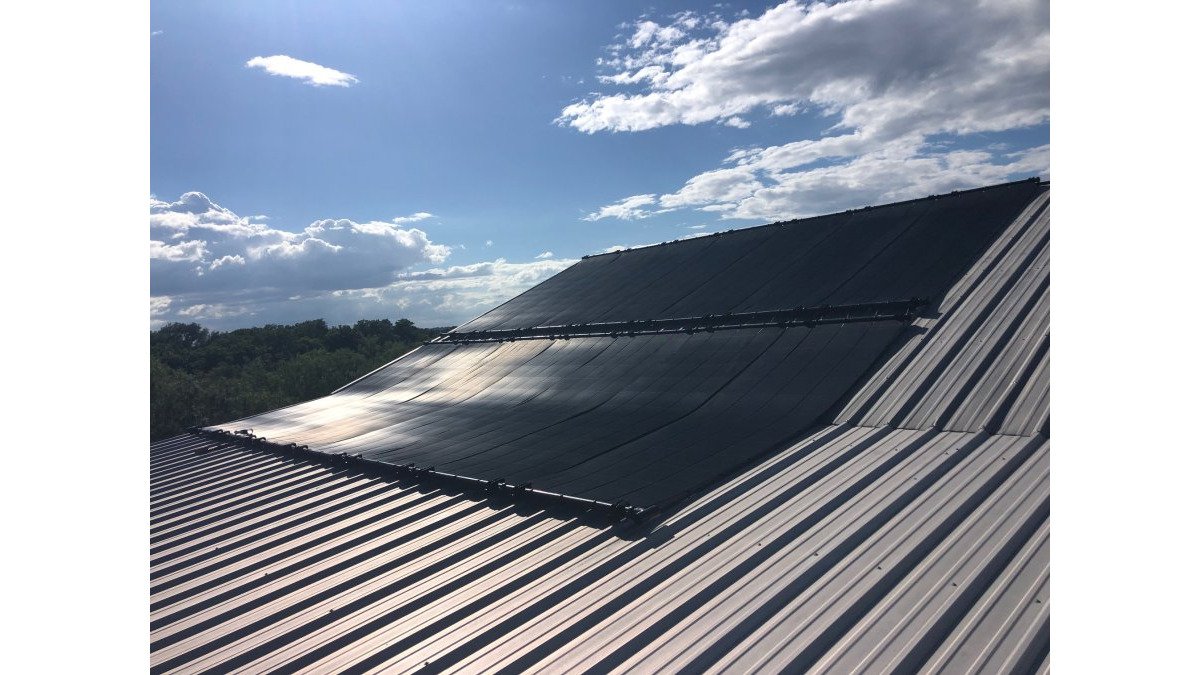
Standing-seam metal. Attachment is the better choice, but only with seam clamps that grip the standing seam without piercing it. Clamps must match the seam profile and gauge so the metal is not crushed.
Structural deck exposed to the interior (open-beam or exposed purlin). Attachment is straightforward because framing is visible and fasteners can be placed precisely.
Shingle and low-slope shingle. Attachment with brackets and proper flashing is the norm. Ballast on shingle is uncommon because the granular surface and slope make weighted trays unstable.
Structural load: what actually adds up
Structural load deserves a real assessment, not a guess. Dead load includes the dry weight of collectors, the water inside them when the pump runs, rails and hardware, and any ballast blocks. Water is the variable most homeowners miss: a filled array can weigh substantially more than dry panels, concentrated over the roof sections carrying the array.
A practical sequence most installers follow:
- Identify the roof framing (rafter or truss spacing, deck thickness, and span) from the attic or from drawings.
- Total the dead load of panels, water, hardware, and ballast per square foot of array footprint.
- Compare that figure against the roof's design load with a margin for wind and live loads.
- Concentrate the array over bearing walls and framing rather than over the middle of a long span.
When framing is unknown, the array is large, the roof is older, or ballast weight is significant, a structural engineer or roofing professional should review the plan before anything goes up.
Wind resistance and uplift
Wind resistance is the third check, and flat roofs catch wind differently than pitched ones. Wind moving over a low-slope roof accelerates at edges, corners, and parapets, and those zones see the highest uplift forces.
Ballast resists uplift through weight, so ballast load must be sized for the wind zone and exposure, not chosen by eye. Attached systems resist uplift through fasteners and straps, so fastener count, embedment depth, and strap placement all matter. Shielding reduces uplift but is no substitute for proper hold-down.
Watch out: a ballasted array sized for a sheltered interior roof section can slide or lift when the same panels are moved toward an exposed corner, so the layout and the hold-down must be planned together rather than added later.
Choosing Your Flat Roof Solar Pool Heater Installation Approach
The right approach follows from your roof, not a preference for one method. Membrane or rolled roof with moderate wind exposure: ballasted, with load confirmed first. Structural deck with strong wind exposure: attached, with every penetration sealed properly.
If you are still weighing the two, our explanation of the solar pool heating installation process shows what each method involves from start to finish.
When you are ready to hire, vet the contractor as carefully as the mounting method. Our guide to choosing a pool heating contractor gives you a seven-step framework. Once you have settled on an approach, here is how to request a solar pool heating quote and what to have ready.
A flat roof is not a limitation for solar pool heating. It is often an advantage, since panels sit out of sight with open sun exposure. The work is in matching the mounting to the roof, and that decision is worth getting right the first time.
Flat roofs reward careful planning, and the mounting decision is where that planning pays off.
Frequently Asked Questions
How do you attach a solar pool heater to a flat roof?
You can use a ballasted system with weighted pads or a roof attachment method with brackets and straps. Ballasted systems avoid roof penetrations and suit flat roofs well, while attached systems anchor panels directly to the roof structure. The best choice depends on your roof membrane, wind exposure, and whether you want to avoid punctures. A professional assessment ensures the mounting method matches your roof type and local conditions.
Is a ballasted or roof-attached system better for a flat roof?
Ballasted systems work well on flat roofs because they spread weight evenly and avoid penetrations that can cause leaks. Roof-attached systems offer stronger wind resistance in exposed areas but require careful sealing. For most flat roofs, ballasted mounting is simpler and safer for the membrane. Your installer should evaluate wind loading, roof structure, and membrane compatibility before recommending one.
Can solar pool heating panels be installed on a low-slope roof?
Yes, solar pool heating panels can be installed on a low-slope roof. The key is proper tilt and orientation to maximize sun exposure, along with a drainage plan so water flows back to the pool when the pump stops. Low-slope roofs often need mounting frames to achieve the right angle. A site assessment confirms whether your roof has enough space and structural capacity.
Can you install a solar pool heater on a flat roof yourself?
DIY solar pool heater installation on a flat roof is possible for handy homeowners, especially with ballasted systems that do not require roof penetrations. You will need to plan panel layout, plumbing connections, and drainage. However, structural load, wind resistance, and roof membrane compatibility are easy to misjudge. Professional installation protects your roof and ensures the system performs as expected.