 how-to
How to Lower Pool Heating Bills: 2026 Solar Guide
Table of Contents
- Why Pool Heating Bills Climb and What Actually Cuts Them
- Step 1: Lock In Heat With a Pool Cover to Reduce Heat Loss
- Step 2: Dial In Your Pool Heater Temperature Settings
- Step 3: Run Your Pool Pump at the Right Hours
- Step 4: Solar vs. Gas Pool Heater: Which One Wins in Texas
- Step 5: How Solar Pool Heating Savings Add Up Over Time
- Common Mistakes That Keep Pool Heating Bills High
- Conclusion: Start With the Free Wins, Then Go Solar
- Frequently Asked Questions
Last Updated: October 12, 2026
Why Pool Heating Bills Climb and What Actually Cuts Them
Learning how to lower pool heating bills starts with one fact: most of the heat you pay for never touches your water. It escapes off the surface, especially on cool, breezy nights. That single problem drives up nearly every heating bill we see across Texas.
Homeowners run a gas or electric heater hard, then wonder why the bill keeps climbing. The fix is not more heat. It is less waste.
Here is the good news. The steps below are simple, and most of them cost nothing to start.
- Trap heat instead of losing it
- Lower the thermostat a couple of degrees
- Run the pump when it actually helps
- Switch to a system that uses free sunlight
Below, we'll show you exactly how to work through each one, starting with the free wins.
Step 1: Lock In Heat With a Pool Cover to Reduce Heat Loss
A pool cover is the single fastest way to cut heat loss. It acts like a blanket, holding warmth in the water overnight instead of letting it drift into the air.
The numbers here are simple to picture. An uncovered pool loses most of its heat from the surface. Cover it, and that loss drops sharply.
You have three main choices, and they suit different pools.
Solar Covers vs. Liquid Covers vs. Blanket Reels
- Solar covers are floating plastic sheets that trap heat and warm the water during the day.
- Liquid covers are a thin film you pour on the surface. They slow evaporation but add no heat.
- Blanket reels are the roller systems that make a solar cover easy to remove and store.
A common mistake is buying a cover and never using it. A cover only pays off when you actually put it on.
Step 2: Dial In Your Pool Heater Temperature Settings
The right pool heater temperature settings sit lower than most people think. Every degree you raise the water costs more energy to hold, and that adds up fast.
How a 2-Degree Change Adds Up Over a Season
A 2-degree drop sounds tiny. Over a full season, though, it means the heater runs less every single day. Multiply that across months, and the savings build quietly.
Try this:
- Set the heater a couple of degrees lower than usual
- Keep the cover on overnight
- Raise the setting only for days you plan to swim
Most swimmers never notice the difference. Your energy use will.
Step 3: Run Your Pool Pump at the Right Hours
Pump timing matters more than most owners realize. The pump moves water through the heater and the filter, so when it runs changes how much heat you keep.
Run the pump during the warmest, sunniest part of the day. That is when the sun can help, and when heat loss is lowest. Skip the long overnight runs unless your pool needs them.
A shorter, well-timed schedule beats a long, wasteful one. Check your filter pressure too. A clogged filter makes the pump work harder for the same result.
Step 4: Solar vs. Gas Pool Heater: Which One Wins in Texas
For Texas pools, solar wins. A solar vs. gas pool heater comparison comes down to one thing: gas burns fuel every time it runs, while solar collects free heat from the sun.
Solar also needs almost no maintenance. There is no fuel to buy, no flame, and no exhaust.
That is why more Texas pool owners are choosing solar. The sun shows up every day, and it does not send a bill.
Step 5: How Solar Pool Heating Savings Add Up Over Time
Solar pool heating savings grow because the fuel is free. Once the system is in place, it keeps collecting heat day after day.
Compare that to gas or electric heating, where every swim adds to the bill. Solar flips that. The system keeps working.
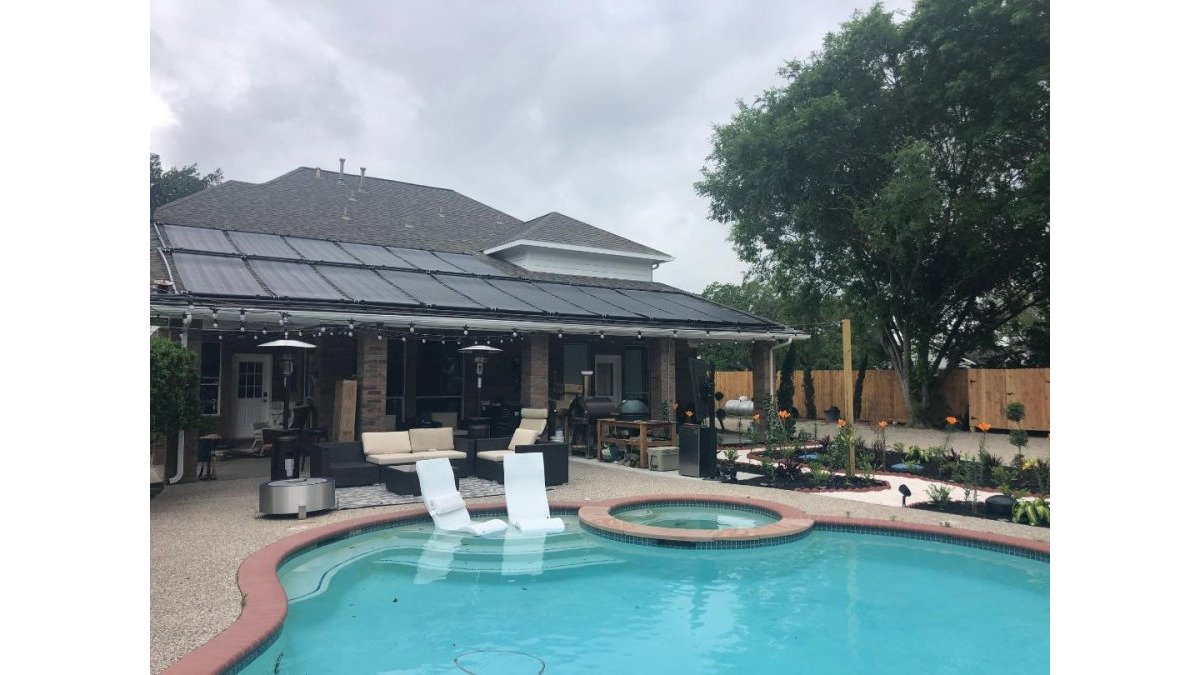
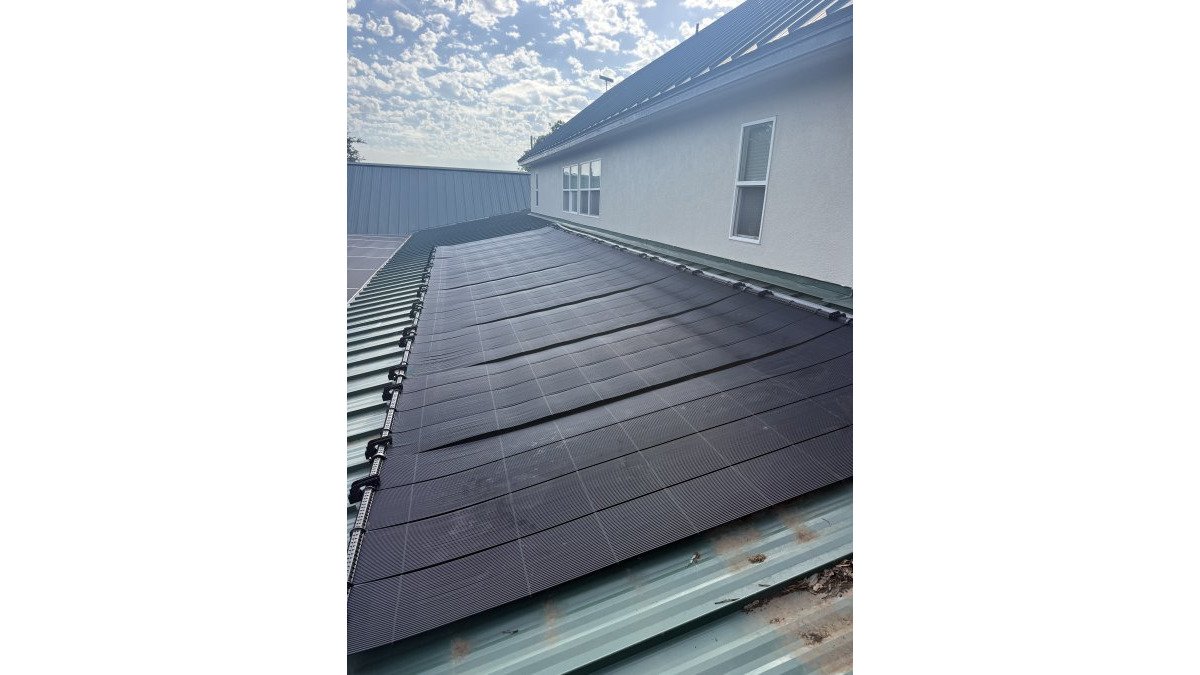
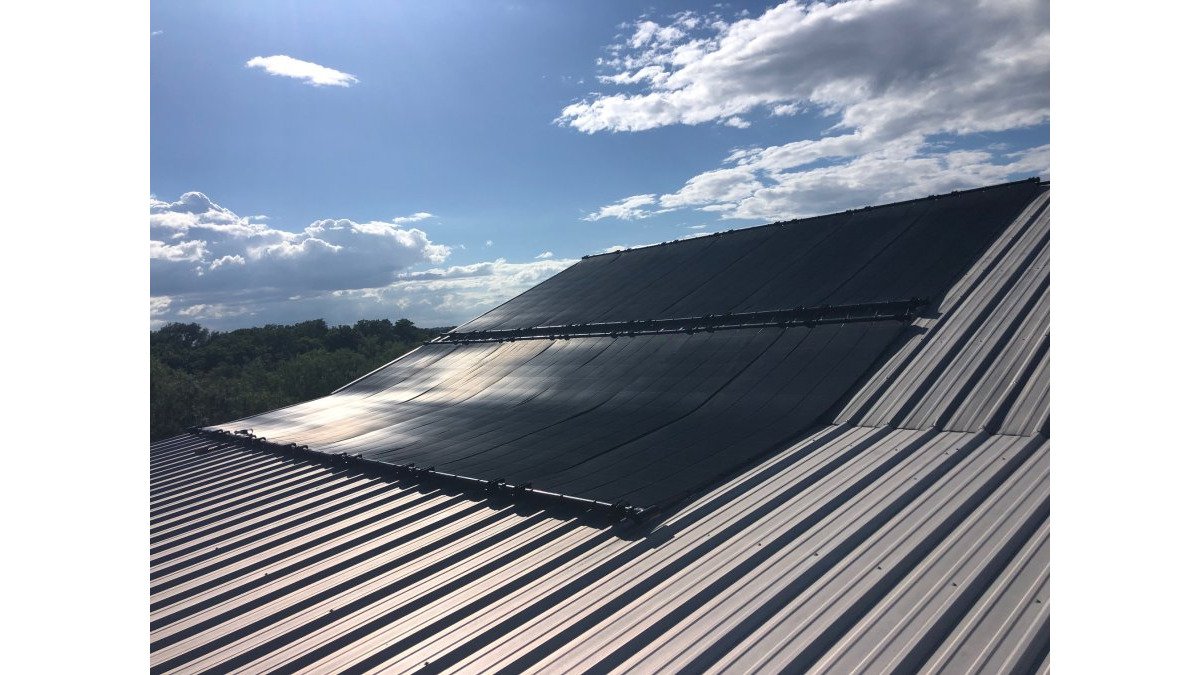
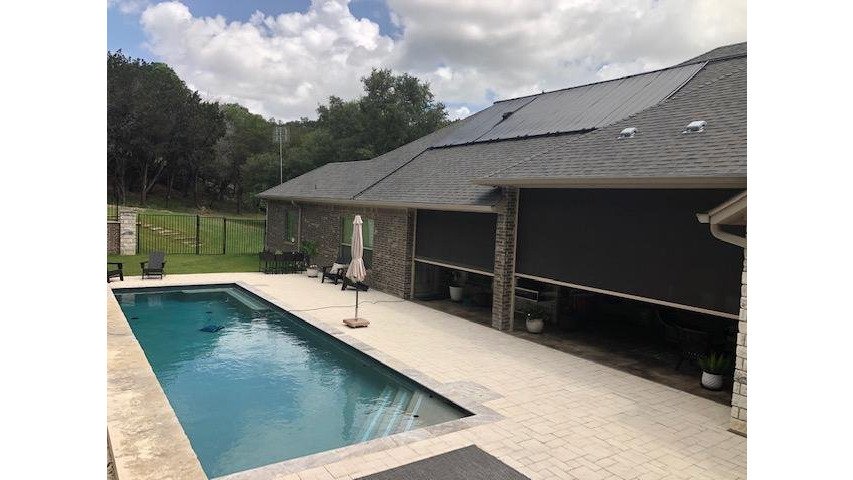
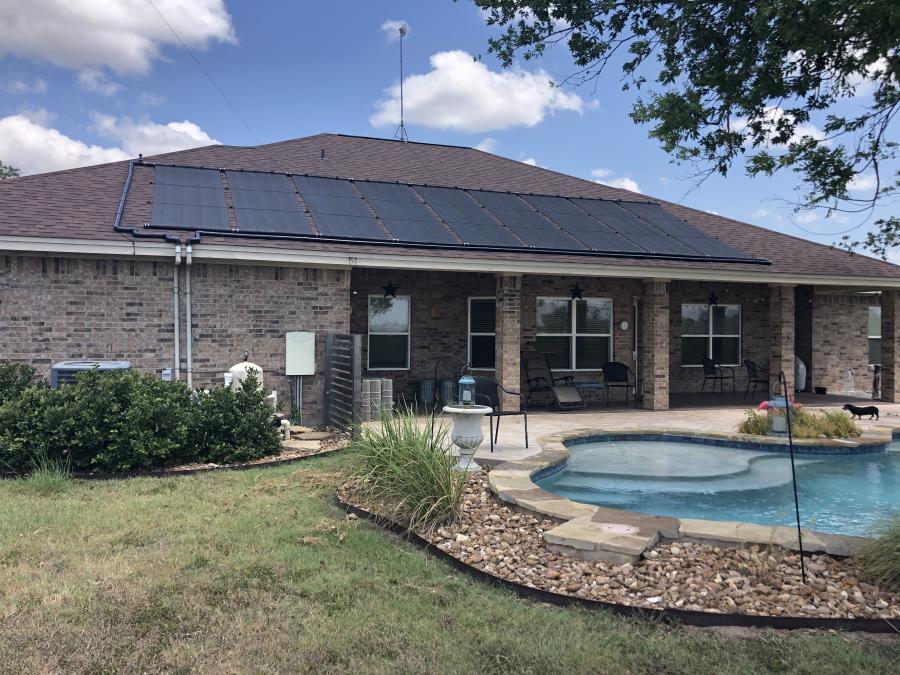
At Solar Pool Heating Texas, we partner with SolarTEK to install systems built for the local climate. They can extend your swimming season by up to nine months. That is a lot of extra pool time for a system that mostly just sits in the sun.
Common Mistakes That Keep Pool Heating Bills High
The biggest mistakes are easy to spot once you know them.
- Leaving the pool uncovered at night
- Keeping the thermostat higher than you need
- Running the pump at the wrong hours
- Ignoring a dirty filter
- Heating with gas when the sun is free
Fix these, and your pool heating bills drop. Miss them, and you keep paying for heat that never stays.
A common mistake is chasing a bigger heater instead of stopping the loss. More heat into a leaky pool just means more waste.
Conclusion: Start With the Free Wins, Then Go Solar
Start with the free steps. Cover the pool, lower the setting, and fix your pump schedule. Those changes cost nothing and cut waste right away.
Then go solar. Solar Pool Heating Texas installs systems that use free sunlight, need almost no maintenance. Our 100% satisfaction guarantee and 24/7 repair team keep your pool warm and your mind at ease.
Get started with Solar Pool Heating Texas and extend your swimming season by up to nine months.
Frequently Asked Questions
What is the cheapest way to heat a swimming pool?
Solar pool heating is the most cost-effective way to heat a pool because the sun does the work once the system is installed. Pair it with a solar cover to reduce heat loss overnight, and you can extend your swimming season by up to nine months. Unlike gas or electric heaters, a solar system needs very little maintenance.
Does a pool cover lower heating bills?
Yes. A pool cover to reduce heat loss is one of the simplest upgrades you can make. It traps warmth that would otherwise escape overnight and slows evaporation, which is where most heat disappears. Homeowners who use a cover consistently notice the pool holds its temperature longer, so the heater runs less often. Pair a cover with sensible pool heater temperature settings and you will see the biggest drop in bills.
Is solar pool heating cheaper to run than gas or electric heating?
Solar pool heating savings come from the fact that sunlight, not fuel, does the heating. Once installed, a solar system, while gas and electric heaters keep charging you every time they run. In a sunny climate like Texas, solar can extend your swimming season by up to nine months without adding to your utility bill. That is why more pool owners are making the switch.
What temperature should I keep my pool to save energy?
Setting your pool heater temperature settings a couple of degrees lower than your usual preference can cut how often the heater runs without making the water uncomfortable. Many owners find a slightly cooler setting still feels great for swimming. Combine that with a cover and a pump schedule that runs during the warmest part of the day, and your pool heating bills will drop noticeably over the season.