 ultimate-guide
Solar Pool Heater Maintenance and Repair Guide
Table of Contents
- Why Solar Pool Heater Maintenance Matters
- Solar Pool Heater Inspection: A Step-by-Step Walkthrough
- Solar Pool Heating Panel Cleaning and Debris Removal
- Solar Pool Heater Troubleshooting: Fixing Weak Heating
- Solar Pool Heater Leak Repair: Finding and Fixing Leaks
- Seasonal Maintenance Schedule and Checklist
- When to Repair vs. Replace Your Solar Pool Heating System
- Frequently Asked Questions
Last Updated: October 19, 2026
Why Solar Pool Heater Maintenance Matters
Solar pool heater maintenance and repair is the difference between a system that quietly extends your swimming season and one that sits on the roof doing nothing. A solar pool heating system has no compressor, no burner, and no refrigerant.
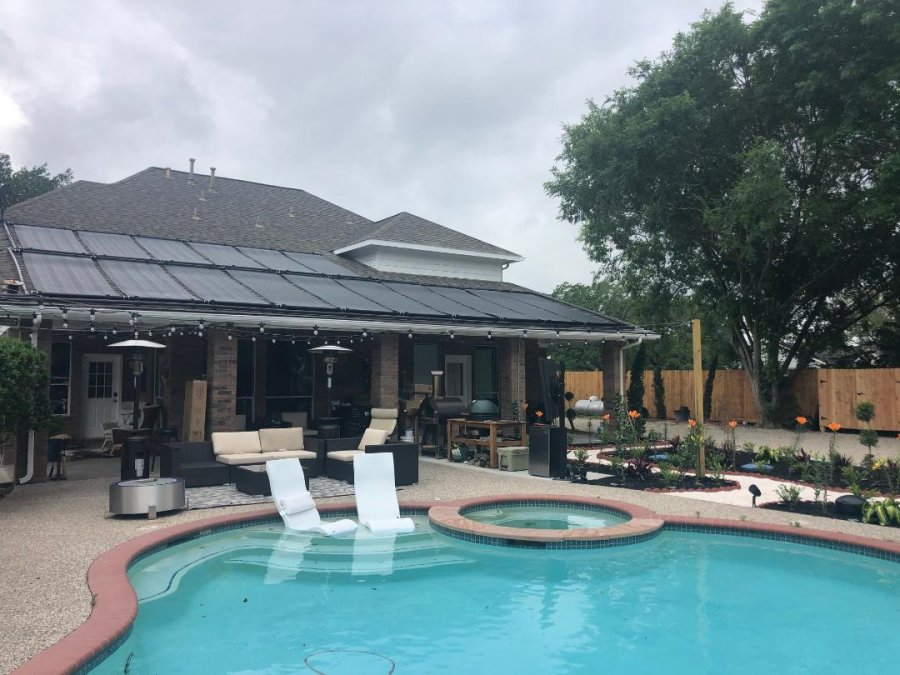
Homeowners often assume the system is broken when the real problem is a clogged filter or a mat buried under pollen. A few minutes of inspection each season prevents most of it.
Below, we'll show you exactly how to inspect, clean, troubleshoot, and repair a solar pool heater, and when to call a professional instead.
Solar Pool Heater Inspection: A Step-by-Step Walkthrough
A solar pool heater inspection takes about 20 minutes and follows a fixed sequence: collectors, then plumbing, then flow.
Step 3: Check the riser tubes. Run your hand along the tubes on a sunny day.
Step 4: Inspect the PVC pipe and connections. Look for white crusting, damp joints, and hairline cracks at unions and elbows.
Step 5: Confirm the diverter valve moves freely. A stuck valve sends water past the collectors entirely.
Checking Collectors, Riser Tubes, and PVC Connections
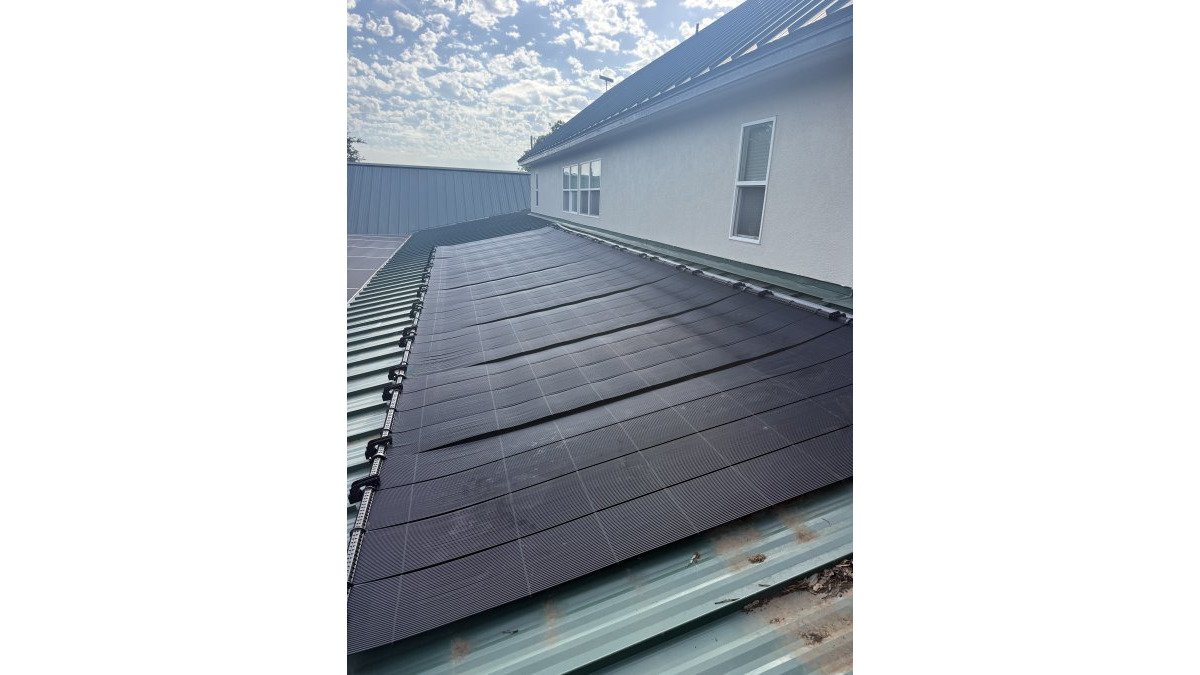
Solar collector panels are the flat mats or glazed units that absorb sunlight and transfer heat to pool water. Each contains many small riser tubes; a failure in one rarely kills the whole panel.
- EPDM mat collectors: flexible rubber mats. Look for UV cracking, blistering, and worn spots where the mat rubs against the roof.
- Glazed flat-plate collectors: check the glass or polycarbonate cover for cracks and the frame for corrosion.
- Riser tubes: a tube that has collapsed or delaminated restricts flow to every tube downstream of it.
PVC connections deserve their own pass. A joint that weeps slowly leaves a white mineral stain, which is your earliest warning of a panel leak in progress.
Solar Pool Heating Panel Cleaning and Debris Removal
Solar pool heating panel cleaning is the highest-return maintenance task you can do, and it costs nothing but time.
Clean early in the morning when panels are cool. Rinse with a garden hose, then scrub with a soft-bristle brush and a mild soap solution. Never use a pressure washer on an EPDM mat or glazed panel, and never use abrasive pads.
- Clear debris from the top edge of the array where leaves collect
- Trim overhanging branches that drop pollen and shade the collectors
- Rinse after heavy pollen season and again after storms
- Check mounting straps and clamps while you're up there
Solar Pool Heater Troubleshooting: Fixing Weak Heating
Solar pool heater troubleshooting starts with one question: is water actually reaching the collectors, and is it clean and balanced? Weak heating almost always traces to flow, filtration, valve position, or water chemistry, not the panels.
The diagnostic order that saves the most time:
- Confirm the controller is calling for heat. If the setpoint is below pool temperature or the controller is in a hold mode, the diverter valve will never open. Check the display before climbing anywhere.
- Confirm the diverter valve is open. A stuck actuator or a manually closed valve sends water straight back to the pool. Feel the roof loop line: if it is cool while the panels are hot, water is bypassing the array.
- Check filter pressure against the clean baseline. A gauge reading well above the baseline means the pump is working harder to move less water. Clean a cartridge or backwash a sand filter, then recheck.
- Clear air from the loop. Air locks at the high point of a roof run are a common cause of "pump runs, no heat." Open the air relief at the high point until a steady stream of water appears.
- Inspect the collectors for shade and debris. A mat half-covered in pollen or shaded by a new branch will heat only part of the day.
- Hand-check riser tube temperatures. Cool spots on a warm panel point to a blocked or failed tube.
| Symptom | Most Likely Cause | First Check | Fix |
|---|---|---|---|
| Water warm but not hot | Dirty filter, low flow | Filter pressure gauge | Clean or replace cartridge |
| No temperature rise at all | Diverter valve closed or stuck | Valve position at the roof loop | Open or free the valve |
| Heating only in the morning | Shade or debris on collectors | Collector surface condition | Clean and trim back shade |
| Warm patch, cold patch on array | Blocked or failed riser tube | Hand-check tube temperatures | Repair or replace tube section |
| Pump runs, no flow to panels | Air lock or clogged line | Air relief and strainer basket | Bleed air, clear the strainer |
| Scale or chalky film on collectors | Out-of-balance water | pH and hardness test | Rebalance water, clean collectors |
| Return line cool, panels hot | Low flow or bypass | Valve and filter | Restore flow, free valve |
Filters, Flow, and Water Circulation Checks
Water flow is the engine of the whole system. If the pool filter is loaded up, the pump pushes less water through the collectors and heat transfer falls off.
Then confirm water circulation through the collector loop. Feel the return line at the pool: it should run warmer than the pool surface when the system is heating. If the return is cool while the panels are hot, water isn't moving through the array.
- Clean the pump strainer basket weekly during swim season
- Bleed air from the high point of the collector loop after any service
- Verify the diverter valve actuator opens fully when the controller calls for heat
- Check for a collapsed hose or a kinked line on the roof run
Water Chemistry and Its Effect on Solar Heating Equipment
Water balance is the maintenance item most pool owners overlook, and it directly affects solar array performance.
A common pattern: a system that heated well for seasons starts underperforming, yet the filter is clean, the valve is open, and the collectors look fine. Testing water chemistry often explains the drift, rebalance the water, then clean the collectors to remove any film.
Solar Pool Heater Leak Repair: Finding and Fixing Leaks
Solar pool heater leak repair follows a simple rule: find it before you cut anything.
How to locate the leak:
- Shut off the pump and let the system drain down.
- Dry the suspect area completely with a towel.
- Restart the pump and watch for the first bead of water.
- Mark it, shut down again, and inspect the tube or joint closely.
For a tube leak on an EPDM mat, a repair kit with a matching patch and clamp-style tube connector handles most small failures.
PVC repairs are straightforward: cut out the failed section, prime and cement a new fitting, and let it cure fully before restoring flow.
Seasonal Maintenance Schedule and Checklist
A seasonal maintenance schedule keeps a solar pool heating system efficient without much effort. Split the work into three windows: spring startup, mid-season check, and fall shutdown.
- Spring: rinse collectors, clean the filter, test the diverter valve, bleed air from the loop
- Spring: inspect riser tubes and PVC joints for cracks or mineral staining
- Mid-season: clear debris after storms, re-check filter pressure, confirm return temperature
- Mid-season: trim vegetation that shades the array
Water chemistry belongs on this list too. Keep pH and sanitizer in range; aggressive water slowly attacks the internals of the collector loop and shortens equipment life.
When to Repair vs. Replace Your Solar Pool Heating System
Repair wins when the failure is isolated: one split tube, one weeping union, one stuck valve.
A decision framework you can apply:
- Scope of damage. Is the failure confined to one tube, one joint, or one panel? Isolated failures are repair candidates. Failures appearing in several places at once usually signal end-of-life material.
- Structural condition. Are the collectors still sound and properly mounted? A mat that has shifted, sagged, or lost its mounting straps has degraded beyond the point where patches hold.
- System age and sun exposure. Collectors in full sun age faster than shaded arrays, so a full-sun collector with many seasons is closer to end-of-life than a newer one showing the same symptom.
- Rest of the system. Is the pump, valve, and controller working correctly? Replacing collectors on a system with a failing valve or controller just moves the problem.
Repair is usually the right call when: the damage is one tube or one joint, the collectors are structurally sound, and the rest of the system checks out.
Replacement is usually the right call when: UV cracking is widespread, delamination covers a large area, a glazed panel has a cracked absorber and corroded frame, or the array is failing in several places at once.
DIY Versus Professional: Where the Line Sits
Other work belongs with a qualified technician: anything at a roof header, anything involving the diverter valve actuator or controller wiring, and any leak you can't safely reach.
A practical rule: if you can't describe exactly how you'll isolate the system and dry the area before you cut, you're past the DIY line.
That's where professional help earns its keep. Solar Pool Heating Texas installs and repairs residential and commercial solar pool heating systems, works with SolarTEK equipment, and is available 24/7 for emergency repairs.
Frequently Asked Questions
What maintenance is required for a solar pool heater?
A solar pool heater needs regular inspection of collectors, riser tubes, and PVC connections, plus cleaning panels to remove debris, pollen, and grime. Check pool filters and water flow monthly, and schedule a professional solar pool heater inspection once a year. This routine keeps heating performance strong and catches small issues before they become costly repairs.
How often should a solar pool heater be inspected?
Inspect your solar pool heater visually every month during swim season and have a professional solar pool heater inspection once a year. Homeowners in dusty or pollen-heavy areas may benefit from more frequent checks. A yearly professional review catches worn connections, damaged tubing, and flow problems early, which protects system efficiency and extends the life of your collectors.
Why is my solar pool heater not heating the pool?
Common causes include dirty collector panels, a clogged pool filter, low water flow, air in the system, or damaged riser tubes. Start solar pool heater troubleshooting by cleaning the panels, checking the filter, and confirming the pump runs at the right flow. If the pool temperature still lags, inspect for leaks and call a professional to test the system.
Can you repair a leaking solar pool heater yourself?
Small leaks at PVC pipe connections or a single damaged tube can often be repaired with a patch kit or replacement section. Larger panel leaks, multiple damaged tubes, or roof-mounted collector issues are better handled by a professional. Always shut off the system and let it cool before any DIY repair, and call an expert if you are unsure.
How do you clean solar pool heating panels?
Use a soft-bristle brush and plain water to gently remove debris, pollen, and grime from the collector surface. Rinse thoroughly and avoid abrasive tools or harsh chemicals that can scratch the panel. Clean panels in the early morning or evening when they are cool. Regular solar pool heating panel cleaning keeps heat absorption high and protects system efficiency.
When should a solar pool heater be serviced by a professional?
Call a professional when you see persistent leaks, a noticeable drop in heating performance after basic troubleshooting, damaged collectors, or roof-mounted panels that are hard to reach safely. Annual professional service is also smart. Experts can pressure-test the system, check flow rates, and repair issues that go beyond routine maintenance.