 how-to
Solar Pool Heating for Oddly Shaped Pools: A Guide
Table of Contents
- Why Solar Pool Heating Works for Oddly Shaped Pools
- Step 1: Sizing a Solar Pool Collector for Irregular Pools
- Step 2: Where to Place Solar Pool Panels
- Step 3: Choosing a Solar Pool Heater for a Freeform Pool
- Step 4: Covering and Fitting an Irregular Pool Outline
- Step 5: Solar Pool Heating Troubleshooting
- What to Ignore When Heating an Oddly Shaped Pool
- Frequently Asked Questions
Last Updated: October 14, 2026
Why Solar Pool Heating Works for Oddly Shaped Pools
Solar pool heating for oddly shaped pools works because solar collectors are modular.
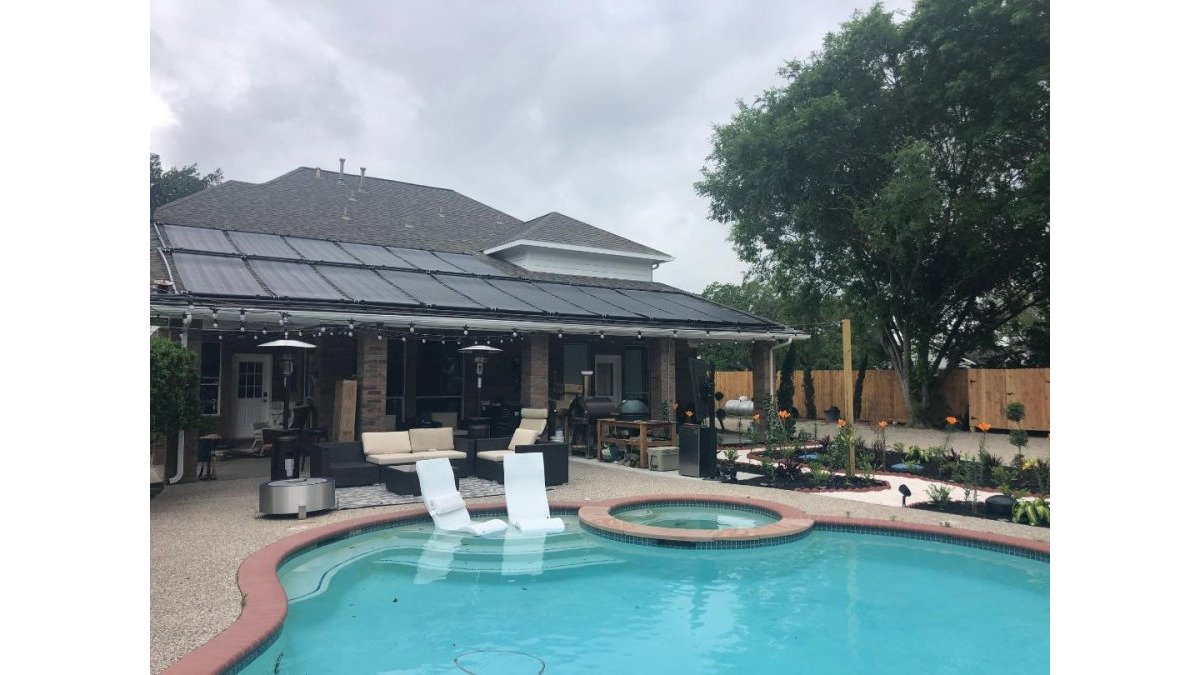
At Solar Pool Heating Texas, homeowners often worry their pool is too unusual for solar.
Most guides treat pool shape as the main problem. It is not. The real issues are collector sizing, panel placement, and covering the water at night.
- Shape does not limit solar. Panel count and placement do.
- Covers do the heavy lifting. They stop overnight heat loss.
- Freeform pools need custom covers. That is a fitting job, not a barrier.
Solar heating suits inground and above-ground pools alike.
How Solar Heating Compares to Gas and Electric
Solar heating uses the sun as its fuel. Gas and electric heaters burn fuel or pull from the grid every time they run.
- Solar: no fuel bill, low upkeep, slower on cloudy days
- Gas: fast heat, high running costs, more moving parts to service
- Electric heat pumps: steady output, still tied to electricity bills
For Texas pool owners, solar stands out because the state gets strong sun most of the year. A solar system can extend your swimming season by up to nine months, while gas and electric heaters keep charging you for warmth.
Solar also needs no routine maintenance, no burners, ignition parts, or compressors. The pump pushes water through the collectors, and the sun does the rest. That is why more Texas pool owners are choosing solar over gas or electric heating.
Step 1: Sizing a Solar Pool Collector for Irregular Pools
Sizing a solar pool collector starts with your pool's surface area, not its outline. Measure the length and width at the widest points, then multiply. For odd shapes, this gives a close estimate.
The goal is a collector area that matches a healthy share of that surface. Too few panels and the water never warms enough; too many add cost without real gain.
Calculating Collector Area for Unusual Geometry
Break the pool into simple shapes. A kidney pool is often two circles plus a rectangle.
- Sketch the pool on paper.
- Split it into rectangles, circles, or triangles.
- Find the area of each block.
- Add the blocks together.
That total is your working surface area. A common approach is to match collectors to roughly half to three-quarters of the pool's surface.
- Small freeform pool: fewer panels, tighter layout
- Large irregular pool: more panels, split across two roof faces
- Spa plus pool: size the spa separately
If your roof space is tight, ground racks or a side yard can hold extra collectors. Shape never blocks you. Space planning does.
Step 2: Where to Place Solar Pool Panels
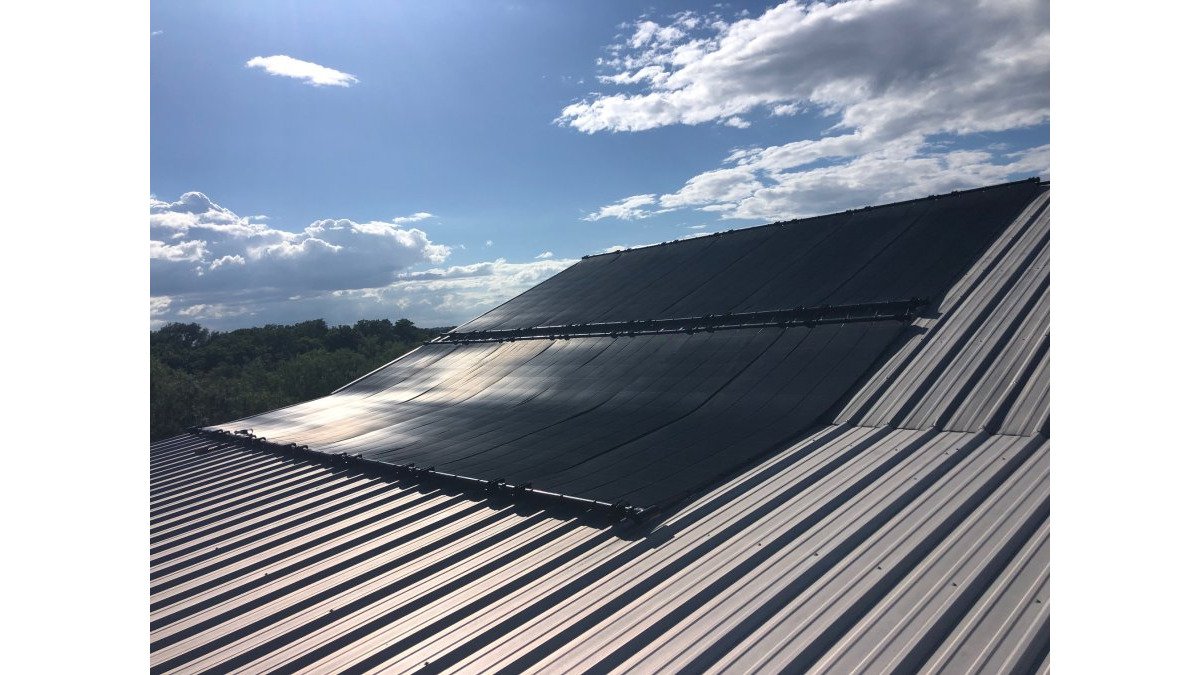
Place solar pool panels where they get the most direct sun, ideally facing south. In Texas, a south-facing roof or rack captures the strongest light all day.
Panel placement decides how well the whole system performs. A great collector in shade underperforms a modest one in full sun. So check for trees, chimneys, and nearby buildings before you commit.
Sun Exposure and Roof Orientation
Track how sun moves across your yard. Morning shade may clear by noon, but afternoon shade is worse since that is when panels do much of their work.
- South-facing: best overall
- West-facing: strong afternoon heat
- East-facing: good morning gain, weaker later
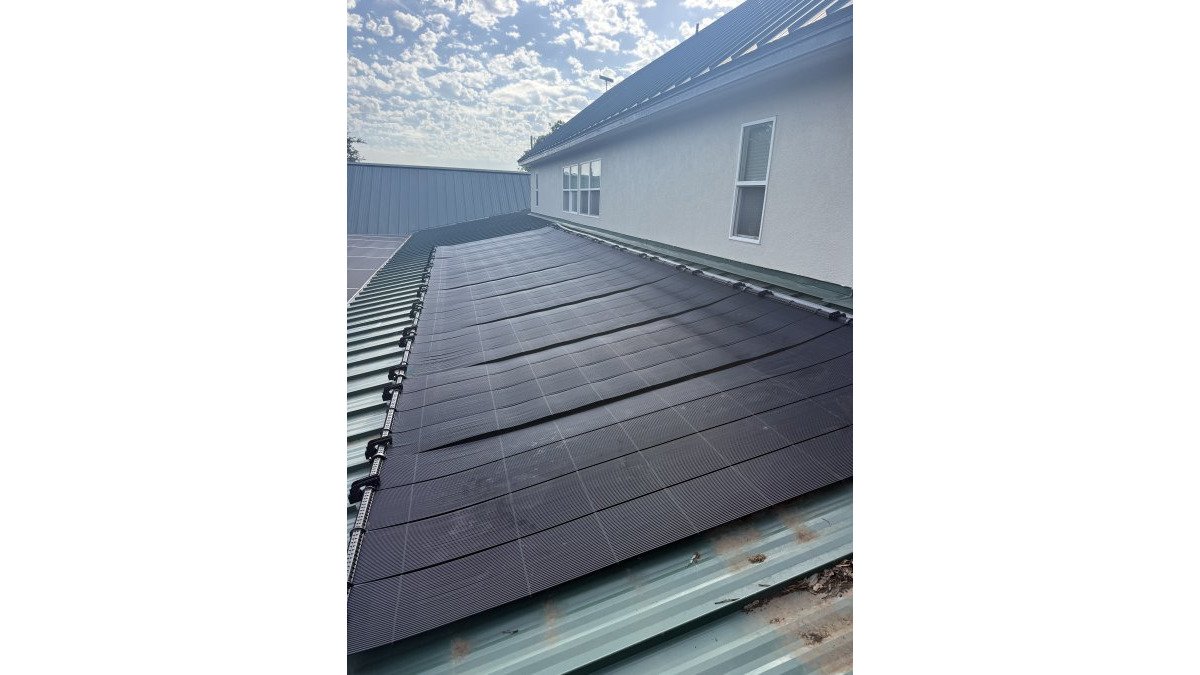
For odd-shaped pools, you may split collectors across two roof faces.
Ground-mounted racks solve roof limits and let you angle panels toward the sun, a common choice for homeowners with tree cover.
Step 3: Choosing a Solar Pool Heater for a Freeform Pool
Choose a solar pool heater by matching collector area to your pool's surface, sun exposure, and goals. A freeform pool needs the same core parts as any other, collectors, a pump connection, valves, and flow controls. What changes is how you size and arrange them.
A solar pool heater for a freeform pool is not a special product. It is a standard system sized and arranged for your space. The parts that matter:
- Solar collectors: the panels that gather heat
- Mounting: roof straps, racks, or ground frames
- Plumbing: hoses, connectors, valves, and adapters
Sizing Collectors to Unusual Pool Geometry
Collector area is the single biggest lever on performance. Size collectors at roughly half to three-quarters of the pool's surface area, then adjust for the factors below.
- Surface area: measure the widest length and width, then break the shape into rectangles, circles, and triangles and add the blocks.
- Volume: a deep freeform pool holds more water than its surface area suggests, so it warms more slowly.
- Shade: a pool under trees needs more collector area to make up for lost sun.
A spa or sun shelf holds less water than the main pool, so size it separately. A shallow shelf warms fast and can throw off a panel count that treats the whole pool as one volume.
Covers, Collectors, Heat Pumps, and Gas: A Decision Framework
Most guides mix cover advice and heater products without a clear way to choose. Here is a simple framework.
- Cover only: the lowest-effort option. A solar blanket or custom cover traps heat and cuts evaporation. Best when your pool is already warm enough and you mainly want to hold the temperature overnight.
- Cover plus solar collectors: the best fit for most freeform pools. The cover holds the heat the collectors add during the day. This combination extends the swimming season the most for the least ongoing input.
- Cover plus heat pump: a heat pump gives steady output and works on cloudy days, but it draws electricity every time it runs.
For most pool owners, the smartest path is a cover plus solar collectors. The cover does the heavy lifting on heat loss, and the collectors add heat for free. Gas and heat pumps can match the warmth, but they keep charging you for it.
Combining Options
You do not have to pick one system. A common pattern is solar collectors for day-to-day heating and a cover for overnight retention, with a heat pump or gas heater as backup for long cloudy stretches. If you combine systems, plan the plumbing so the solar loop and backup heater run independently.
Kits Versus Custom Builds
Solar heater kits bundle many of the parts. Kits work well when your layout is simple. For an irregular pool with split roof faces, a custom plan often fits better.
When you compare options, focus on collector area and flow, not brand hype. Ask how many panels your pool needs and where they will sit. A system that fits your space beats a bigger one that does not.
Step 4: Covering and Fitting an Irregular Pool Outline
Covering an irregular pool means cutting a solar blanket or custom cover to follow the pool's edge. Without a cover, most of the warmth you gain during the day escapes after dark.
Making a Template for a Freeform Pool
For a pool with tight curves, a spa spillway, or a built-in bench, a paper template beats eyeballing the cut. Most installers use builder's paper, rosin paper, or heavy craft paper.
- Lay the paper on the deck and overlap the sheets by several inches.
- Tape the seams so the template holds together.
- Walk the paper edge along the waterline, pressing it against the coping.
- Mark the waterline on the paper with a marker as you go.
- Cut the template a few inches outside your mark.
- Float the template on the water to check the fit before you cut the cover.
A template lets you test the shape before you commit a blade to the cover, and mark where a ladder, diving rock, or spa wall interrupts the outline.
Cutting and Fitting the Cover
Once the template fits, lay the cover bubble side down on a clean, flat surface, set the template on top, and trace the outline.
- Trim along the waterline, not the deck edge, so the cover floats flat.
- Leave a small margin on the first pass; you can always take more off.
- On tight curves, make short relief cuts rather than one long sweep.
A snug cover is the goal. One that overlaps the deck traps debris and tears at the edges; one that floats too far from the wall lets warm water slip past the gap.
Sectional Covers for Awkward Shapes
A single blanket on a freeform pool is heavy and hard to move. Splitting it into two or three pieces solves most of that.
- Two-piece layout: one large piece for the main body, one smaller piece for a spa, sun shelf, or tight lobe.
- Three-piece layout: useful when the pool has a narrow neck or an L-shape that a single sheet cannot cover without wrinkling.
- Overlap the seams: let the pieces overlap by a few inches so heat does not escape at the joint.
Sectional covers fold and store faster than one large blanket and need no straight edge for a reel.
Reel Solutions When a Standard Reel Will Not Fit
A standard reel wants a straight edge to roll onto. Freeform pools rarely have one. Options that work:
- Deck-mounted reel along the straightest edge: pick the longest straight run of coping, even if it only covers part of the pool.
- Reel with a lead edge: a straight bar or pipe added to one side of the cover gives the reel something to grab.
- Manual rolling: two people roll the cover by hand, folding as they go.
For many freeform pools, a sectional cover beats fighting a reel that does not fit.
Folding and Storing a Custom Cover
A cover stored wet and wadded up will grow mildew and lose its bubbles. Fold it loosely, bubble side in, and keep it out of direct sun when it is off the pool.
- Fold in thirds or quarters, then roll or drape over a storage reel or a covered hook.
- Keep the cover off the deck so it does not pick up grit that scratches the surface.
- Rinse the cover with fresh water before storing it for the season.
Step 5: Solar Pool Heating Troubleshooting
Troubleshooting solar pool heating starts with three checks: sun, flow, and cover. If the water is not warming, one of those three is usually the cause.
Work through the likely problems in order:
- Water is cool on sunny days. Check for shade on the panels. Trim branches or move ground racks.
- Panels feel cool to the touch. Water may not be flowing through them. Check valves and the diverter.
- Pump runs but flow is weak. Look for a clogged filter or a closed valve.
Weather matters too. Cool nights and cloudy stretches slow heat gain. On warm days, the system catches up fast.
A simple routine keeps the system healthy: check the cover, clear the skimmer, and confirm the valve is set for solar on sunny days.
What to Ignore When Heating an Oddly Shaped Pool
Ignore advice that treats pool shape as a dealbreaker. Shape changes your layout, not your options.
Skip these common myths:
- "Solar only works for rectangle pools." False. Collectors are modular.
- "You need a reel to use a cover." Not true. Sectional covers and hand rolling work fine.
- "A bigger system is always better." Oversized collectors add cost without much gain.
Focus on what moves the needle: collector area, sun exposure, and a cover that fits.
If you want a system planned around your pool's exact shape, that is where expert help pays off.
Heating an oddly shaped pool comes down to planning, not luck.
Frequently Asked Questions
Can solar pool heating work with a freeform pool?
Yes. Solar pool heating works with freeform and oddly shaped pools because the collectors are sized by surface area, not by shape. A solar pool heater for a freeform pool uses the same circulation loop as a rectangular one: the pool pump pushes water through roof-mounted collectors, where it absorbs heat from the sun, then returns it to the pool. The main adjustment is calculating collector area from the actual water surface rather than a simple length-by-width figure.
How do you cover an irregular shaped pool?
Start by laying the cover material over the pool and letting it settle into the shape of the water. Then trim along the pool outline with a sharp utility knife or heavy scissors, leaving a small overlap at the edges. For freeform pools, work in sections and recheck the fit as you go. A custom-fit solar blanket reduces evaporation and overnight heat loss far better than a loose rectangular cover draped over an odd shape.
How are solar collectors sized for an oddly shaped pool?
Measure the actual water surface area, not the deck or the lot. For an irregular pool, break the surface into simple shapes, add the areas together, and use that total. Solar pool collector sizing typically targets a collector area equal to roughly half to three-quarters of the pool surface, depending on sun exposure and how warm you want the water. Shaded or wind-exposed pools need more collector area.
Can a solar pool heater be added to an existing pool system?
A solar heater kit can be tied into most existing pool systems using connectors, valves, and adapters that route water from the pump through the collectors and back to the pool. The pump needs enough capacity to push water up to the roof and through the panels. If the existing pump is undersized, a booster or a variable-speed pump may be needed. A professional evaluation confirms whether the current circulation setup can handle the added collector loop.