 How-to
How to Fix a Solar Pool Heater Leaking From Panels
Last Updated: November 15, 2026
Quick Summary
A solar pool heater leaking from panels is fixed by first tracing the drip to its source, then matching the repair to the damage: a repair plug for small punctures, liquid sealant for hairline splits, and a rebuilt PVC connection for manifold or fitting leaks. Shut off the pump and close the loop valves before any roof work.
- Turn off the pool pump at the breaker and close the solar loop valves before climbing.
- Low pressure with normal flow points to a small leak on the return side.
- A puncture smaller than a pencil tip takes a repair plug seated flush.
- Replace a panel that is cracked across the face, brittle, or failing in more than one place.
- After the fix, run the pump and confirm the pressure gauge holds its normal reading.
Table of Contents
- Find the Leak Before You Touch a Single Panel
- How to Fix a Pool Solar Panel Leak: Match the Repair to the Damage
- What Belongs in a Solar Pool Heater Repair Kit
- Pool Solar Panel Repair Plugs: When a Plug Is Enough
- When to Repair, Isolate, or Replace a Damaged Panel
- Solar Pool Heater Not Working After the Fix? Test and Troubleshoot
- Schedule a Professional Leak Inspection
- Frequently Asked Questions
Find the Leak Before You Touch a Single Panel
A solar pool heater leaking from panels almost always announces itself the same way: a wet patch on the roof, a pressure gauge sitting low, or a pump that keeps losing prime. Find the source first. Guessing wastes hours and can crack a healthy panel.
A small leak does not have to change the picture, as long as you fix it properly.
Below, you can follow the full repair, from shutting the system down to testing it afterward.
Shut Down the System Safely
Turn off the pool pump at the breaker before you climb anything. Close the valves on the solar loop so water stops moving through the panels. Let the panels cool, because a dry panel under full sun gets hot enough to burn a hand.
Roof work is the real risk here, not the repair itself. Use a stable ladder, keep your weight on the frame rather than the glazing, and stay off wet panels entirely. If the roof pitch is steep or the panels sit high, stop and call a professional. No patch is worth a fall.
Trace the Drip to Its Source
Water travels. A drip at the far end of the array can start at a manifold joint three panels away. Work backward from the wet spot toward the supply line.
- Check the gauge first. Low pressure with normal flow points to a small leak on the return side.
- Look for mineral staining, which marks where water has been drying for weeks.
- Dry the suspect area with a rag, then run the pump briefly and watch where water reappears first.
- Check the manifold joints, the PVC connections, and the tube ends before you blame the panel face.
This step is often skipped, but it saves the most time. If the symptom looks familiar, our list of common solar pool heating maintenance issues helps you match the leak to a known cause.
How to Fix a Pool Solar Panel Leak: Match the Repair to the Damage
Match the repair to the damage, not to whatever is in the toolbox. A pinhole in a tube and a split manifold joint need different fixes, and using the wrong one turns a small leak into a panel replacement.
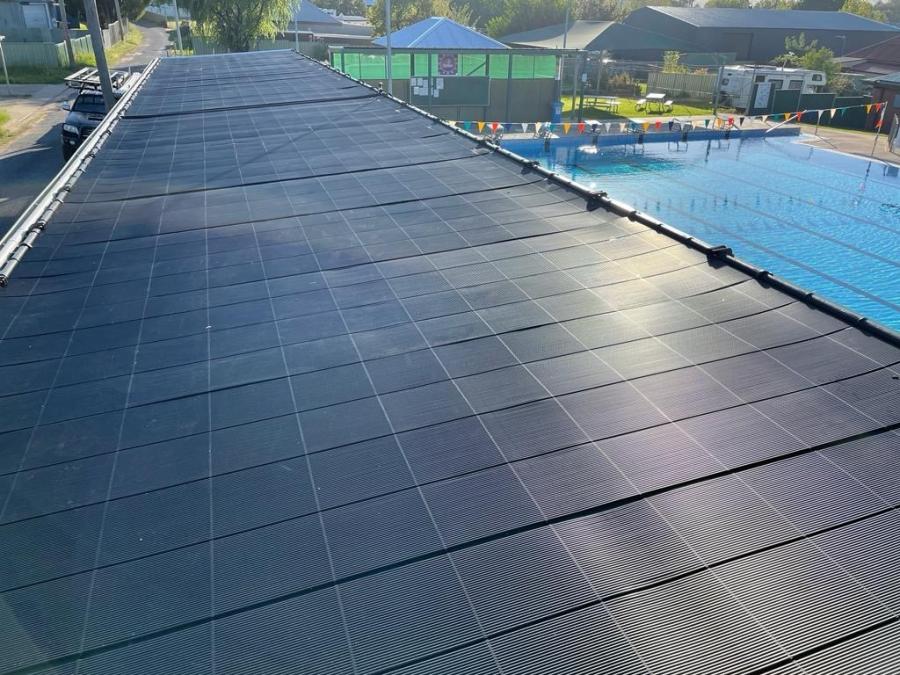
Small Holes and Tube Punctures
A puncture smaller than a pencil tip takes a repair plug. Clean the tube, let it dry, and push the plug in firmly so it seats flush. For a hairline split, a liquid sealant rated for pool solar panels works, applied to a dry surface and left to cure.
Watch out: sealant applied to a wet or dirty tube will peel within weeks. Dry and clean first, always.
Manifold and PVC Connection Leaks
A leaking manifold joint or PVC fitting usually needs the connection cut out and rebuilt. Shut the loop down, cut the pipe cleanly, and rejoin with a proper PVC fitting and solvent cement. A cracked fitting gets replaced, never patched.
For a damaged tube you cannot reach, cut it and join the two open ends with a connector. That isolates the tube while keeping the rest of the array running. Our solar pool heater maintenance and repair guide shows how this fix fits into ongoing upkeep.
What Belongs in a Solar Pool Heater Repair Kit
A solar pool heater repair kit should cover the three common failures: punctures, tube splits, and fitting leaks. But the kit only works if each item matches the panel material and the damage in front of you. A repair kit works best when each item matches the panel material and the damage in front of you.
- Repair plugs in two or three sizes. Plugs suit EPDM and polypropylene tube walls that are still flexible and at least as thick as the plug shoulder. A plug in a brittle or thin-walled tube has nothing to grip and will weep under pressure.
- Liquid sealant rated for pool solar panels and continuous chlorinated water. Sealant is for hairline splits and pinholes on a flat tube face, not for joints under mechanical stress. Check the label for flexibility after cure; a rigid sealant cracks as the panel expands in sun.
- Sheet-metal screws with sealing washers for header and manifold repairs where the header is metal-backed. Do not drive a screw into a plastic header that is already cracked; it spreads the crack.
- Spare connectors sized to your tube outside diameter for joining cut tubes. Measure the tube, not the panel, because tube diameters vary by manufacturer.
- PVC fittings and solvent cement for manifold and supply-line work. Cement is for rigid PVC only; it will not bond to flexible tube or polypropylene.
- A sharp knife, rag, and emery cloth for clean prep. A clean, dry, scuffed surface is the difference between a sealant that cures and one that lifts.
Watch out: mixing repair methods is the most common cause of a failed patch. A plug seated into a tube that was just wiped with solvent, or sealant smeared over a plug shoulder, prevents either from bonding. Pick one method per leak and prep the surface for that method only.
Keep the kit sealed and out of sun between uses, since UV can degrade plugs and sealant tubes.
Pool Solar Panel Repair Plugs: When a Plug Is Enough
Pool solar panel repair plugs work when the damage is a clean puncture in a tube, with solid material around it. Push the plug in, twist slightly, and check for a seal under normal water pressure.
A plug is not enough when the tube is split lengthwise, the header is cracked, or the panel face is brittle and crumbling. In those cases the plug has nothing solid to grip. Use it as a temporary repair, then plan a replacement.
When to Repair, Isolate, or Replace a Damaged Panel
Repair when the damage is one or two small punctures and the panel material is still flexible. Isolate when a single tube or panel keeps leaking and you want the rest of the array running while you decide. Replace when the panel is cracked across the face, brittle, or has failed in more than one place.
Damage extent. Count the failures, not the drips. One clean puncture in a sound tube is a repair.
Panel condition. Press a thumbnail into the tube wall away from the leak. If it springs back, the material is still serviceable.
Panel age and leak history. A panel that has been patched once and held for several seasons is a good repair candidate.
Repair reliability by method. A plug in a sound tube is a durable repair. A sealant patch on a flexing tube face is less durable and should be watched. A rebuilt PVC manifold joint is as good as new if the cut and cement are clean.
| Situation | Best Move | Why |
|---|---|---|
| One small puncture, flexible tube | Repair plug | Fast, holds under normal pressure |
| Split tube, reachable | Cut and join with connector | Keeps the rest of the panel working |
| Leaking manifold joint | Rebuild the PVC connection | A patch will not hold on a joint |
| Cracked or brittle panel | Replace the panel | Repair material has nothing to bond to |
| Repeated leaks in one panel | Isolate, then replace | Stops the cycle of temporary fixes |
| Leak under the frame or at a hidden header | Professional inspection | Access and diagnosis exceed DIY scope |
Isolating a panel is a holding action, not a fix. It keeps the rest of the array heating the pool while you decide, but a bypassed panel adds no heat and changes flow through the remaining panels.
Watch out: replacing a single panel in an older array can create a mismatch in flow and heat output between old and new panels.
Solar Pool Heater Not Working After the Fix? Test and Troubleshoot
A solar pool heater not working after a repair usually means one of three things: air in the loop, a valve left closed, or a second leak you have not found yet.
Run the pump and watch the pressure gauge. It should climb back to its normal reading and hold. Bleed air from the high point if flow stumbles. Then check every joint you touched, plus the ones you did not, with a dry rag.
If pressure stays low and flow is weak, work through our guide to troubleshooting low solar pool heater flow. It covers the flow-specific checks that a general leak guide skips.
Schedule a Professional Leak Inspection
Some leaks are not a DIY job. If the leak sits under the panel frame, the roof pitch is steep, or you have already patched the same spot twice, a professional inspection saves money over time.
Solar Pool Heating Texas offers 24/7 emergency repairs and a 100% satisfaction guarantee. The company works on residential and commercial solar pool heating across Texas. If you are deciding who to hire, our 7-step guide to choosing a pool heating contractor and our guide to finding the right local installer walk you through the questions that matter.
A leaking panel does not mean the end of your system, and it does not mean a return to gas or electric bills. Solar Pool Heating Texas offers installation and repair, backed by its SolarTEK partnership, 24/7 emergency availability, and a 100% satisfaction guarantee. Get started with Solar Pool Heating Texas and keep your pool warm without the energy bill.
Frequently Asked Questions
Why is my solar pool heater leaking water from the panels?
Most panel leaks come from four places: a pinhole or crack in a tube, a loose or cracked manifold joint, a failed PVC connection at the header, or a worn O-ring in a connector. Sun exposure and normal expansion and contraction weaken plastic over time. Before you buy any parts, shut off the pool pump and inspect the whole array so you fix the actual source rather than the first drip you see.
Can a leaking solar pool panel be repaired, or does it need replacement?
Many leaks can be repaired. A single small hole in a tube is a good candidate for a repair plug or a solar pool heater repair kit, and a loose manifold joint can often be resealed. Replacement makes more sense when a panel has multiple cracks, the header itself is split, or the plastic has gone brittle across the whole panel. Compare the repair to the age and condition of the array before you decide.
Can a solar pool heater leak only when it is running?
Yes. Some leaks only show up when the pool pump is on and water is moving through the panels under pressure. A joint that seeps under flow may stay dry once the pump stops. If you cannot find a leak with the system off, dry the suspect area, run the pump for a few minutes, and watch for water. That is also why post-repair testing should always be done with the system running.
How do I know if a solar pool heater not working is caused by a leak?
A leak can drop water flow and pressure enough that the panels stop heating well, and air pulled into the system can cause gurgling or a pump that keeps losing prime. Check for wet spots, low flow at the return, and air bubbles. If the water is simply not warming and there is no leak, the cause may be a sensor, a valve position, or a dirty panel surface. A professional inspection sorts the two apart quickly.