 How-to
How to Troubleshoot Low Solar Pool Heater Flow After Cleaning Filters
Last Updated: November 10, 2026
Quick Summary
Low solar pool heater flow after cleaning filters usually comes from a filter reassembled wrong, air pulled into the suction side, or a solar loop that lost its prime. Check the pressure gauge first: higher pressure after cleaning points to a reassembly error, while normal pressure with weak returns points to air or a solar-side restriction.
- A clean filter should show lower pressure than a dirty one, so rising pressure signals a reassembly error.
- Clear an air lock by priming the pump fully, setting the solar diverter fully to solar, and running high speed.
- Bubbles that return within a day mean a suction-side air leak, not trapped air.
- Shaving cream smeared on a joint while the pump runs will bubble where air is drawn in.
- Never run the pump dry for more than a minute or two, as it can damage the seal and motor.
Table of Contents
- Why Flow Drops After Filter Cleaning
- Check Baskets, Valves, and Pump Operation First
- Clear an Air Lock in a Solar Pool Heating System
- Pool Pump Priming Techniques That Restore Circulation
- Solar Pool Heater Flow Switch Troubleshooting
- Inspect Solar Panels, Plumbing, and Diverter Valves for Blockages
- When to Call a Solar Pool Heating Specialist
- Frequently Asked Questions
Why Flow Drops After Filter Cleaning
Low solar pool heater flow after cleaning filters usually comes from one of three places: a filter that was reassembled wrong, air pulled into the suction side, or a solar loop that lost its prime. This call is common in the first week after a homeowner cleans a cartridge or backwashes a sand filter.
Here is the frustrating part. A clean filter should improve flow, not reduce it. When the opposite happens, the filter is rarely the real problem. Something changed during the cleaning that the system has not recovered from.
The most common culprits:
- A filter cartridge seated crooked or put back in the wrong order
- An O-ring that slipped, letting air into the pump
- A valve left half-open after backwashing
- A solar loop that drained and never refilled
A solar pool heater flow problem after cleaning is a diagnostic puzzle, not a mystery. The system is telling you where the restriction sits. You just need to read the clues in the right order.
Reading Filter Pressure Before and After Cleaning
The pressure gauge is your first and best clue. A clean filter should show lower pressure than a dirty one. If pressure went up after cleaning, the filter is still restricting flow.
Check these readings:
- Before cleaning: note the gauge reading with the pump running
- After cleaning: note it again once the system settles
- After a week: note it a third time
A gauge that reads higher after cleaning points to a reassembly error. A gauge that reads lower but flow is still weak points to air or a solar-side restriction. A gauge that reads normal with weak return jets points to the pump or suction line.
For a broader list of what can go wrong with these systems, see our guide to common solar pool heating maintenance issues.
The article names four common culprits behind low flow after a filter cleaning.
| Culprit | What went wrong |
|---|---|
| Filter cartridge | Seated crooked or put back in the wrong order |
| O-ring | Slipped, letting air into the pump |
| Valve | Left half-open after backwashing |
| Solar loop | Drained and never refilled |
Check Baskets, Valves, and Pump Operation First
Start with the simple checks before you touch the solar loop. Most low-flow calls end here.
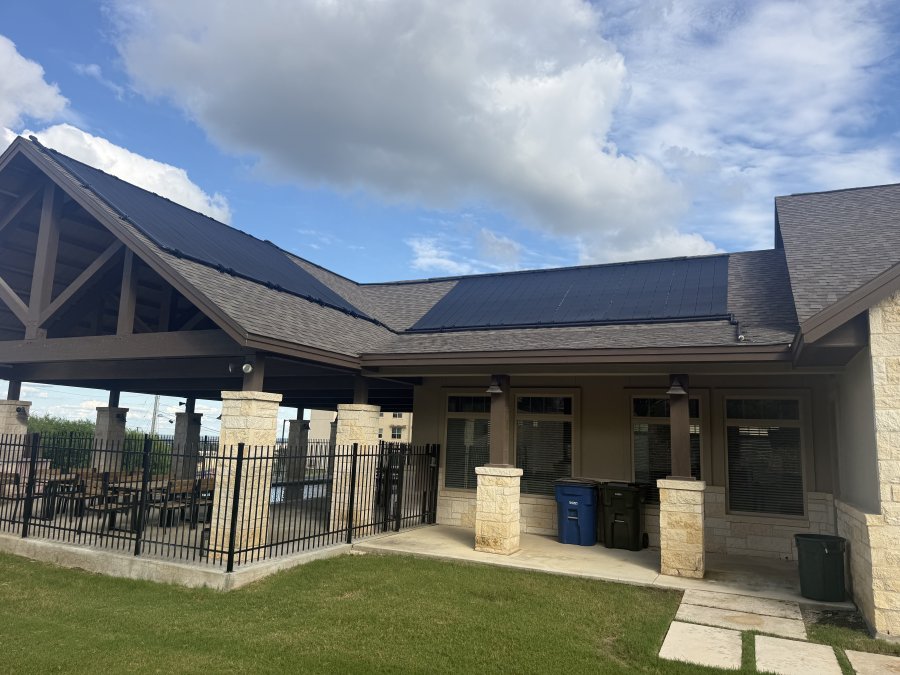
Work through this list in order:
- Pump strainer basket: pull it, empty it, and check for cracks in the lid O-ring
- Skimmer basket: clear debris and confirm the weir door moves freely
- Pump lid: reseat it firmly, since a loose lid pulls air
- Suction valves: confirm they are fully open
- Return valves: confirm they are open and not fighting each other
- Pump operation: listen for cavitation, a rattling sound that signals air
A pump that runs but moves little water is often starved on the suction side. A pump that shuts off quickly is often protecting itself from low flow.
Our solar pool heater maintenance and repair guide covers pumps, valves, and system parts in more depth if you want the full picture.
Clear an Air Lock in a Solar Pool Heating System
An air lock in a solar pool heating system is trapped air that blocks water from moving through the panels.
Water pushes against the pocket instead of through it, and flow at the returns drops even though the filter is spotless.
Signs of an air lock:
- Bubbles shooting from the return jets
- A gurgling or rushing sound at the equipment pad
- Panels that feel cool even in full sun
- Flow that starts strong, then fades within a minute or two
- The pump strainer pot that will not stay full
Work through the clearing sequence in this order:
- Confirm the pump is fully primed with the strainer pot full and the lid sealed. Clearing air with an unprimed pump just pulls more air in.
- Set the solar diverter fully to solar. A valve left halfway splits flow and makes the air pocket harder to push out.
- Run the pump on high speed with solar engaged and give it several minutes. The higher velocity is what carries the air pocket down and out through the returns.
- Watch the returns. A burst of bubbles followed by steady flow means the lock cleared. Bubbles that keep coming back mean air is still entering somewhere.
- Bleed the filter relief valve if your system has one, then recheck the gauge.
If the lock clears but returns within a day, the problem is not trapped air, it is a suction-side air leak pulling new air into the system every cycle. Common entry points are the pump lid O-ring, the strainer pot drain plug, and any union on the suction line.
Watch out: never force a diverter valve or run the pump dry to chase an air lock. Running dry for more than a minute or two can damage the pump seal and motor, and forcing a stuck valve can crack the body.
A solar loop that will not hold prime after two or three clearing attempts usually has a physical cause, a leaking panel union, a failed check valve, or a suction leak under the pad. Our explainer on how a solar pool heater works shows the full water cycle so you can trace where air gets in.
Pool Pump Priming Techniques That Restore Circulation
Pool pump priming techniques matter more than most homeowners realize. A pump that is not fully primed will never deliver strong flow to the panels, no matter how clean the filter is.
Try these steps:
- Fill the pump strainer pot with water before restarting
- Open all suction valves fully
- Run the pump on high speed until the pot fills and stays full
- Bleed air from the filter relief valve if your system has one
- Check that the pump lid is tight and the O-ring is clean
Watch out: running a pump dry for more than a minute or two can damage the seal and the motor. If the pump will not prime after two or three attempts, stop and look for a suction-side air leak instead of running it longer.
Common air leak spots include the pump lid, the strainer pot drain plug, and any union on the suction line. A little shaving cream smeared on a joint while the pump runs will bubble where air is being pulled in.
Solar Pool Heater Flow Switch Troubleshooting
Solar pool heater flow switch troubleshooting starts with one question: is the switch reporting low flow because flow is actually low, or because the switch itself failed?
The flow switch is a safety device. It tells the controller that water is moving before the system sends water to the panels. When it senses low flow, it triggers a check flow warning or shuts the heater down.
Work through it this way:
- Confirm the pump is running and the filter is clean
- Confirm the solar valve is open
- Check the switch for debris or a stuck paddle
- Confirm the wiring is secure at the controller
- Test the switch per the manufacturer's instructions
A heater shutdown right after a filter cleaning usually points to air, not a failed switch. Clear the air first, then test the switch. If the warning persists with strong flow at the returns, the switch is the likely culprit.
Inspect Solar Panels, Plumbing, and Diverter Valves for Blockages
Head up to the roof and look at the panels themselves. A blockage on the solar side will hold flow down even when everything at the pad looks perfect.
Check for:
- Debris or nests blocking panel inlets
- Kinks or collapsed sections in the plumbing
- Leaks at panel unions
- A diverter valve stuck between positions
- Panels that are hot to the touch but not heating water
Valve position is a frequent offender. A diverter valve left partly open after service splits flow and starves the loop. Set it fully to solar and watch the return jets for a change.
Also look at panel temperature. Panels in full sun that stay cool to the touch are not getting water. That points to a blockage or an air lock upstream.
When to Call a Solar Pool Heating Specialist
Call a specialist when you have worked the checks above and flow is still weak.
Call us at Solar Pool Heating Texas when:
- Flow stays low after clearing air and priming the pump
- The heater keeps shutting down with a flow warning
- You see water where it should not be
- The panels are not heating despite strong flow
We can walk you through choosing a pool heating contractor if you are comparing options, or show you how to get a solar pool heating quote if you are ready to move.
Solar pool heating is a sustainable, energy-efficient way to heat a pool. Our team is available 24/7 for emergency repairs, and our 100% satisfaction guarantee applies to our work.
A weak-flow call after a filter cleaning is almost always solvable in an afternoon. When it is not, our team at Solar Pool Heating Texas can diagnose the system, restore full circulation, and get your panels heating again.
Frequently Asked Questions
Why does my pool heater say low flow right after I clean the filter?
A low flow warning after cleaning usually means air entered the system or a valve was left in the wrong position. When you open the filter or pump basket, the pump loses prime and can trap air in the solar loop. Check that the pump basket is full of water, confirm the diverter valve is set to send water through the collectors, and look at the pressure gauge. If pressure reads lower than normal, air is the likely culprit; if it reads higher, a blockage or a filter installed backward is more likely.
How do I know if the flow switch on my solar pool heater is bad?
Start by confirming the pump is moving water and the filter is clean. If the controller still shows no flow, the switch may be stuck, fouled with debris, or wired loose. Many switches have a small paddle or plunger you can inspect for scale or grit. A quick test is to compare the switch reading against visible return jet strength. If the jets are strong but the controller reports no flow, the switch itself is the likely fault and should be tested or replaced by a technician.
Does air trapped in the system cause low flow after filter maintenance?
Yes. Air in the system is one of the most common reasons for low flow after filter cleaning. The pump cannot move water efficiently when it is pulling air, and an air lock in a solar pool heating system can stop circulation through the collectors entirely. Bleed air from the filter, confirm the pump basket is full, and let the pump run a few minutes with the solar valve open so the loop can purge. If air keeps returning, check the suction line and pump lid O-ring for leaks.
What should I check if my solar pool heater fails to activate after cleaning?
Work through the basics in order. Confirm the pump is primed and the filter pressure is in its normal range, then verify the diverter valve is positioned to route water through the solar collectors. Check that the controller has power and the temperature setpoint is calling for heat. If the panel sensor reads cooler than the pool, the controller will hold off on purpose. When all of those check out and the heater still will not activate, the flow switch or controller wiring is the next thing to test.