 blog
Solar Pool Heating Alternatives for Commercial Properties
Table of Contents
- Why Commercial Properties Are Switching to Solar Pool Heating
- Commercial Solar Pool Heating Systems: Core Features and Options
- Solar Pool Heater System Sizing for Large Commercial Pools
- Solar Pool Heating vs. Gas Heating: Performance and Operational Differences
- Commercial Pool Heating System Maintenance and Long-Term Reliability
- Return on Investment and Energy Savings for Commercial Facilities
- How to Choose the Right Solar Pool Heating Solution
- Frequently Asked Questions
Last Updated: October 11, 2026
Why Commercial Properties Are Switching to Solar Pool Heating
More commercial property managers are choosing solar pool heating alternatives because they deliver measurable operational savings without the ongoing fuel costs of gas or electric systems. Solar pool heating harnesses free energy from the sun to maintain comfortable water temperatures year-round, making it the smartest choice for hotels, resorts, gyms, and aquatic facilities across Texas.
Facility managers choose solar pool heating for predictable energy costs and sustainable operations. Unlike gas heating, which fluctuates with fuel prices, or electric heating, which drives up utility bills, solar systems provide stable, long-term temperature control and extend swimming seasons by up to nine months.
Commercial Solar Pool Heating Systems: Core Features and Options
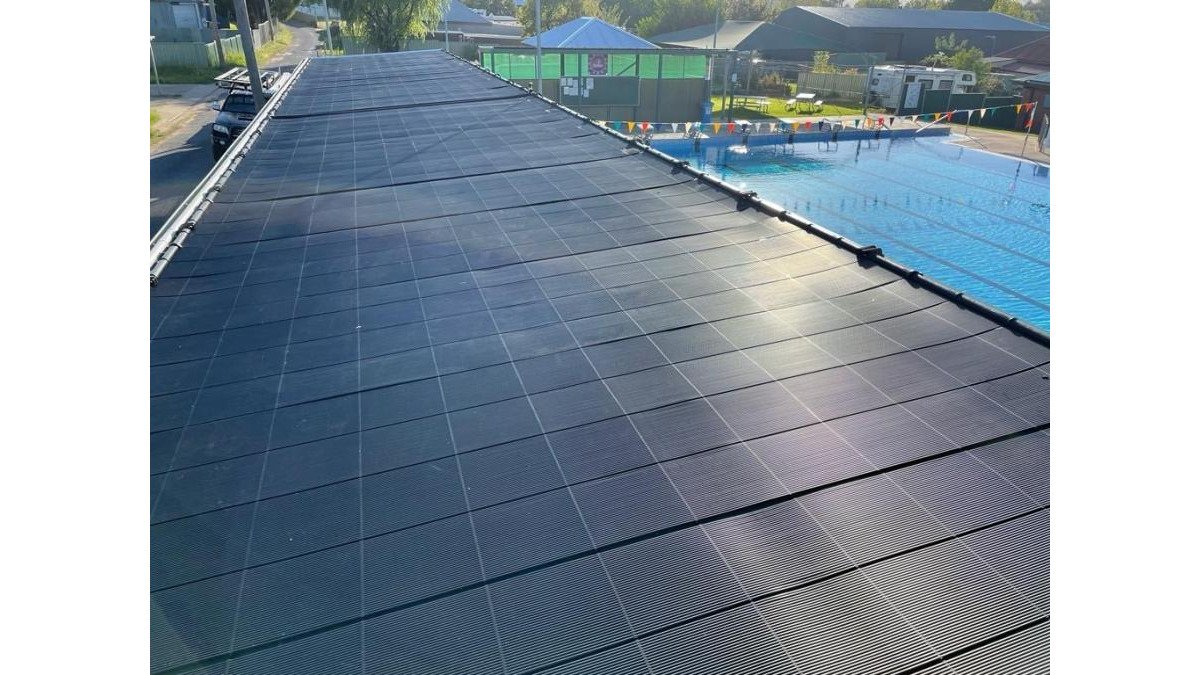
Rooftop Solar Pool Heating Installations
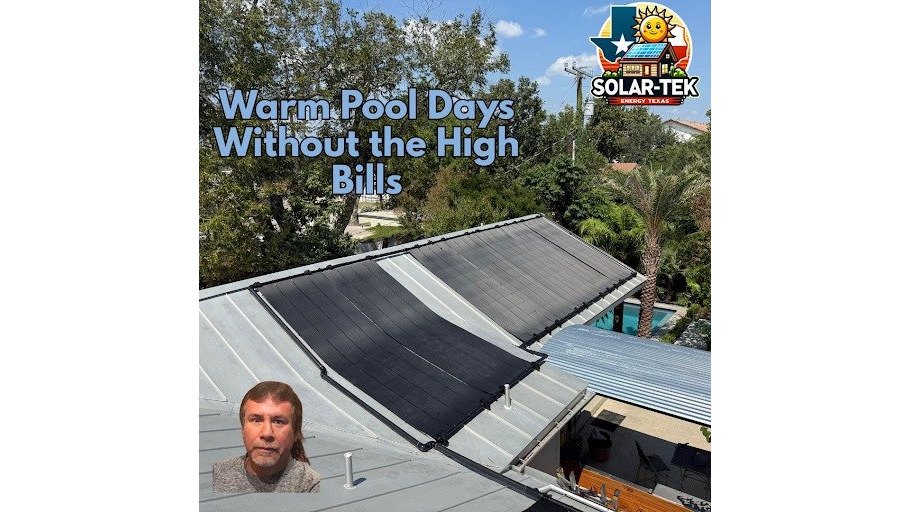
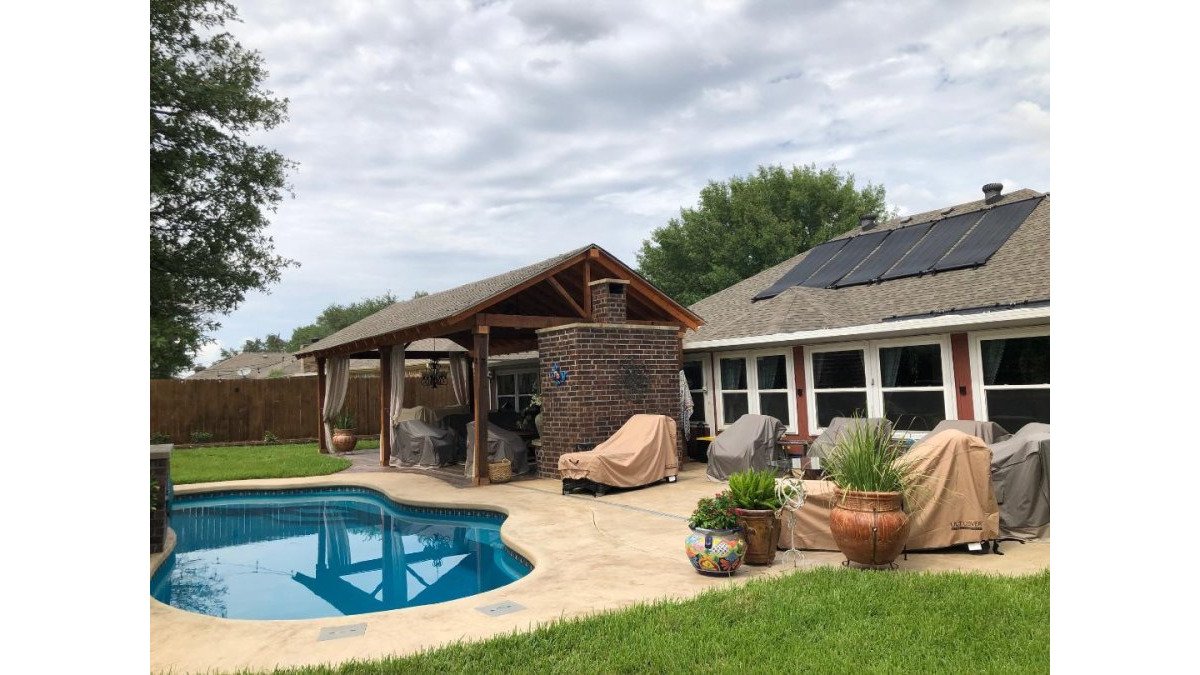
Rooftop solar pool heating systems mount flat-plate collectors on your facility's existing roof structure, absorbing solar radiation and transferring heat to pool water through a circulation system. Installation uses space already available and integrates seamlessly with most commercial buildings.
Rooftop systems work best with southern exposure and minimal shade. Occasional cleaning keeps collectors operating at peak efficiency. Most commercial properties achieve consistent heating performance year-round, with stronger output during spring and summer.
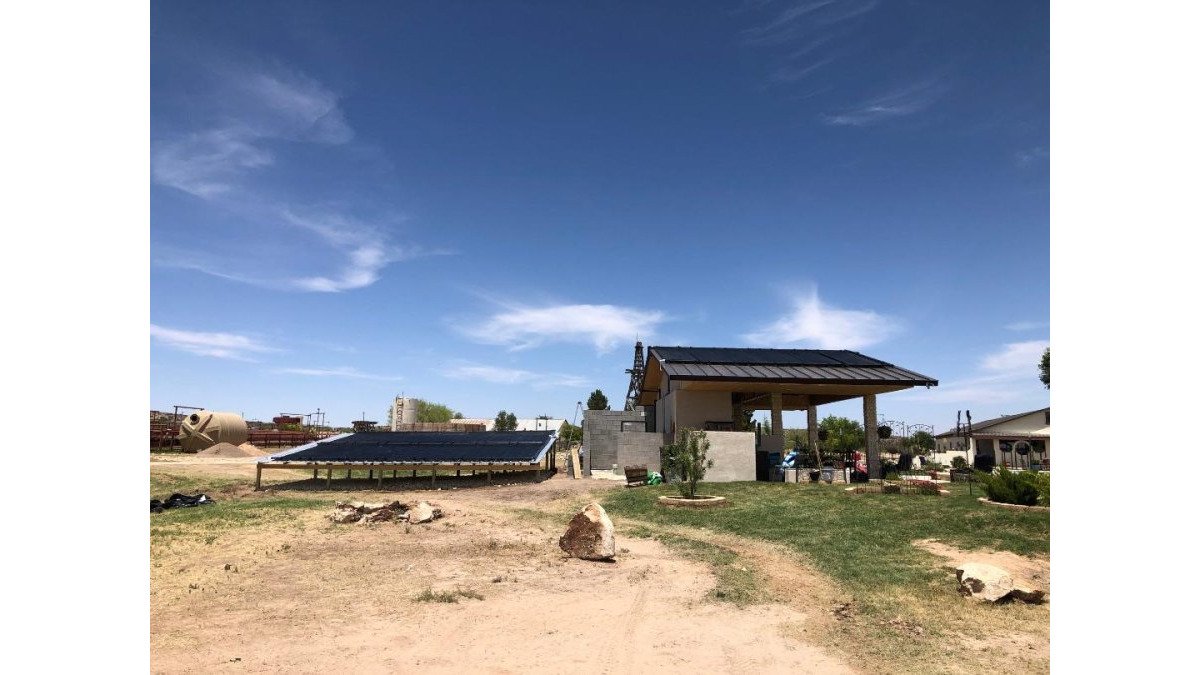
Ground-Mounted and Carport Systems
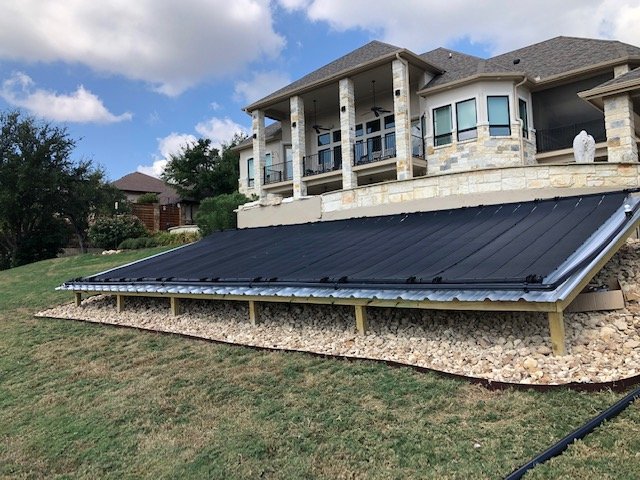
Ground-mounted systems sit adjacent to your pool or facility, ideal when roof space is limited. Carport systems provide shade for parking while generating heat for your pool.
Carport installations maximize land use by converting parking areas into functional energy-generating assets. Ground-mounted systems offer the same heating performance as rooftop installations with greater placement flexibility.
Solar Pool Heater System Sizing for Large Commercial Pools
Proper system sizing ensures your solar pool heating investment delivers the comfort level you need. Undersized systems struggle during winter; oversized systems waste resources.
System sizing depends on pool surface area, desired temperature increase, climate conditions, and operating hours. Professional assessment ensures your solar pool heater system sizing matches your operational needs.
Solar Pool Heating vs. Gas Heating: Performance and Operational Differences
Solar pool heating operates silently with zero emissions and eliminates fuel bills. Gas heating creates noise, requires fuel delivery or pipeline connections, and generates combustion byproducts.
Gas heating responds faster to temperature demands; solar heating works gradually and continuously, ideal for facilities with consistent pool use. Many commercial properties use solar as their primary system for baseline heating, supplementing with gas only during peak demand or poor weather.
Commercial Pool Heating System Maintenance and Long-Term Reliability
Solar pool heating systems need minimal maintenance: occasional filter cleaning, circulation pump checks, and connection inspections.
Most commercial solar pool heating systems operate for 15-20+ years with proper care.
Return on Investment and Energy Savings for Commercial Facilities
Commercial property owners evaluate solar pool heating through energy savings, capital expenditure, cash flow timing, and ownership structure.
Energy Savings and Operational Cost Reduction
Solar pool heating eliminates or dramatically reduces energy costs. Savings depend on your current heating method, pool size, and operating schedule.
Facilities using gas heating see the most immediate benefit. Gas heating requires ongoing fuel purchases that fluctuate with market conditions. Switching to solar eliminates fuel costs almost entirely, leaving only negligible maintenance expenses.
Facilities using electric heating benefit from reduced electricity consumption and lower utility costs. Savings are most pronounced at facilities with high occupancy or extended operating hours.
Solar systems provide operational stability, locking in heating costs at minimal maintenance levels, a predictable expense that doesn't fluctuate with energy markets.
Ownership and Financing Models
Commercial buyers structure solar investments in different ways, each with distinct financial and operational implications:
Direct Purchase (Capital Expenditure) You own the system permanently and receive all energy savings immediately. This model maximizes long-term savings over the system's 15-20+ year lifespan but requires significant upfront capital and places maintenance responsibility on you. Direct purchase suits well-capitalized facilities with internal maintenance capacity.
Equipment Financing Loan You finance the system over 5-10 years, own it, and receive all energy savings. Net cash benefit typically becomes positive within 3-5 years. This model preserves capital and allows depreciation benefits but requires good credit and debt capacity.
Lease or Service Agreement A third party owns the system; you pay a monthly fee typically lower than current heating costs. You see immediate savings but don't own the equipment, and the lease term locks you into a fixed structure. Leases suit facilities wanting to avoid capital expenditure and maintenance responsibility.
Power Purchase Agreement (PPA) or Energy-as-a-Service A solar provider owns the system; you pay only for heat generated. You have no upfront cost, no maintenance responsibility, and the provider bears equipment risk. This model suits facilities with limited capital, though per-unit heating cost may exceed direct ownership over time.
Payback Timeline and Financial Scenarios
The payback timeline, how long it takes for energy savings to equal your investment, varies by ownership model and facility profile:
- Direct purchase: Typically 5-8 years, depending on current heating costs and system size. After payback, all subsequent energy savings are pure profit.
- Equipment loan: Payback occurs when cumulative energy savings exceed total loan payments, usually 3-5 years into the loan term. Ownership and depreciation benefits may improve the effective payback.
- Lease: You see immediate monthly savings, but you never fully recover the system cost because you don't own it. The value is in reduced operating expenses, not capital recovery.
- PPA: Similar to lease; you benefit from lower heating costs but don't achieve traditional payback because you don't own the asset.
Commercial facilities should model their specific scenario: current heating costs, expected pool usage, facility lifespan, and financing capacity. A facility with high current heating bills and a 20-year operational horizon will see stronger returns from direct purchase or financing. A facility with uncertain long-term plans or limited capital may prefer a lease or PPA to minimize risk and upfront commitment.
Secondary Financial Benefits
Beyond direct energy savings, solar systems create additional financial value:
Property value and marketability: Facilities with renewable energy systems are increasingly attractive to guests, tenants, and investors. Hotels and resorts can market solar heating as a sustainability feature. Office and retail properties appeal to environmentally conscious tenants. This competitive advantage can support higher occupancy rates or rental rates.
Insurance and risk management: Some insurance providers offer modest discounts for properties with renewable energy systems, recognizing the reduced operational risk and lower utility exposure.
Depreciation and tax benefits: Businesses that purchase solar systems may be eligible for depreciation deductions and, in some cases, federal investment tax credits. Consult your tax advisor to understand the specific benefits available to your facility.
Operational resilience: Solar systems reduce your dependence on grid electricity and gas supply chains. During periods of high utility rates or supply disruptions, your facility's heating costs remain stable.
Solar Pool Heating Texas helps commercial property owners model their specific financial scenario, compare ownership structures, and select the approach that aligns with their capital availability, risk tolerance, and long-term facility plans. Our partnership with SolarTEK ensures you receive transparent guidance on energy savings and financing options.
How to Choose the Right Solar Pool Heating Solution
Choosing a solar pool heating provider requires more than assessing your roof space and budget. Commercial property owners need a structured evaluation framework to compare solutions and ensure the provider matches their operational requirements, facility type, and long-term goals.
Evaluation Criteria for Commercial Solar Pool Heating Providers
Start with system design and sizing accuracy. Request a detailed site assessment that accounts for your pool's surface area, desired operating temperature, typical usage hours, and local solar irradiance patterns.
Installer qualifications and track record matter significantly for commercial installations. Ask for references from similar facilities, hotels, gyms, aquatic centers, or resorts with comparable pool sizes. Request documentation of completed projects, system performance data, and customer satisfaction ratings.
Warranty coverage and performance guarantees protect your investment. Ask whether the warranty covers parts, labor, or both. Clarify what happens if the system underperforms, does the provider offer a performance guarantee, and under what conditions?
Monitoring and maintenance support determine how easily you can track system performance and address issues.
Integration with your existing equipment is often overlooked but critical. Your solar system must connect seamlessly to your pool's existing circulation pump, filtration system, and any supplemental heating (gas or electric).
Matching System Type to Property Configuration
Rooftop installations work best for facilities with southern-facing roof space, minimal shade, and structural capacity to support collector weight (typically 3-5 pounds per square foot). Hotels, office buildings, and multi-story facilities often have suitable rooftop area. Confirm that your roof is in good condition and has at least 10-15 years of remaining life.
Ground-mounted systems suit properties with available land adjacent to the pool or facility. These systems offer easier maintenance access and future expansion capability. Ground-mounted installations work well at resorts, recreational facilities, and properties with ample grounds. Verify that the installation site has adequate southern exposure and that the ground is stable and level.
Carport and parking-lot systems maximize land use by combining shade structures with solar collection. These are ideal for commercial properties with large parking areas and moderate pool heating needs.
Questions to Ask Before Committing
- How will the system perform during winter months or cloudy periods? (Request seasonal output projections.)
- What is the expected lifespan of major components, and what is the replacement cost if a pump or controller fails after warranty expiration?
- How does the system integrate with any existing backup heating, and when would backup heating activate?
- What monitoring data will you receive, and how often?
- Are there any maintenance tasks you must perform, or does the provider handle all upkeep?
- What happens if the system underperforms due to equipment failure versus poor weather?
- Does the provider offer financing options, and if so, what are the terms and conditions?
Solar Pool Heating Texas specializes in both residential and commercial installations. Our team conducts a thorough site assessment, designs a system matched to your facility's specific needs, and handles professional installation with ongoing monitoring and support. We partner with SolarTEK to deliver reliable solutions backed by comprehensive warranties and 24/7 emergency repair availability.
Frequently Asked Questions
What is the best solar pool heating solution for a large commercial pool?
The best solar pool heating system depends on your pool size, available space, and climate. Rooftop installations work well for facilities with southern-facing roof space, while ground-mounted or carport systems suit properties with limited roof area. Commercial solar pool heating systems can handle pools of any size when properly sized. A professional assessment determines the optimal configuration, panel count, and placement to maximize performance and extend your swimming season significantly.
How does solar pool heating compare to gas heating for commercial properties?
Solar pool heating vs. gas heating offers distinct trade-offs. Gas systems provide instant heat but rely on ongoing fuel costs and produce emissions. Solar systems have minimal operating costs, require less maintenance, and provide predictable energy expenses. While solar heating takes longer to raise water temperature initially, it maintains warmth efficiently once established. For commercial facilities operating year-round, solar eliminates the monthly energy bills that gas systems generate, making it the more cost-effective long-term choice.
What maintenance does a commercial solar pool heating system require?
Commercial pool heating system maintenance is minimal compared to gas or electric alternatives. Solar systems require occasional panel cleaning to maintain efficiency. Annual inspections check connections and ensure optimal performance. Unlike gas heaters, there are no burners to service or fuel lines to maintain. This low-maintenance design means fewer service calls, reduced downtime, and predictable operating costs, making solar systems ideal for busy commercial facilities.
How long does it take for a commercial solar pool heating system to pay for itself?
Return on investment timelines vary based on your current heating costs, system size, and local energy rates. Commercial facilities with high monthly heating expenses typically see payback within a reasonable timeframe. Solar pool heating eliminates or drastically reduces electricity or gas bills, creating immediate monthly savings. Beyond financial returns, facilities gain extended swimming seasons, reduced operational overhead, and improved sustainability credentials that enhance property value and guest experience.
Solar pool heating is the smartest, most cost-effective way to heat a commercial pool. It needs no maintenance, pays for itself quickly, and explains why more Texas property owners are choosing solar over gas or electric alternatives. Contact Solar Pool Heating Texas for a free consultation and discover how much you can save with a custom solar pool heating system designed for your facility.