 blog
How to Choose SolarTEK Alternatives for Residential Pools
Last Updated: October 25, 2026
Quick Summary
SolarTEK alternatives for residential pools come down to collector type, sizing, and installer quality rather than brand. For most warm, sunny climates, an unglazed mat array sized to 50% to 100% of your pool's surface area is the closest functional match. Pair it with a solar cover to hold heat overnight.
- A solar pool heater wins on operating costs and maintenance; a gas heater wins on speed and cloudy-day output.
- For a round 24-foot above-ground pool, a sensible array is roughly 225 to 450 square feet of collector.
- A solar cover is the cheapest upgrade that makes any solar heating system work better.
- South-facing mounting is ideal; east and west mounts shorten the useful heating window.
- A differential controller runs the pump only when the panels can actually add heat.
Table of Contents
- Why Homeowners Look for SolarTEK Alternatives for Residential Pools
- Solar vs Gas Pool Heater: Which Makes More Sense for Your Pool
- Solar vs Electric Pool Heater: Efficiency and Everyday Performance
- Solar Pool Heating for Above-Ground Pools: What Works and What Doesn't
- Solar Pool Covers: The Low-Cost Partner to Any Solar Heating System
- How SolarTEK Alternatives Compare Side by Side
- Get a Free Consultation on Your Solar Pool Heating Options
- Frequently Asked Questions
Why Homeowners Look for SolarTEK Alternatives for Residential Pools
Homeowners searching for SolarTEK alternatives for residential pools usually want the same three things: a warm pool, lower energy bills, and a system that runs without fuss. At Solar Pool Heating Texas, we hear this constantly from pool owners comparing solar options before they commit. The appeal of solar is simple. Readers considering a switch can also review the residential pool solar panel installation process step by step.
Solar vs Gas Pool Heater: Which Makes More Sense for Your Pool
A solar pool heater wins on operating costs and maintenance; a gas heater wins on speed and cloudy-day output. That trade-off decides most purchases.
Gas heaters burn fuel to raise water temperature fast, which suits spas and pools used in short bursts. For a deeper look at whether the investment makes sense, see our review of whether solar pool heaters are worth it.
Best for: homeowners who heat daily through the season and want predictable energy costs. Skip if: you need instant heat for a spa used a few times a month.
Solar vs Electric Pool Heater: Efficiency and Everyday Performance
A pool heat pump moves heat from the air into the water, while solar collectors gather heat directly from sunlight. Both beat resistance electric heating on energy use, but they behave differently day to day.
Heat pumps run on electricity and perform well in mild air, though their efficiency drops as temperatures fall. If you are weighing the switch, our guide to lowering pool heating bills with solar walks through the everyday numbers.
| Feature | Solar Collector System | Pool Heat Pump | Gas Heater |
|---|---|---|---|
| Heat source | Sunlight | Air temperature | Fuel combustion |
| Operating cost | Very low after install | Moderate electricity use | Highest fuel use |
| Maintenance | Minimal | Moderate | Regular service |
| Best climate | High solar exposure | Mild air temps | Any |
| Swimming season gain | Up to 9 months | Seasonal | Seasonal |
Solar Pool Heating for Above-Ground Pools: What Works and What Doesn't
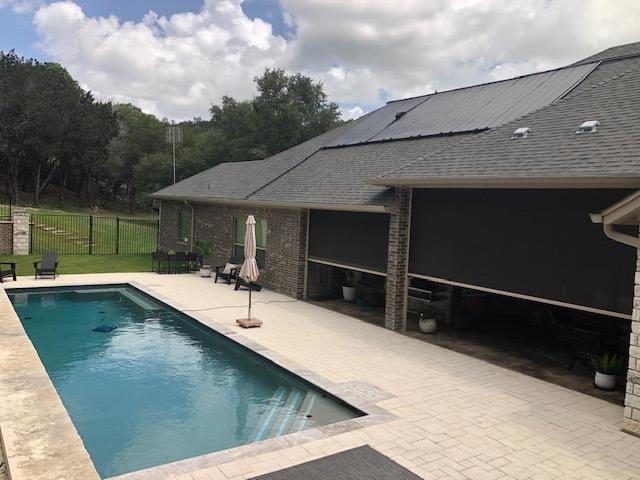
Above-ground pools are a good fit for solar heating because the pool is usually small, the pump is accessible, and there is often yard space for a ground-level rack.
Sizing the array to the pool
A common industry rule of thumb is collector area equal to 50% to 100% of the pool's surface area. For a round 24-foot above-ground pool, surface area is about 452 square feet, so a sensible array is roughly 225 to 450 square feet of collector. A smaller array will still add heat but will not extend the season as far.
Mounting options that actually work
- Ground-level rack. The most common approach. Angle the collectors toward the sun at roughly your latitude, face them south, and keep them off the ground so air circulates behind them. A rack keeps the pool deck clear and makes service easy.
- Fence or wall mount. Works when yard space is tight, but check that the mount can carry the wet weight of the panels and that the panels are not shaded by the fence itself.
- Roof mount. Possible on a nearby shed or garage, but above-ground pool pumps often lack the pressure to push water to a roof and back. A booster pump may be needed, which adds complexity.
Plumbing into an above-ground pool
The collectors tie into the existing circulation loop with a bypass valve so you can route water through the panels or straight back to the pool. Above-ground pools typically use flexible hose and clamp fittings, so the retrofit is simpler than on an in-ground pool. Two details matter: install a check valve to prevent backflow when the pump shuts off, and make sure the panels drain down when the pump stops so water does not sit and stagnate in the collectors.
What doesn't work
- Shading the collectors. Even partial shade from a tree or the pool itself cuts output sharply.
- Skipping the bypass valve. Without it you cannot tune flow or isolate the panels for service.
- Undersizing the array. A system sized for a small pool will underperform on a larger one.
- Ignoring the cover. An uncovered above-ground pool loses much of its heat overnight, so the collectors run longer to recover.
Seasonal performance
In warm, high-sunlight regions, a well-sized above-ground solar system plus a cover can extend the swimming season by several weeks on each end. Performance tracks sunlight, ambient temperature, and wind. On cool, windy days the panels still collect heat, but losses at the pool surface rise, which is why windbreaks and covers matter. In regions with occasional hard freezes, drain-down and freeze protection are essential.
Installation is straightforward for a professional and keeps the pool deck clear.
Solar Pool Covers: The Low-Cost Partner to Any Solar Heating System
A solar cover, or pool blanket, is the cheapest upgrade that makes any solar heating system work better. It reduces evaporation and heat loss at the surface, holding water temperature overnight. Pair a cover with solar collectors and you keep more of the heat you paid for. Without one, much of your gain escapes after sunset. The combination of collectors plus a blanket is a highly cost-effective way to heat a pool, and it needs minimal maintenance beyond rolling the cover on and off.
How SolarTEK Alternatives Compare Side by Side
SolarTEK is a brand name in solar pool heating, not a single product, so "SolarTEK alternatives" really means alternatives to the type of system SolarTEK sells: glazed or unglazed solar collector arrays plumbed into the pool's existing circulation loop. The useful comparison is therefore not logo versus logo. It is collector type versus collector type, and installer versus installer, because the same hardware performs very differently depending on how it is sized and plumbed.
What you are actually replacing
A SolarTEK-style system has four parts: the collectors, a mounting rack or roof mount, a plumbing loop with a bypass valve, and a control that decides when the pump pushes water through the panels. When homeowners shop alternatives, they usually keep the pool pump and replace the collector array, the controls, or the installer. That is why a like-for-like alternative is defined by collector area, flow rate, and mounting, not by brand.
The three collector families that compete with a SolarTEK-style array
| Collector type | How it heats | Strengths | Trade-offs |
|---|---|---|---|
| Unglazed mat or panel | Black polymer absorbs sunlight; pool water flows through | Simple, lightweight, works well in warm sunny climates, low maintenance | Loses efficiency on cool, windy days; needs full sun |
| Glazed flat-plate | Covered absorber with insulation | Holds heat better in cooler air, longer season | Heavier, more complex mounting, higher equipment complexity |
| Evacuated tube | Vacuum tubes capture diffuse light | Good in cooler or hazier conditions | More fragile, more plumbing connections, overkill for many residential pools |
For most residential pools in warm, high-sunlight regions, an unglazed mat array is the closest functional match to a SolarTEK-style system and the easiest to integrate with an existing pump and filter. Glazed and evacuated-tube systems make sense when the pool is used in cooler shoulder months or the roof space is limited.
What separates a good alternative from a bad one
- Collector area matched to pool surface area. A common industry rule of thumb is that collector area should equal roughly 50% to 100% of the pool's surface area, with the higher end for cooler climates, windier sites, or a longer desired season. Undersizing is the most common reason a solar array disappoints.
- Flow rate through the collectors. Manufacturers publish a recommended flow per panel; too little flow overheats the panels, too much reduces the temperature rise per pass. A bypass valve lets you tune this.
- Mounting and orientation. South-facing is ideal; east and west mounts work but shorten the useful heating window. Shading from trees or a second story kills output regardless of collector quality.
- Controls and freeze protection. A differential controller that compares collector temperature to pool temperature runs the pump only when the panels can actually add heat. Automatic drain-down or freeze protection matters in regions with occasional hard freezes.
- Installer quality. Plumbing layout, valve placement, and roof penetration details decide whether the system lasts. Two bids for identical collectors can produce very different systems.
Get a Free Consultation on Your Solar Pool Heating Options
Choosing among SolarTEK alternatives comes down to your pool, your sunlight, and how you swim. We install and repair residential and commercial solar pool heating, and we back the work with a 100% satisfaction guarantee. Our team is available 24/7 for emergency repairs, and we have deep experience across the region's pools and seasons. Our guide to choosing a pool heating contractor walks you through the seven steps to picking a trustworthy installer.
Frequently Asked Questions
What are the alternatives to SolarTEK for heating a residential pool?
Homeowners comparing SolarTEK alternatives typically weigh three routes: a professionally installed solar collector system, a pool heat pump, or a gas heater. Solar collectors use the sun to warm water running through panels on the roof or a rack, while heat pumps and gas heaters rely on electricity or fuel. Many pool owners pair solar collectors with a solar cover to hold heat overnight. The right pick depends on your pool size, sun exposure, and how long you want to swim each year.
How does solar pool heating compare with gas and electric pool heaters?
A solar vs gas pool heater comparison usually comes down to running costs and maintenance. Gas heaters warm water fast but burn fuel every time they run, and heat pumps move heat using electricity. Solar collectors draw energy from sunlight, so once installed they need very little to operate. Solar also has no combustion parts and few moving pieces, which keeps upkeep simple. For Texas pools with good sun exposure, solar often delivers the lowest ongoing energy use across a long swimming season.
Are solar pool heaters suitable for above-ground pools?
Yes. Solar pool heating for above-ground pools works well when panels are mounted on a rack, a fence, or a nearby roof so they catch direct sunlight. The pool's existing pump can usually push water through the collectors, and a solar cover helps retain the heat. Above-ground pools heat faster because they hold less water, so a modest collector array can make a noticeable difference. Check that the panels sit where shade from trees or buildings won't block the sun for most of the day.
Can a solar pool cover replace a solar pool heating system?
No, but the two work best together. Solar pool covers trap heat and cut evaporation, which slows overnight heat loss, yet they don't actively warm the water the way collectors do. Think of a cover as heat retention and collectors as the heat source. Pairing a cover with a solar heating system keeps water warmer for longer and reduces how much energy the system needs to recover lost heat. Many homeowners find the combination extends their swimming season more than either alone.
The smartest way to heat a pool is still the sun. If you are ready to stop feeding a gas or electric bill, reach out for a free consultation and we will size a solar system to your pool. Get started with Solar Pool Heating Texas and enjoy warm water, lower energy use, and a system that needs no maintenance.