 comparison
Solar Pool Heating Monthly Payment: What Texas Owners Should Know
Last Updated: November 4, 2026
Quick Summary
A solar pool heating monthly payment is the amount you effectively spend each month once a solar system is installed, and it is driven mainly by financing terms rather than fuel costs. Because the sun provides the heat for free, the only ongoing expense is the small amount of pump electricity needed to circulate water through the collectors.
- Solar collectors use free sunlight, so the only ongoing cost is pump electricity.
- A variable-speed pump paired with a thermal blanket keeps the monthly operating figure small.
- A calculator estimates a range from pool volume, collector area, climate, APR, and term.
- A longer financing term lowers the installment but raises total interest paid.
- A promotional rate that resets can make the first-year installment look better than later years.
Table of Contents
- Why Solar Pool Heating Monthly Payments Matter More Than Sticker Price
- How Much Does It Cost to Heat a Pool Per Month With Gas, Electric, or Solar?
- Using a Solar Pool Heating Monthly Payment Calculator
- What a Swimming Pool Heating Cost Calculator Can and Cannot Tell You
- Solar Pool Heating Financing Options That Keep Cash Flow Steady
- Factors That Change Your Solar Pool Heating Monthly Payment
- How Solar Pool Heating Pays for Itself Over Time
- Get a Free Consultation on Your Solar Pool Heating Plan
- Frequently Asked Questions
Why Solar Pool Heating Monthly Payments Matter More Than Sticker Price
A solar pool heating monthly payment is the amount you effectively spend each month to keep your pool warm once a solar system is installed.
That framing is the right one. Sticker price tells you what you spend once. Monthly payment tells you what you live with for the next decade and beyond.
Below, we break down how solar compares with gas and electric heating on ongoing cost, how to use a solar pool heating monthly payment calculator honestly, and which financing structures keep cash flow steady.
How Much Does It Cost to Heat a Pool Per Month With Gas, Electric, or Solar?
Solar uses the sun rather than purchased fuel or grid electricity to warm the water, which is why it is often described as having a low operating cost. For the full cost breakdown, see our solar pool heating cost guide. Gas and electric systems both add a recurring line to your utility bills every month you run them; a solar system does not. The gap widens the longer your season runs and the larger your pool volume. Here is how the three compare on the factors that actually drive monthly spend.
| Heating Type | What You Pay For Each Month | How the Monthly Figure Moves | Maintenance Load |
|---|---|---|---|
| Gas heater | Metered natural gas or propane burned in a combustion chamber | Rises with swim frequency, night-time temperature drop, and tankless vs. storage design | Annual service, igniter and heat-exchanger wear, venting checks |
| Heat pump | Grid electricity to run a compressor and fan | Rises with utility rate, ambient air temperature, and hours of runtime | Compressor, fan motor, and coil service; refrigerant checks |
| Solar collector | Pump electricity only, the heat itself is free | Rises only with pump runtime, which a variable-speed pump and thermal blanket keep small | Occasional panel rinse and a periodic look at the pump basket |
Gas Heaters: Fast Heat, Recurring Bills
The trade-off is that every hour of warmth is a metered expense. A gas heater's monthly bill tracks how often you swim and how cold the nights get, so a cool snap in spring or fall can push the number up sharply. Combustion efficiency also matters: older atmospheric units vent a meaningful share of their heat up the flue, while modern condensing units recover more of it, but both still burn fuel every hour they run.
Heat Pumps: Efficient but Still Tied to the Grid
Heat pumps move heat rather than generate it, so they cost less to run than gas for the same temperature gain. Their efficiency is expressed as a coefficient of performance (COP), the ratio of heat delivered to electricity consumed, and that ratio falls as the outside air gets colder. That is why a heat pump's monthly figure depends on your utility rate, the ambient air temperature it works against, and how hard the unit runs to offset night-time heat loss.
Solar: The Lowest Operating Cost of the Three
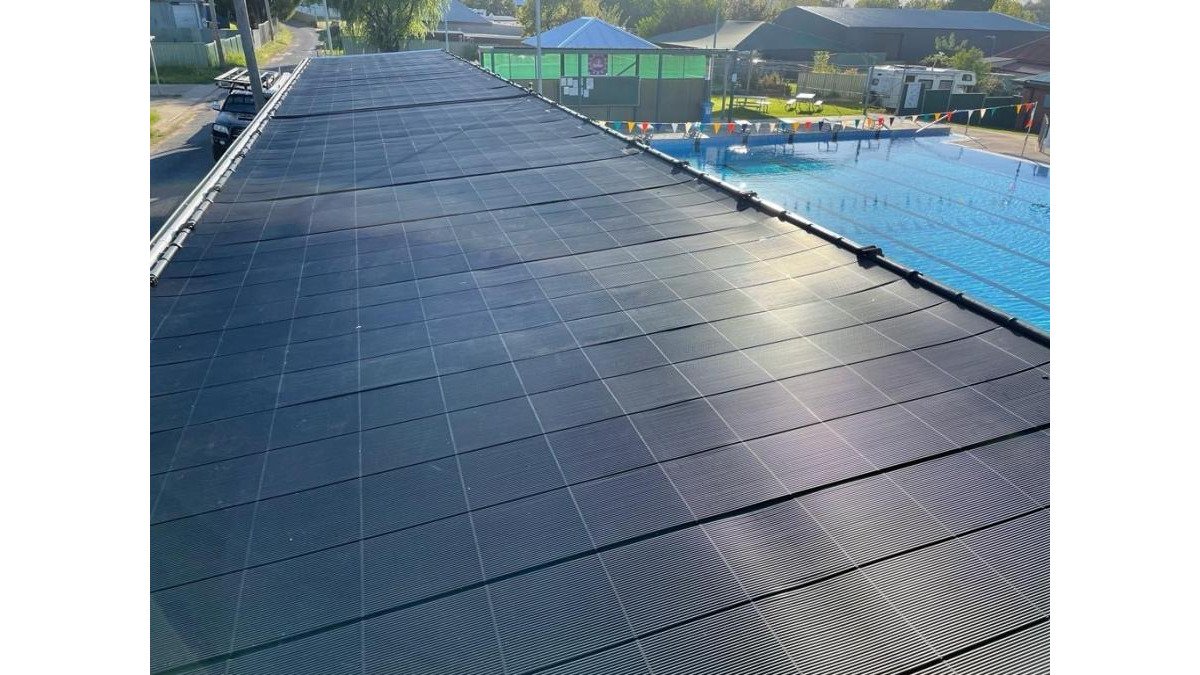
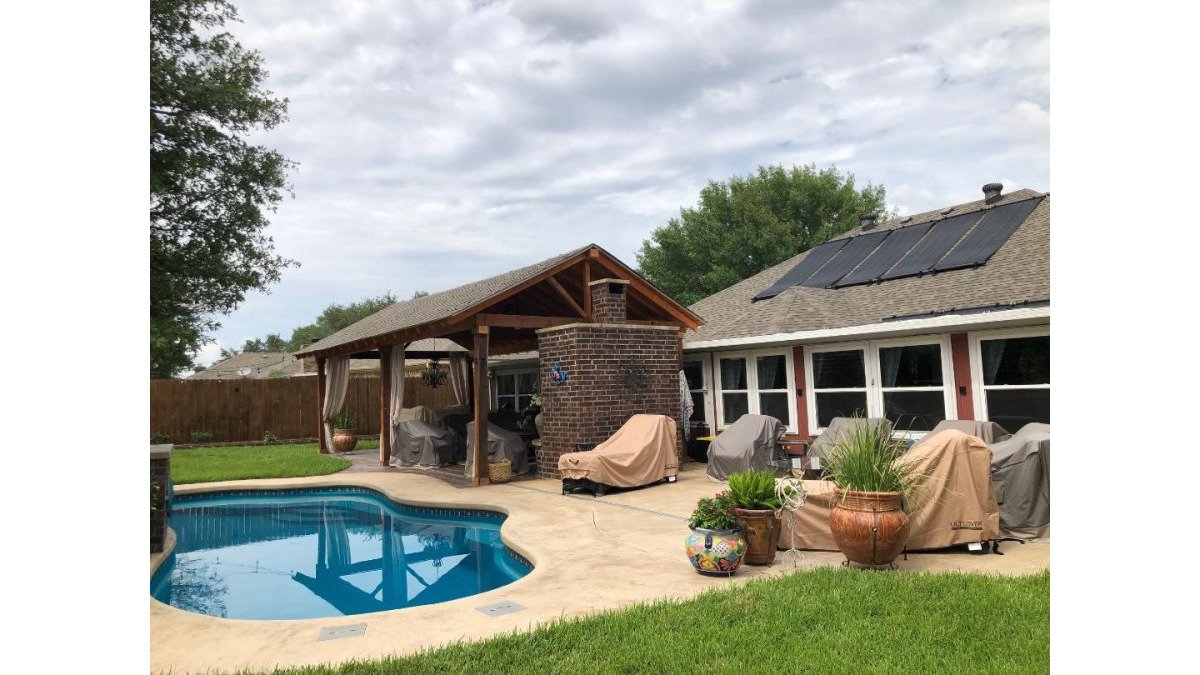
A solar collector system circulates pool water through panels that absorb sunlight, so the heat itself is free. The only ongoing cost is the pump electricity needed to move water through the panels. Solar's near-free heat is why more Texas pool owners are choosing it over gas or electric. For a deeper look at trimming the remaining pump cost, see our guide on how to lower pool heating bills.
The Pump Is the Only Line Worth Watching
Most comparisons lump the solar system's running cost into a single vague number. In practice, the pump is the only powered component, so its electricity consumption is the entire operating story. A single-speed pump moving water through collectors for hours a day draws far more wattage than a variable-speed pump running at a lower speed for a longer window. Because pump power scales roughly with the cube of speed, dropping to a lower speed for filtration and collector circulation cuts energy use disproportionately.
Using a Solar Pool Heating Monthly Payment Calculator
A solar pool heating monthly payment calculator estimates what a system would cost you per month by combining system size, financing terms, and expected energy savings. It is a planning tool, not a quote.
Most calculators ask for pool volume in gallons, collector area, your climate zone, and the loan APR and term you are considering. From there, they model a monthly installment and subtract the heating cost you avoid.
What a Swimming Pool Heating Cost Calculator Can and Cannot Tell You
A swimming pool heating cost calculator can estimate your monthly installment and rough energy savings, but it cannot see your roof orientation, shading, or how you actually use the pool. Those site-specific factors decide real performance.
What it can do well:
- Compare financing terms side by side
- Show how pool volume changes heating demand
- Estimate the utility bills you would avoid
What it misses:
- Shade from trees or nearby buildings
- Panel placement and roof angle
- Your real water temperature target and swim habits
Use the calculator to narrow your options, then let an on-site assessment set the final number.
Solar Pool Heating Financing Options That Keep Cash Flow Steady
Financing turns a large capital expenditure into predictable monthly installments, which is what most owners mean when they ask about a solar pool heating monthly payment. Three routes dominate, and each one changes the monthly figure in a different way. The key variables are the same across all three: the amount financed, the APR, and the term. A longer term lowers the installment but raises total interest; a shorter term does the opposite.
Home Equity and Refinancing
A home equity loan or a mortgage refinancing lets you borrow against your property at a fixed rate and spread the cost over a long term. Monthly installments stay level, and the interest rate is often lower than unsecured options because the loan is secured by your home. The caveat: you are tying the loan to your home, so the term and terms deserve careful reading, and a refinance resets the terms on your existing mortgage rather than adding a standalone installment.
Unsecured Home Improvement Loans
Unsecured loans require no collateral and fund quickly. Rates run higher than secured options because the lender carries more risk, so the monthly installment is larger for the same amount borrowed and the same term. They suit owners who want to avoid touching their mortgage or who plan to pay the balance down early. Because the APR is higher, the term matters more here: stretching an unsecured loan to lower the monthly figure can add a meaningful amount of interest over the life of the loan.
Dealer-Arranged Financing
Many installers work with lending partners who offer project-based financing with set terms and monthly payments. This keeps the whole project under one roof and simplifies the paperwork. Ask for the APR, the term, and whether there are prepayment penalties before signing. Dealer-arranged programs sometimes offer promotional structures, a lower introductory rate or a deferred first payment, that change the early monthly figure but not the long-run total, so read the terms rather than the headline installment.
How the Structure Changes the Monthly Figure
A useful way to think about it: the monthly payment is a function of three levers, and you can only pull two without affecting the third.
- Amount financed: a smaller system or a larger down payment lowers the installment on any term.
- Term: a longer term lowers the installment but raises total interest paid.
- APR: a lower rate lowers both the installment and the total interest, which is why secured options are attractive when you can use them comfortably.
A common pattern is to compare a fixed-rate home equity loan against a dealer-arranged program at the same term and ask which produces the lower total interest, not just the lower installment.
Watch out: a promotional rate that resets after an introductory period can make the first-year installment look far better than the years that follow, confirm what the rate becomes and when.
If you are still assembling your plan, our step-by-step guide to requesting a solar pool heating quote walks through what to have ready, and our guide to choosing a pool heating contractor covers the questions worth asking any installer.
Factors That Change Your Solar Pool Heating Monthly Payment
Several variables move the monthly figure up or down, and understanding them helps you read any quote accurately.
- Pool volume in gallons: larger pools hold more water and need more collector area.
- Climate zone and sun hours: more direct sun means more free heat.
- Collector area and panel count: sizing drives both performance and upfront cost.
- Financing term and APR: a longer term lowers the installment but raises total interest.
- Thermal blanket use: cutting heat loss reduces the pump run time needed to hold temperature.
- Seasonal usage: heating only in shoulder months changes the annual picture.
How Solar Pool Heating Pays for Itself Over Time
Solar pays for itself because it removes the recurring fuel cost that gas and electric systems carry forever.
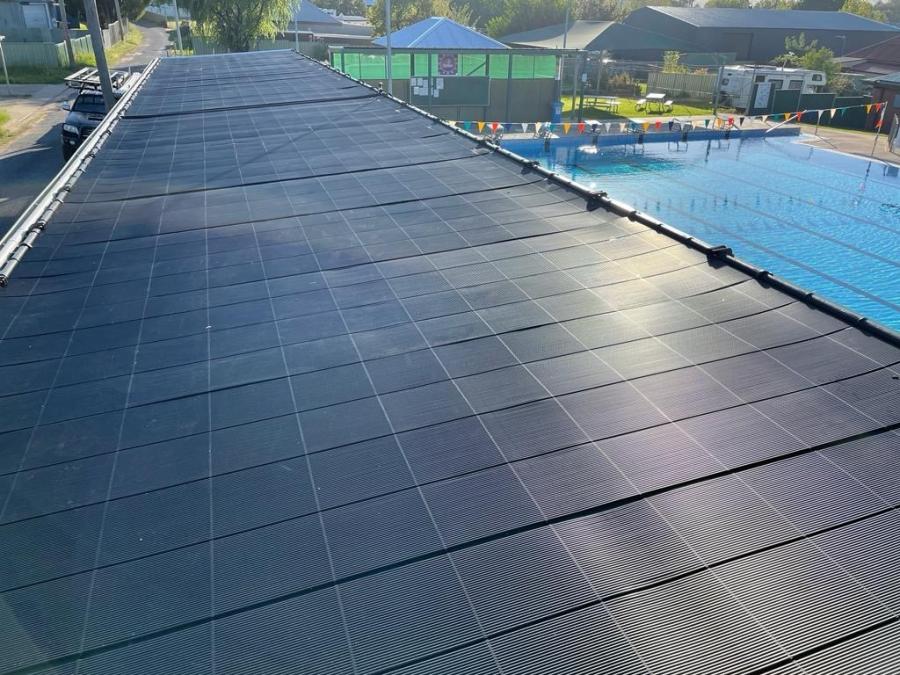
The system longevity works in your favor here. For real-world examples from owners like you, see our breakdown of real savings from residential solar pool heating.
One more angle most guides skip: the pump.
Get a Free Consultation on Your Solar Pool Heating Plan
The monthly payment question has a clear answer once someone looks at your actual pool, roof, and goals. A calculator gives you a range; a site evaluation gives you the real number.
At Solar Pool Heating Texas, we design and install residential and commercial solar pool heating systems, backed by our partnership with SolarTEK, a 100% satisfaction guarantee, and 24/7 availability for emergency repairs. Our systems extend your swimming season by up to nine months and can significantly reduce or eliminate energy costs.
Get started with Solar Pool Heating Texas and get a free consultation on a solar plan built around your pool.
Frequently Asked Questions
How much does it cost to heat a pool with solar?
Solar pool heating uses the sun to warm the water. Once the system is installed, you are not paying a gas bill or running a compressor every day. Most of the ongoing expense comes from the pool pump moving water through the collectors, and that pump already runs for filtration. Pricing for the system itself depends on pool size, collector area, and site conditions, so the most accurate figure comes from a free consultation rather than a generic estimate.
Can you finance a solar pool heating system?
Financing availability for this business is confirmed through a free consultation, where you can review the options that apply to your project.
What factors affect a solar pool heating monthly payment?
The main factors are system size, collector type, installation complexity, financing terms, and the interest rate on your loan. Pool volume in gallons, available roof or ground space, and shading all influence how many collectors you need. A larger system costs more upfront but heats more water. Shorter financing terms raise the monthly payment but reduce total interest. Longer terms lower the payment but cost more over the life of the loan.
How does solar pool heating compare with gas or electric heating?
Solar collectors use the sun to warm the water. Solar also extends your swimming season by up to nine months and needs very little maintenance, which is why more Texas pool owners choose it over gas or electric systems.