 comparison
Are Solar Pool Heaters Worth It? A 2026 Review
Last Updated: October 23, 2026
Quick Summary
Yes, for most pool owners who want a longer swimming season without rising energy bills, solar pool heaters are worth it. They run on sunlight alone, need almost no upkeep, and pay for themselves quickly, which is why more Texas pool owners are choosing solar over gas or electric heating.
- Solar pool heaters push water through black collectors using your existing circulation pump, adding no separate heating equipment to run.
- Solar extends the swimming season by up to nine months with near-zero operating costs and no burners or compressors to service.
- Gas heats faster and works in any weather, but it carries a recurring fuel bill for as long as you own the pool.
- Collector area relative to pool surface area is the single biggest lever on performance, so sizing comes before anything else.
- A pool cover is the cheapest performance upgrade, cutting nighttime heat loss so the day's gain stays in the water.
Table of Contents
- Are Solar Pool Heaters Worth It? The Short Answer
- How Solar Pool Heaters Work
- Solar Pool Heater Pros and Cons
- Solar Pool Heater vs. Gas Heater
- Solar Pool Heater vs. Heat Pump
- Solar Pool Heater Maintenance: What Owners Actually Do
- How Much Warmer Will Your Pool Get, and When Does Solar Pay Off?
- Verdict: Who Should Choose Solar Pool Heating?
- Frequently Asked Questions
Are Solar Pool Heaters Worth It? The Short Answer
Yes, for most pool owners who want a longer swimming season without rising energy bills, solar pool heaters are worth it. At Solar Pool Heating Texas, we have watched this question shift over the past decade: the systems now run on sunlight alone, need almost no upkeep, and pay for themselves quickly.
Here is the part most guides get wrong. They frame solar as the "green" option and gas or electric as the "practical" option. In practice, it is the reverse. A solar array has no fuel line, no compressor, and no monthly bill attached to it.
Below, we break down how the systems work, how they compare with gas heaters and heat pumps, and which pool owners get the most out of one.
How Solar Pool Heaters Work
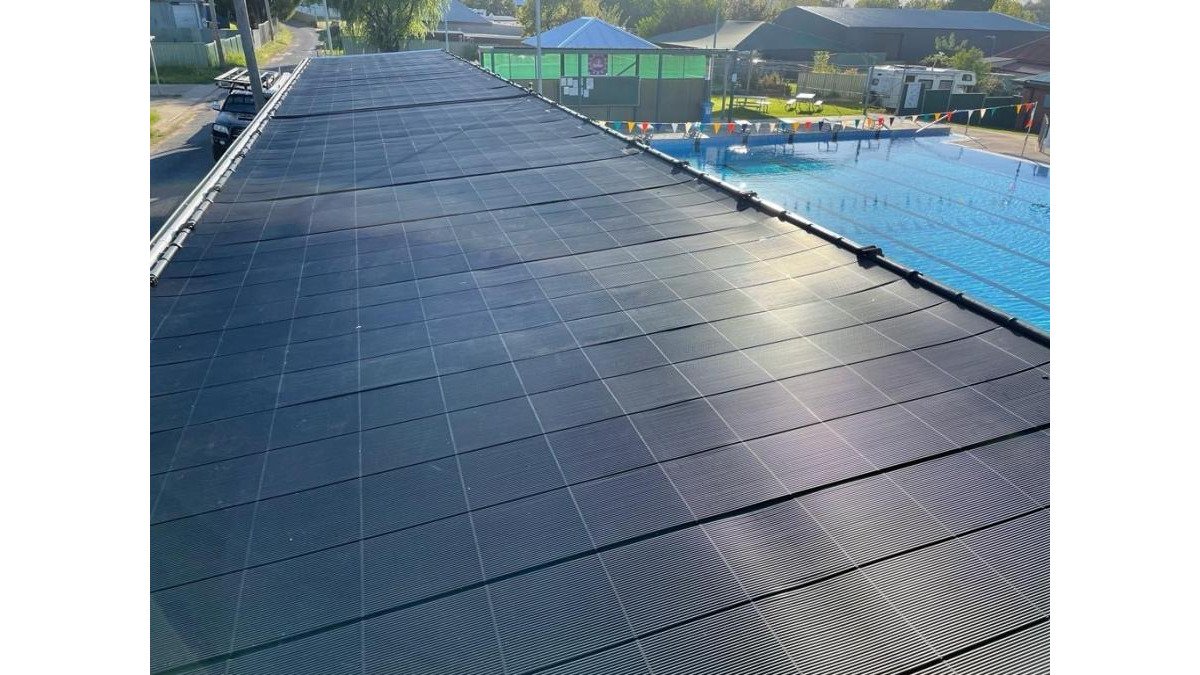
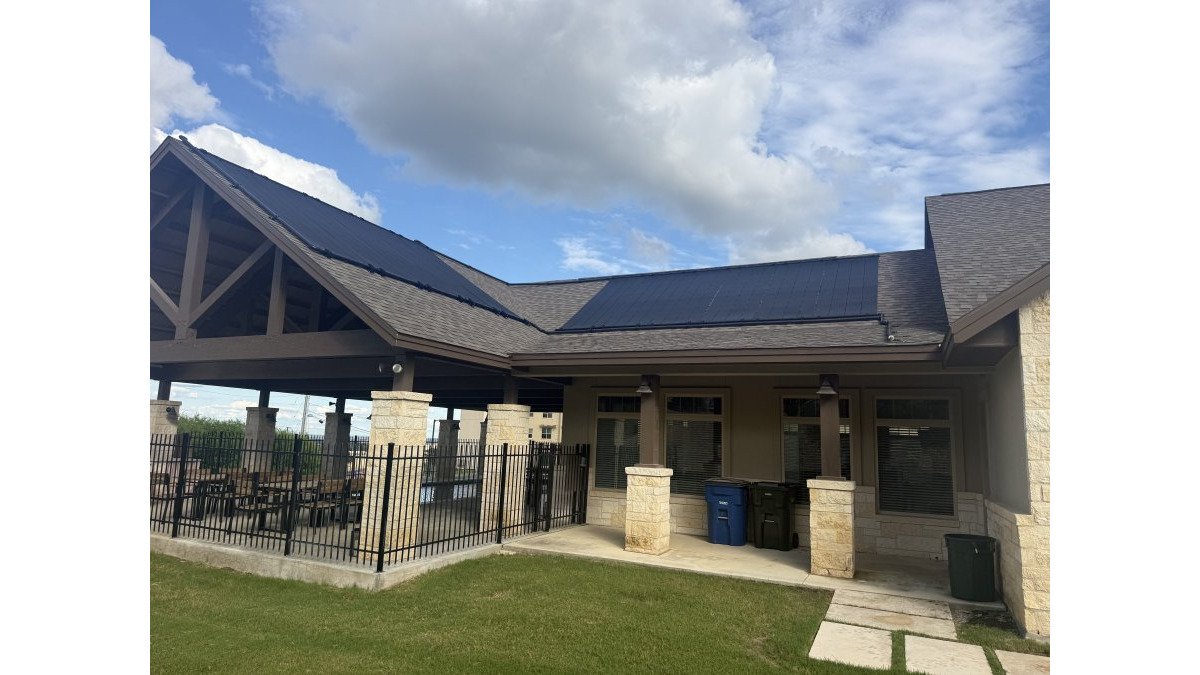
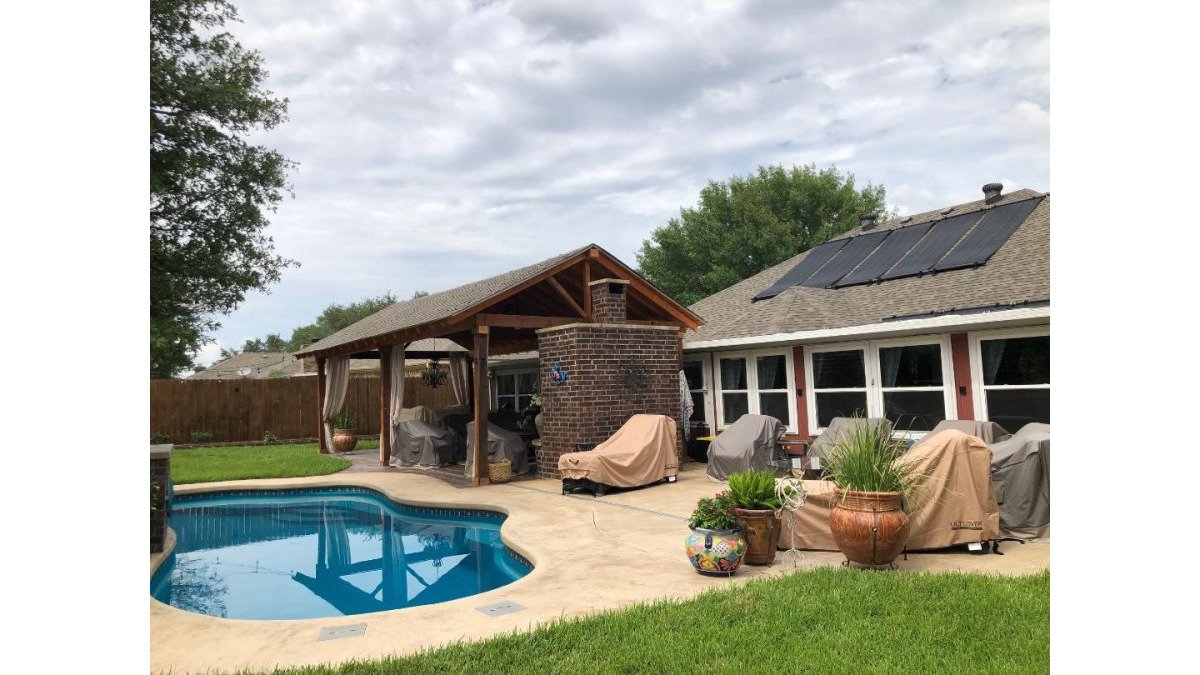
A solar pool heater pushes your pool water through black solar collectors, where sunlight warms it, and returns it to the pool.
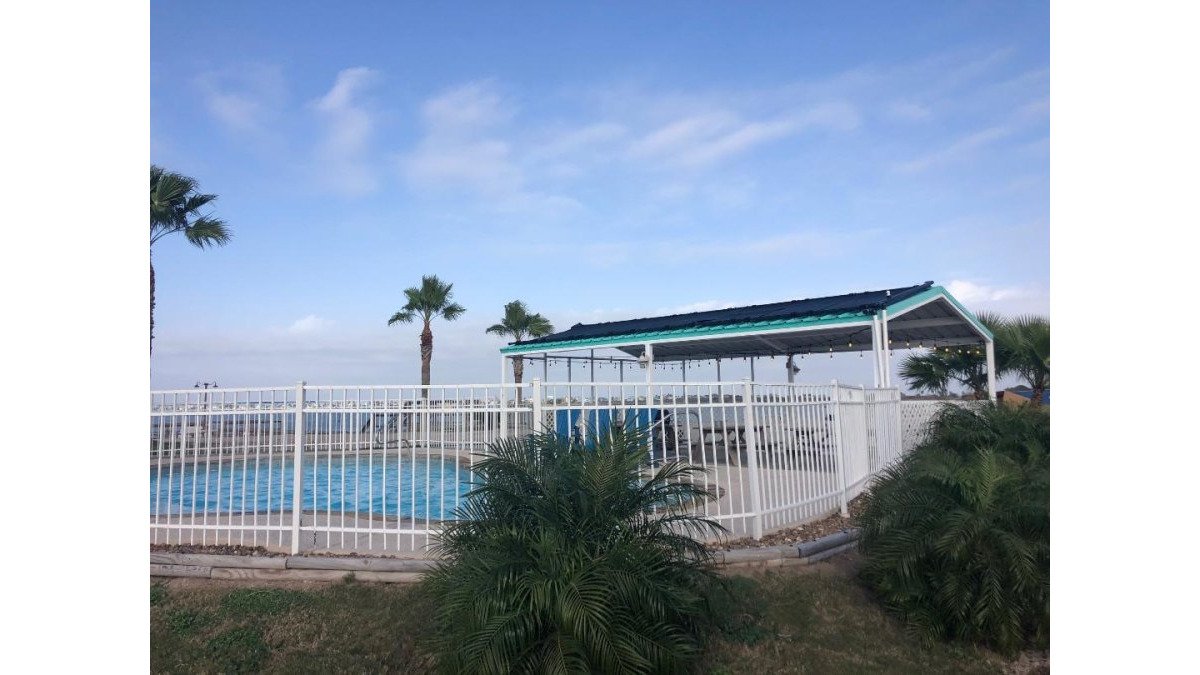
The setup is simpler than most people picture. Solar collectors mount on a roof or on the ground near the pool.
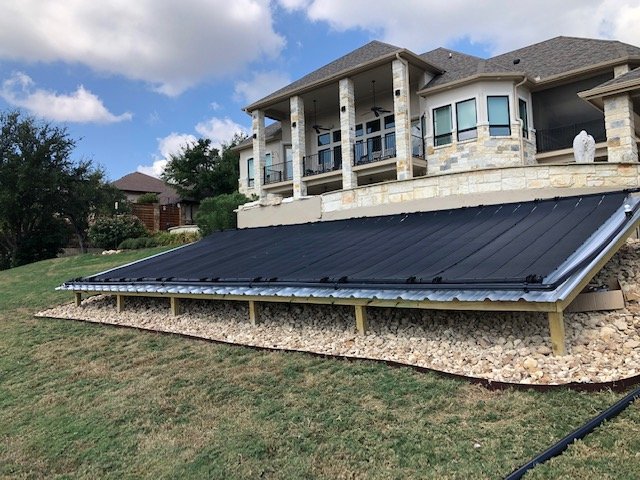
That is the whole system. No flame, no refrigerant, no compressor.
Solar Pool Heater Pros and Cons
The strengths are real, and so are the limits. Here is the honest version.
Pros:
- Runs on free energy from the sun, so operating costs stay near zero
- Extends the swimming season by up to nine months
- Low maintenance, with no burners or compressors to service
Cons:
- Performance depends on sunlight and cloud cover
- Heats gradually rather than instantly
- Needs adequate collector area relative to pool size
Solar Pool Heater vs. Gas Heater
A gas heater wins on speed and loses on everything that follows. Understanding why comes down to how each system makes heat.
How each one actually heats water
A gas heater burns fuel in a burner assembly, passes pool water across a heat exchanger, and returns warmed water to the pool. It can raise water temperature quickly and works in any weather, day or night, rain or shine.
A solar pool heater has no flame, no burner, and no heat exchanger to wear out. Your existing circulation pump pushes water through black collectors, sunlight warms the water, and it returns to the pool.
The operating profile is the real difference
| Gas heater | Solar pool heater | |
|---|---|---|
| Heat source | Burned fuel | Sunlight |
| Speed | Fast | Gradual, steady |
| Works at night or in heavy overcast | Yes | Limited |
| Recurring fuel bill | Yes, every hour it runs | None |
| Moving parts | Burners, ignition, heat exchanger | None in the collectors |
| Maintenance profile | Regular service on wear parts | Minimal |
| Season extension | Yes, at a cost | Yes, at no fuel cost |
Where gas still makes sense
Gas is the right call for a narrow set of owners: those who need a hot pool on demand for a specific event, those who swim year-round regardless of weather, and those whose site genuinely cannot support collectors. For everyone else, the recurring bill is the deciding factor.
Why more pool owners are choosing solar
The pattern is consistent. Owners start with gas because it heats fast, then notice the fuel bill is the single biggest recurring cost of owning the pool. Solar flips that equation: it heats more slowly, but the fuel is sunlight, so the running cost is effectively nothing, and there are no burners or heat exchangers to service. That is why more Texas pool owners are choosing solar over gas or electric heating.
The trade-off is speed, not capability. Solar heats slowly and steadily, which suits most pools and most swimming habits. If you need a hot pool by tonight, gas is the tool for the job, but it is a tool you pay to run every time you use it.
Solar Pool Heater vs. Heat Pump
A heat pump is efficient by electric standards, but it still draws power every time it runs. Solar pool heaters draw no heating power at all, because the sun does the work.
Heat pumps hold one advantage: they run day or night and in cooler air. Solar needs sunlight.
For eco-conscious homeowners, the comparison is not close. A heat pump reduces electricity use. A solar system eliminates it.
Solar Pool Heater Maintenance: What Owners Actually Do
Solar pool heater maintenance is minimal, and that is the point. There are no burners to clean, no refrigerant to check, and no compressor to replace. Owners mostly keep the collectors clear of debris and confirm the controller is switching correctly.
A typical annual routine looks like this:
- Rinse dust and pollen off the collectors a few times a season
- Check the diverter valve moves freely
- Confirm the controller responds to temperature changes
That is the list. If something does need attention, our team is available 24/7 for emergency repairs, and every installation carries a 100% satisfaction guarantee.
How Much Warmer Will Your Pool Get, and When Does Solar Pay Off?
This is the section where the "worth it" question actually gets settled, so it deserves real numbers rather than a shrug. Two things determine your result: how much collector area you have relative to your pool surface, and how much of the sun's heat you keep in the water.
Temperature rise you can realistically expect
A well-sized solar array does not turn a cold pool into a hot tub. What it does is reliably lift water temperature above an unheated pool and hold it there through the season. Most practitioners find the gain falls into a predictable band:
- Clear, sunny, warm days: the largest gains, with the pool climbing steadily through the afternoon and peaking late in the day
- Partly cloudy days: meaningful but reduced gains, since passing clouds interrupt the heating cycle
- Heavy overcast or short winter daylight: little to no net gain, which is why solar is a season-extender rather than a winter heater
Ambient air temperature and humidity matter too. A dry, breezy day pulls heat off the pool surface through evaporation faster than a humid, still day, even when the sun is equally strong. That is why two pools with identical arrays can perform differently in different parts of the state.
The sizing ratio that decides everything
Collector area relative to pool surface area is the single biggest lever on performance. An undersized array heats slowly and never catches up on cool nights; an oversized array is capacity you paid for and rarely use. A common pattern is to size the collector area as a meaningful fraction of the pool's surface, with larger ratios for owners who want a warmer pool or a longer season and smaller ratios for mild goals.
Why a pool cover changes the math
A cover is the cheapest performance upgrade there is. It cuts evaporative and nighttime heat loss, which means the heat your collectors add stays in the water instead of drifting off overnight. Owners who run a cover consistently report warmer mornings and a longer usable season from the same array. Without a cover, a meaningful share of the day's gain is gone by sunrise.
How solar pays off
Solar pays off through two channels, and both compound over the life of the system:
- The heating bill you stop paying. A solar array has no fuel line and no compressor, so once it is running, the energy that heats your pool arrives free. Every season you would otherwise have paid to heat the pool is a season of savings.
- The swimming season you gain. Weeks of extra usable swim time each year are value you cannot get back once the season closes.
Because operating costs stay near zero, the system pays for itself quickly relative to heaters that carry a recurring bill for as long as you own the pool. It is fastest for owners who swim often, keep the pool open longer, and run a cover. It is slowest for owners with heavy shade or an undersized array, which is why sizing and siting come before anything else.
We size collector area to your pool and your goals, and we will tell you honestly when a ground-mounted array makes more sense than a roof mount. Getting that balance right is the difference between a system that works and one that disappoints.
Verdict: Who Should Choose Solar Pool Heating?
Solar pool heating is the smartest, most cost-effective way to heat a pool, and it fits most homeowners who want a longer season without a permanent energy bill.
It is a weaker fit if you need instant heat in any weather, or if your roof gets heavy shade all day.
Here is how we would decide:
| Your situation | Best fit | Why |
|---|---|---|
| Want a longer season, lower bills | Solar | No fuel cost, minimal upkeep |
| Need heat tonight, any weather | Gas | Fast, weather-independent |
| Want efficiency, not zero fuel | Heat pump | Lower power draw than gas |
| Heavy roof shade | Ground-mounted solar | Sidesteps the shade issue |
| Commercial pool, many users | Solar | Scales without scaling bills |
If your pool sits idle for months while you pay to heat it the rest of the year, that is the challenge worth solving.
Frequently Asked Questions
Are solar pool heaters worth it?
For most pool owners who want to swim more of the year, yes. Solar pool heaters use free sunlight instead of gas or electricity, need very little maintenance, and help reduce energy bills. They work best in sunny climates with a decent roof or ground space for collectors. The main trade-off is slower heating on cloudy stretches and a larger initial investment than a basic gas heater.
How well do solar pool heaters work in cooler weather?
They still heat water whenever sunlight hits the collectors, but output drops on short, cloudy days. Pairing a solar system with a pool cover keeps heat in overnight and extends the swimming season by several weeks on each end. In mild climates, many owners swim comfortably for up to nine months of the year with solar heating and a cover.
What are the disadvantages of solar pool heating?
The biggest ones are weather dependence and space. Collectors need sun exposure, so shaded roofs or small lots limit performance. Heating is gradual rather than instant, so you plan ahead instead of cranking a dial. The initial investment is typically higher than a bare gas unit, though operating costs are near zero. Maintenance is minimal: clear debris, check flow, and winterize if needed.
Do solar pool heaters work for above-ground pools?
Yes. Above-ground pools can use ground-mounted collector racks or floating solar heaters that sit on the water surface. A small circulation pump moves water through the collectors and back into the pool. These setups are simple to install and easy to remove for winter, though they heat a smaller volume of water than full roof systems on in-ground pools.
How much maintenance does a solar pool heater need?
Very little. Check the collectors for leaves and debris a few times a season, keep the pump and filter running clean, and watch for leaks at the plumbing connections. In freezing areas, drain the collectors before winter. Most systems run for years with only occasional inspection, which is why solar pool heater maintenance is far lighter than servicing a gas heater or heat pump.