 How-to
How to Protect Solar Pool Collectors From Texas Wind
Last Updated: November 24, 2026
Quick Summary
Protect solar pool collectors from Texas wind by strapping every panel to the roof frame, not just the sheathing, and spacing fasteners evenly along each rail. Seal air gaps and keep panels flush so wind cannot lift them, then tighten loose straps before any forecast front.
- Wind lift, not panel weight, is the dangerous force once air gets under a collector.
- Fastening into sheathing instead of framing is the most common strap mistake we see.
- Work the pre-storm checklist when a front is forecast within 24 to 48 hours.
- Stay off the roof in high wind, rain, or when the surface is wet.
- A floating solar cover and a windbreak reduce pool heat loss from wind and evaporation.
Table of Contents
- Why Texas Wind Threatens Solar Pool Collectors
- Solar Pool Collector Mounting That Holds Against Wind
- Solar Pool Heater Roof Straps and Fastener Techniques
- Solar Pool Heater Storm Preparation Before the Front Arrives
- Solar Pool Heater Wind Damage Inspection After the Storm
- Reducing Pool Heat Loss From Wind and Evaporation
- Schedule a Free Wind-Safety Consultation
- Frequently Asked Questions
Why Texas Wind Threatens Solar Pool Collectors
Texas wind is hard on rooftop solar pool collectors. A steady gust can lift an unstrapped panel, and a single storm can tear a collector array loose.
Two things happen when wind hits a collector. First, it pushes against the panel face. Second, it sneaks under the frame and tries to lift the whole unit. The lift is the dangerous part. Once air gets under a panel, the wind load multiplies fast.
A common mistake is assuming a heavy panel stays put. Weight alone does not beat wind force. The panels need to be tied down and the air gaps closed.
Solar Covers vs. Solar Collectors: Know What You're Securing
These are two different things, and they fail in different ways.
A solar pool cover is a floating sheet that sits on the pool surface. It traps heat and slows evaporation. Wind gets under the cover edge and peels it back or blows it off the pool.
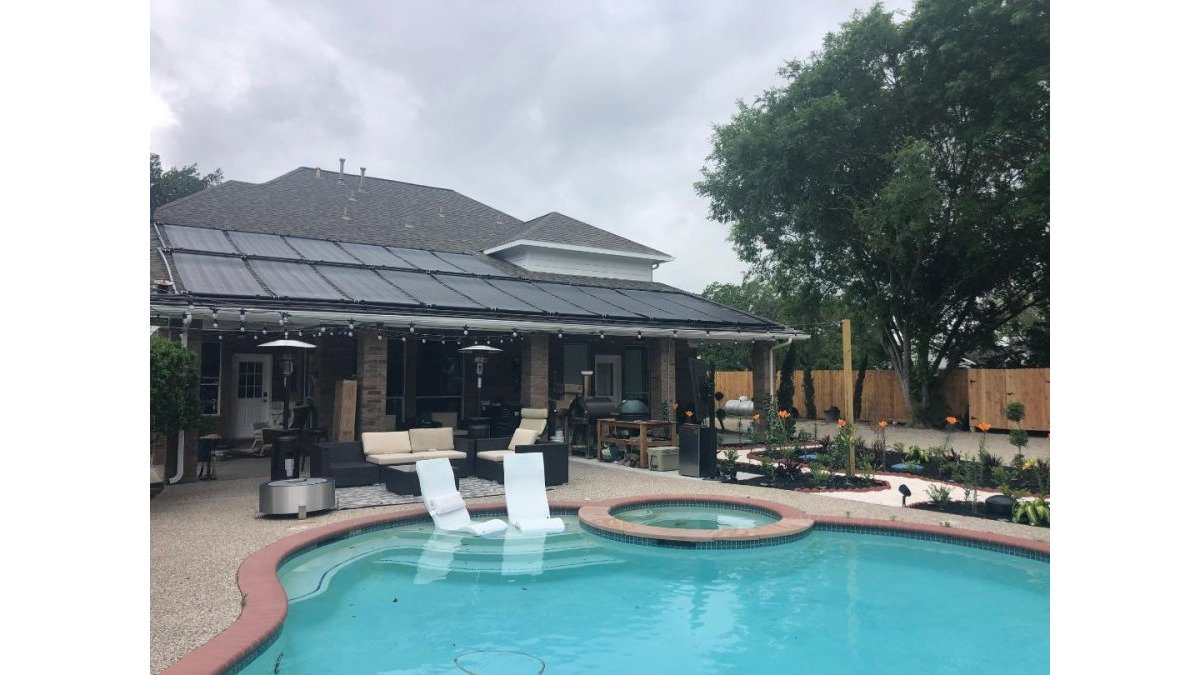
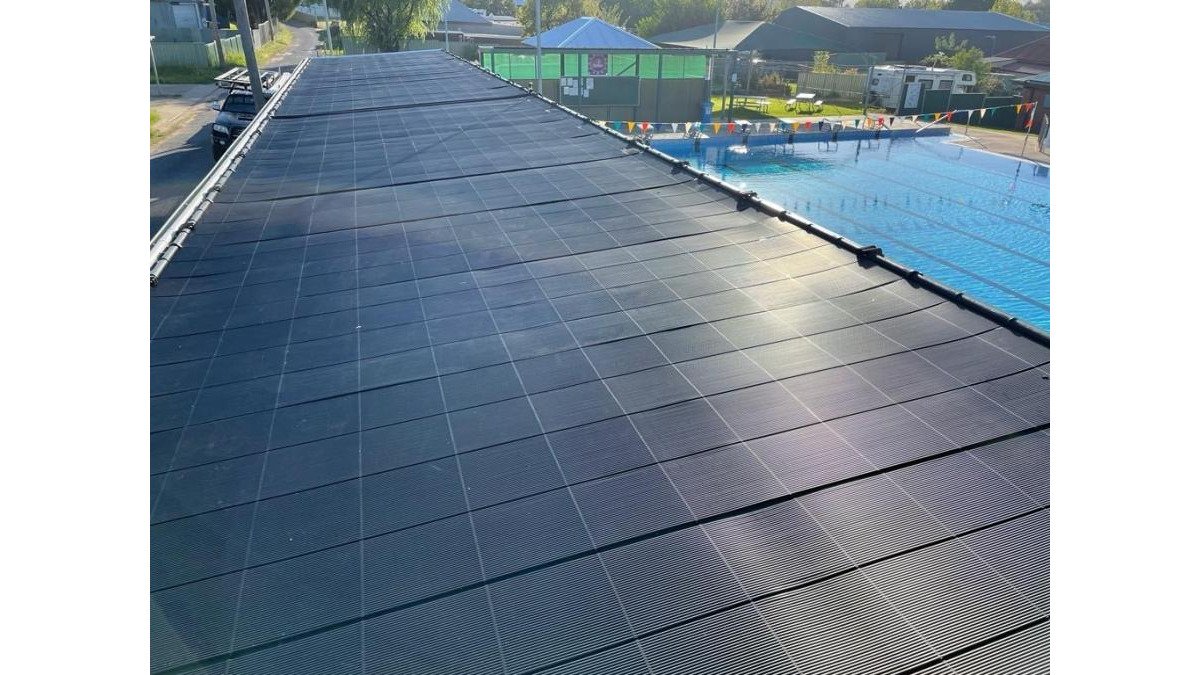
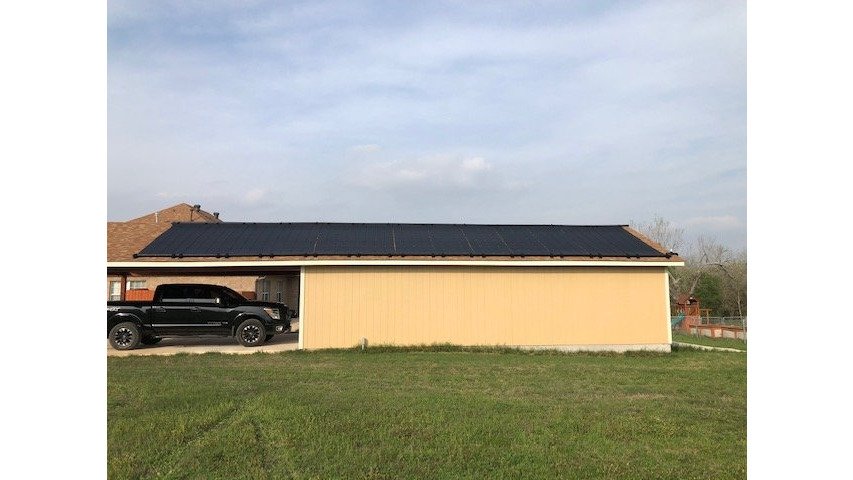
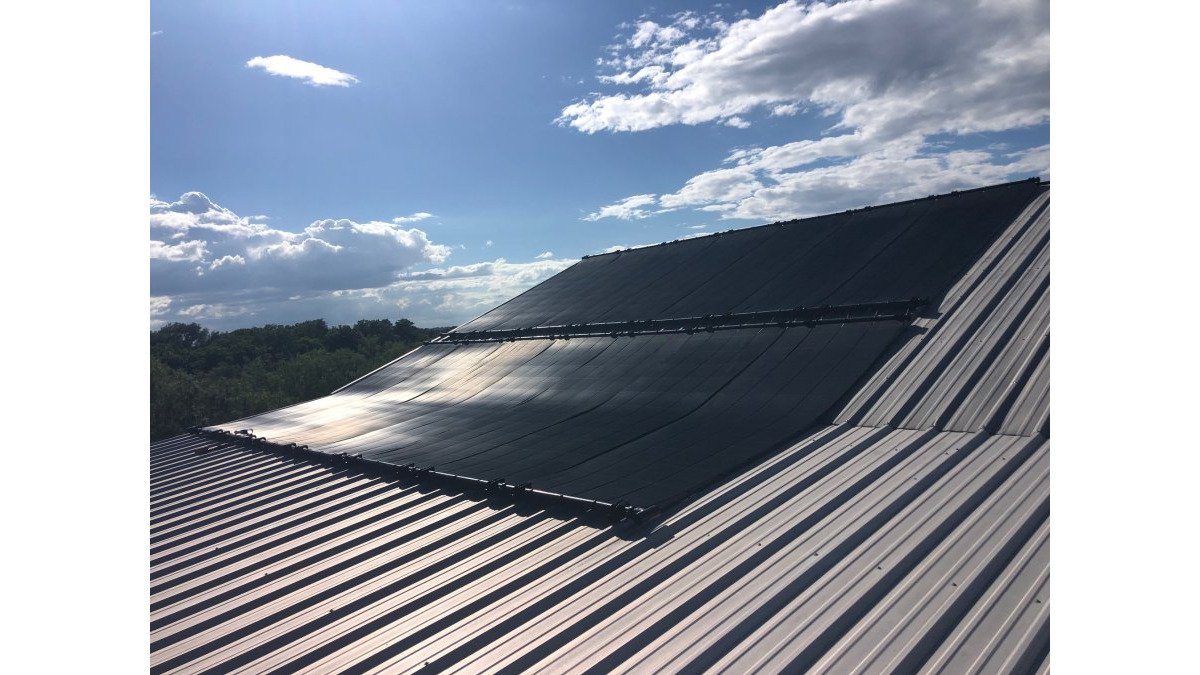
A solar pool collector is a panel mounted on a roof or rack. Pool water runs through it, and the sun heats the water. Wind tries to lift the panel off its mounts.
So when we talk about protecting solar pool collectors, we mean the rooftop panels, not the floating blanket. Both matter, but the fastening methods are different. Mixing them up leads to the wrong fix.
Solar Pool Collector Mounting That Holds Against Wind
A collector stays put when the mount is right and the air gaps are sealed. Roof mounting works well when the roof pitch and shingles allow a solid anchor. Ground racks suit flat yards and open lots.
Wind exposure changes the plan. A roof with a clear run of open field to the west takes more force than a sheltered lot with trees.
For readers weighing roof versus ground options, our guide to roof mounted vs ground mounted pool solar collectors breaks down how each handles wind. And if you have a flat roof, ballasted vs roof-mounted solar pool heaters for flat roofs covers which method holds better.
Distributing Wind Load Across Collector Panels
Wind load should spread across the whole array, not sit on one corner. A few rules we follow:
- Strap every panel, not just the end ones
- Space fasteners evenly along each rail
- Tie the array to the roof frame, not just the deck
- Leave no loose edge for wind to grab
Even spacing keeps any single mount from taking the full force. That is the difference between a panel that rattles and one that holds.
Solar Pool Heater Roof Straps and Fastener Techniques
Good roof straps and the right fasteners keep a collector array on the roof when wind gusts hit. Wind strapping ties each panel to the structure below, and the fastener choice decides whether that strap holds.
Here is how we approach strap and fastener work:
- Find the roof frame and mark anchor points along each rail.
- Set fasteners into solid framing, not just sheathing.
- Run straps over the panel frame at even spacing.
- Tighten until the panel sits firm with no flex.
- Check every strap by hand before you call it done.
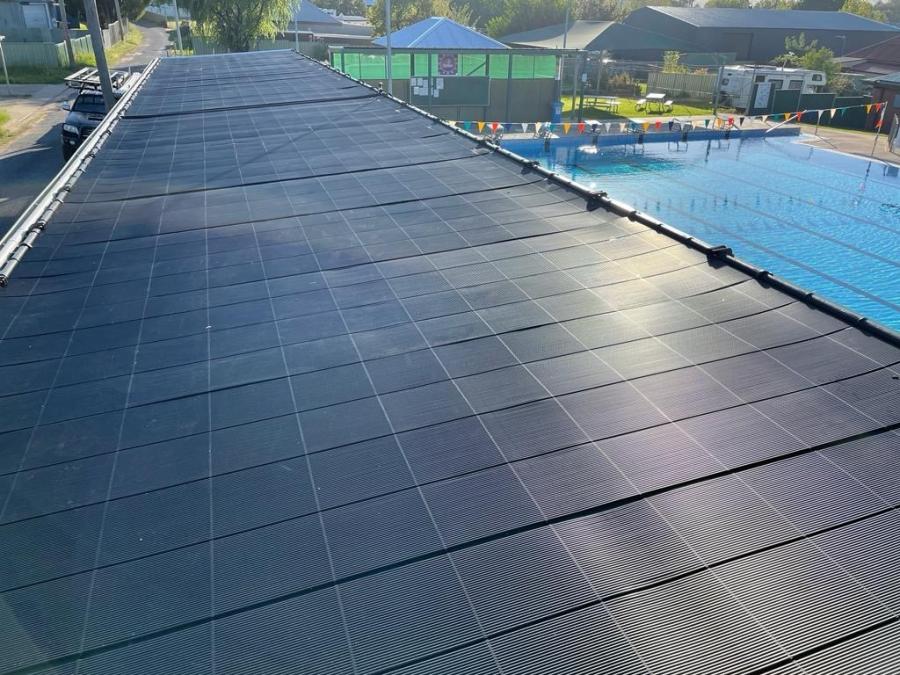
Watch out: fastening into sheathing instead of framing is the mistake we see most. The strap looks tight, but the first hard gust pulls the fastener free. To see how secure mounting fits the full job, read our solar pool heating installation process explained.
Solar Pool Heater Storm Preparation Before the Front Arrives
Storm preparation starts before the wind picks up. A little work ahead of a front saves a lot of repair after it. The key is to know what kind of weather you are preparing for, because routine Texas wind and a severe storm call for different responses.
Routine Wind vs. Storm Conditions
Most days, Texas wind is a steady push that your collector array should handle without any action. The trouble starts when the National Weather Service issues a wind advisory, severe thunderstorm warning, or hurricane watch for your area. That is when you move from routine monitoring to active preparation.
A common pattern is to treat every windy day like a storm. That leads to over-tightening straps and unnecessary roof trips. Instead, use the forecast as your trigger: routine gusts mean a visual check from the ground, while an active warning means you work through the full checklist below.
Pre-Storm Checklist
Work through this list when a front is forecast to arrive within 24 to 48 hours:
- Walk the roof and press on every panel to check for flex
- Tighten any loose strap or fastener
- Clear loose branches and yard items that could become flying debris
- Confirm the panels sit flush with no lifted edge
- Note any cracked panel or worn strap for repair
- Check that plumbing connections are secure and not rubbing against the roof
- Confirm the pump and controller are in a safe state for the storm
Safety and Shutdown Considerations
Roof access is the biggest hazard in storm preparation. Staying off the roof in high wind, rain, or when the surface is wet is a sensible precaution. If you cannot safely reach the array, secure what you can from the ground and wait for conditions to improve.
Where your system has an electrical controller or pump, follow the manufacturer's instructions for shutting down or isolating the equipment before a severe storm. Improvised restraints, ropes, bungees, or added weights not specified by the manufacturer, can damage panels or void warranties. When in doubt, have a professional assess the array rather than adding a temporary fix.
Freeze Protection After the Front
If a hard freeze follows the wind, drain the collectors and isolate them from the plumbing. Trapped water can freeze and crack a panel (Solar Photovoltaic Hardening for Resilience - Winter Weather). For the full cold-weather steps, see our solar pool heater maintenance and repair guide.
Here is the pre-storm checklist to work through when a front is forecast within 24 to 48 hours.
| Task | What to check |
|---|---|
| Walk the roof | Press on every panel to check for flex |
| Tighten hardware | Secure any loose strap or fastener |
| Clear debris | Remove loose branches and yard items |
| Check panel fit | Confirm panels sit flush with no lifted edge |
| Note damage | Record cracked panels or worn straps for repair |
| Check plumbing | Confirm connections are secure and not rubbing |
| Check equipment | Confirm pump and controller are in a safe state |
Solar Pool Heater Wind Damage Inspection After the Storm
Inspect the array as soon as it is safe to go on the roof. Look for the problems wind leaves behind, and work through the inspection in a repeatable order so nothing gets missed.
Step-by-Step Post-Storm Inspection
- Check the roof surface first. Look for displaced shingles, debris, or standing water before you step onto the roof.
- Inspect panel position. Confirm each panel sits flush and square. A panel that shifted even a little needs attention.
- Check straps and fasteners. Look for stretched, snapped, or backed-out fasteners. Press on each strap by hand.
- Examine panel faces. Look for cracks, hazing, or impact marks from flying debris.
- Trace the plumbing. Check for loose connections, leaks, or lines rubbing against the roof.
- Clear debris. Remove anything caught under or between panels so it does not abrade the surface.
How Small Damage Escalates
A panel that shifted even a little needs attention. Small movement grows into a bigger failure over the next windy day because the gap lets more air under the panel, which increases lift and puts more strain on the remaining fasteners. Catching a loose strap early is far easier than repairing a torn array later.
Safety and Warranty Considerations
Stay off the roof in high wind, rain, or when the surface is wet. If you see damage you cannot safely reach, document it from the ground and schedule a professional inspection. Improvised repairs, added weights, ropes, or non-specified fasteners, can damage equipment or affect warranties. When in doubt, have a professional assess the array.
Our list of 7 common solar pool heating maintenance issues to fix helps you match what you see to the likely cause.
Reducing Pool Heat Loss From Wind and Evaporation
Wind steals heat from the pool surface, and evaporation takes more. Both cost you warmth you already paid for.
A floating solar cover cuts evaporation and holds heat in the pool water. Keeping the cover on overnight matters most, when air is cool and wind is steady. A windbreak, like a fence or hedge on the windy side, also slows surface heat loss.
Less heat loss means the pool holds its temperature longer, and your system works less to keep it warm. Solar is the smartest way to heat a pool: it needs no fuel to run and little routine upkeep. More Texas pool owners are choosing solar over gas or electric heating.
Schedule a Free Wind-Safety Consultation
Texas wind will test every collector array eventually. The question is whether your panels are strapped and sealed to pass that test. At Solar Pool Heating Texas, we install and repair solar pool heating systems across Texas, backed by our 100% satisfaction guarantee and 24/7 emergency repair availability. Our team can check your mounting, straps, and fasteners, and our systems are designed to extend your swimming season by up to nine months with low maintenance.
Get started with Solar Pool Heating Texas and secure your collectors before the next front rolls in.
Frequently Asked Questions
How do you protect solar pool collectors from strong wind?
Anchor the panels with rated roof straps and fasteners spaced along every edge, not just the corners. Keep the collector frame tight to the mounting surface so wind can't catch an exposed edge and lift it. Before a front arrives, isolate and drain the collectors, then inspect straps, plumbing, and panel edges once the storm passes. A properly mounted solar pool heating system handles routine Texas gusts well, and annual inspections catch loose hardware before it becomes damage.
Can solar pool collectors withstand high winds?
Quality collector panels mounted with proper straps, fasteners, and distributed wind load are built to handle typical Texas wind exposure. The weak point is usually installation, not the panel itself: missing straps, loose fasteners, or an exposed cover edge give wind a place to grab. Ask your installer how the system is anchored and how wind load is spread across the array. If a storm is forecast, isolate and drain the collectors as a precaution.
What should I check on solar pool collectors after a windstorm?
Walk the roof line and look for lifted or cracked collector panels, loose or missing roof straps, pulled fasteners, and sagging plumbing connections. Check the pool pump and circulation system for air leaks, and confirm the collectors refill and flow normally when you restart. Photograph anything that looks off before you touch it. If you see cracked panels, shifted mounting, or plumbing that pulled loose, call a professional for a wind damage inspection rather than climbing up yourself.
Should I cover solar pool collectors during a storm?
Don't wrap or tarp the collectors. A loose cover catches wind and can tear panels off the roof. The better move is solar pool heater storm preparation: isolate the collectors from the pool, drain them so wind-driven debris and freeze damage can't harm the system, and make sure straps and fasteners are tight beforehand. After the storm, inspect the array before restarting the circulation system. For severe weather, have a professional check the mounting hardware.